
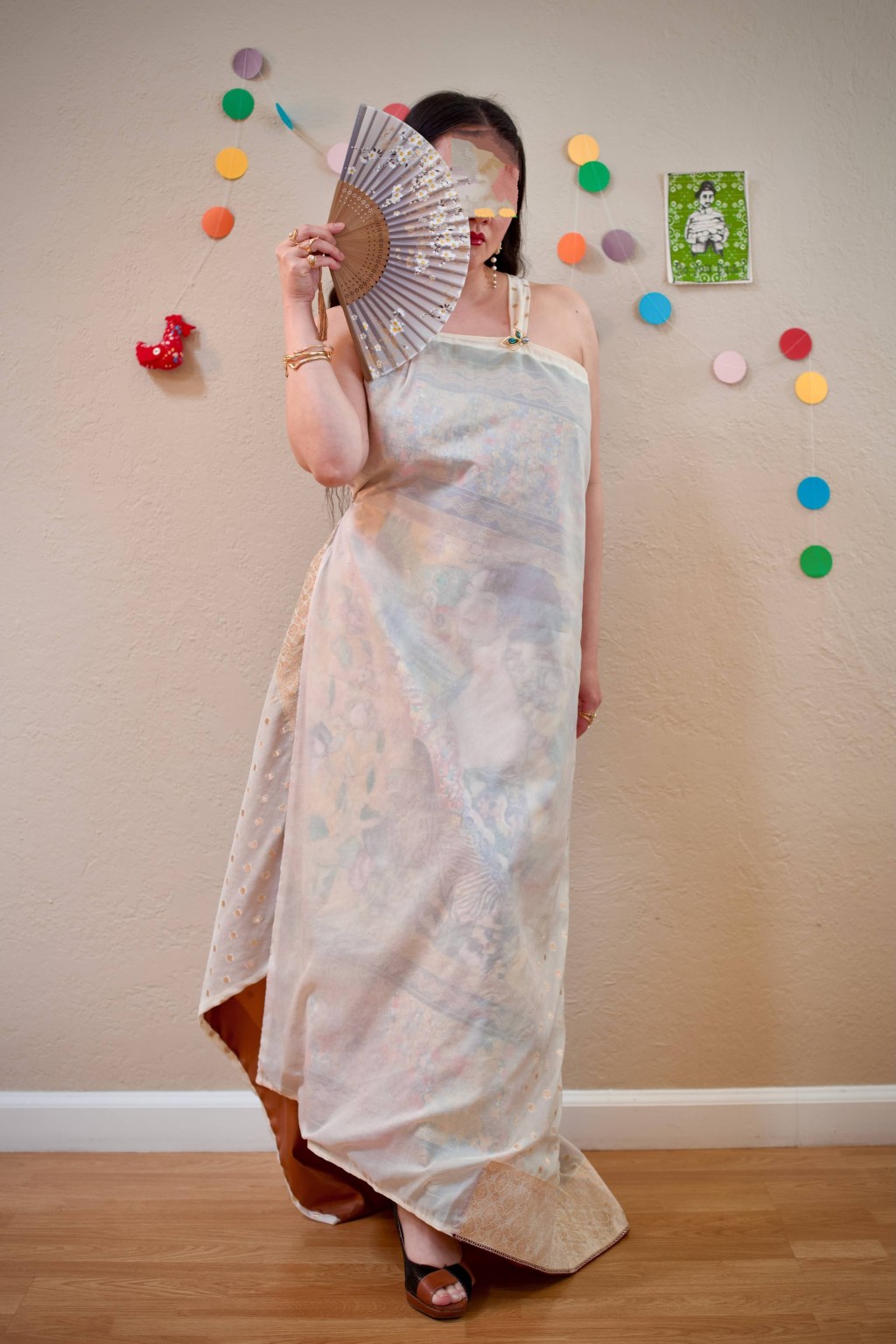
The fan is about as old as civilization itself. Sometimes it is said it is “as old as hot weather itself.” Found in the 14th-century BC Egyptian Pharaoh Tutankhamun’s tomb were eight fans, which in ancient Egypt were called “shuwt” to mean shadow or shade, and “seryt” to mean a royal or military standard. The most elaborate, for the pharaoh’s personal use, sat in a treasure box in the Store Chamber, whose handle is of ivory encircled with bands of gold and whose terminal knob is of lapis lazuli glass. It still has the original ostrich feathers which were collected by the young king himself during his hunting expeditions, and according to the British archaeologist Howard Carter who discovered this tomb, “as perfect as when it left the hands of the boy king.”
Appearing in China over 3000 years ago, the earliest fans, called “Shanhan”, were tied to a horse-drawn carriage to shelter passengers from sunlight and rain. The Shanhan soon evolved into a long-handled fan called the Zhangshan. Made of silk or bird feathers, it was used by the emperor’s honor guard for decoration. During the Han Dynasty (206 BCE – 220 CE), a new type of silk fan was introduced. Favored by young women in the imperial palace, the silk fans were round to resemble the moon and were called “round fans” or “tuánshàn”. By the time of the Tang Dynasty, it became an elegant necessity for the aristocratic woman, and was made of white jade and ivory. The fans were painted by famous artists with motifs of flora, animals, and landscapes. The moon-shaped fan took on many other forms, including ovals and even the shape of a Chinese plum flower or sunflower. A marriage etiquette, called “Etiquette of Removing Fan,” remained popular until the Song Dynasty (960 – 1279 CE), in which the bride hid her face with the fan. After drinking wine and chanting poems, the bride could then move the fan away to reveal her visage. The folding fan was invented in Japan around the 9th century and exported to mainland China in the 10th century during the Song Dynasty. The first shape was that of the hiōgi, or wooden folding fan, and before long the kawahoriōgi made by pasting paper onto one side of the ribs was born.
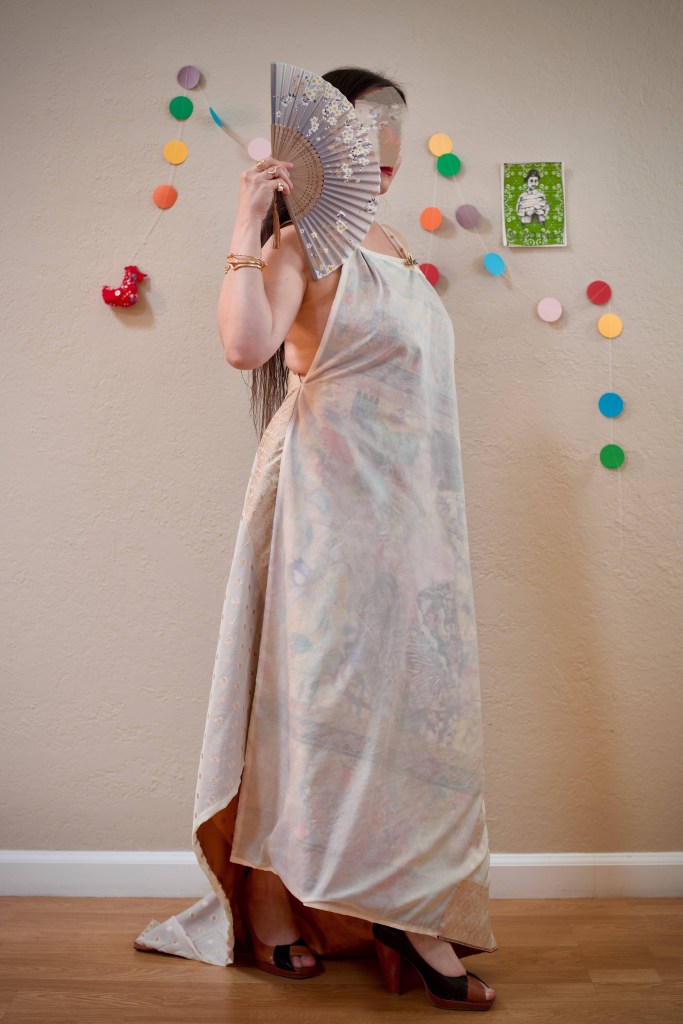
In the 16th century, Chinese folding fans were introduced to Europe. During the reign of Louis XIV, France became the fan center of the world, as French royalty were especially fond of extravagant and artistic fans. One fan, belonging to Madam de Pompadour, mistress of Louis XV, took nine years to make and cost $30,000. The mount of that fan was of paper intricately cut in imitation of lace and contained ten painted miniatures. The British writer Joseph Addison, in his Essay on Fans, wrote that “women are armed with Fans as Men with Swords, and sometimes do more Execution with them.” He erected an academy for the training of young women in the Exercise of the Fan, according to the most fashionable Airs and Motions that were then practis’d at Court. The women were instructed in the Use of their Arms, and exercised by the following Words of Command:
– Handle your Fans,
– Unfurl your Fans,
– Discharge your Fans,
– Ground your Fans,
– Recover your Fans,
– Flutter your Fans.
Evidently the fan has over time evolved into a symbol for idle pleasure and female power. The 18th-century Vietnamese poet Hồ Xuân Hương wrote two poems praising the hand fan. Vietnamese folding fans were then made very simply: of purple colored paper pasted onto bamboo ribs with the sap of the Diospyros Lotus, also known as the date-plum tree. It was known to the ancient Greeks as “God’s fruit,” hence the scientific name of the genus. This tree has been suggested as the “lotus tree” mentioned in Homer’s 8th-century BC epic poem The Odyssey, whose delicious fruits caused their eaters to become forgetful of their homeward way.
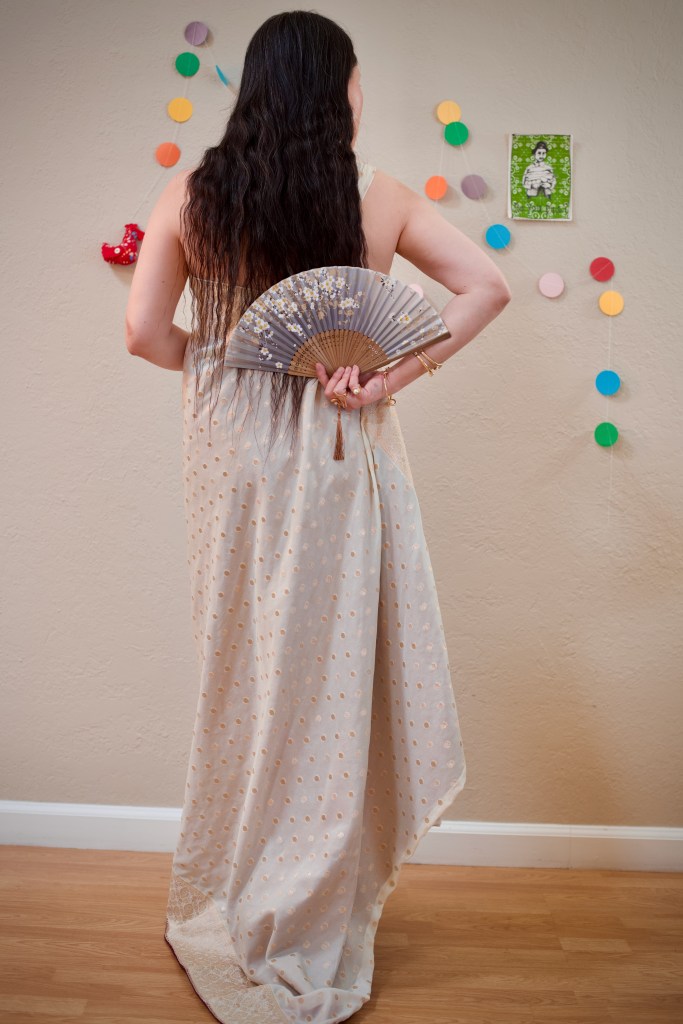
The Hand Fan, by Hồ Xuân Hương
Seventeen, eighteen folds,
For ever these hands to hold.
Thick through thin, pierce through one head,
Three corners spread, I open wide.
Rising heat raises your pride,
Love me in the morning and the night.
Rosy cheeks for the lotus flower,
The Lord’s secret, the King’s passion – is my power.
—————————–
Cái Quạt
Mười bảy hay là mười tám đây,
Cho ta yêu dấu chẳng rời tay.
Mỏng dày chừng ấy, chành ba góc,
Rộng hẹp dường nào, cắm một cay.
Càng nóng bao nhiêu thời càng mát,
Yêu đêm chưa phỉ lại yêu ngày.
Hồng hồng má phấn duyên vì cậy,
Chúa dấu vua yêu một cái này.
 hardlyplaying.blog