
When peace and prosperity returned after the long years of World War II, Paris reigned again as the arbiter of high fashion, and the powers that be were turning their eyes toward a race into space, a young lady would emerge to become the epitome of glamor, who captivated the public eye as an American First Lady, a fashion icon, an extraordinary public figure for decades to come. That young lady was Jacqueline Lee Bouvier.
Grand-daughter to the chairman of the New York Central Savings Bank, Jackie was born into wealth and privilege, passing idyllic summers at her grandparents’ estate on Long Island Sound in East Hampton, composing poetic odes to the sea and honing to become an accomplished equestrian. A witty and intelligent child, Jackie was bored and misbehaved often in school. A school headmistress told the child that she reminded her of a thoroughbred horse. But what good would a great racehorse be, she asked, “if he wasn’t trained to stay on track, to stand still at the starting gate, to obey commands?” The scolding impressed the young equestrian and changed her behaviors accordingly. Though later on as First Lady, she once admitted that she hated the title because it sounded like a thoroughbred horse race.
Jackie adored her father, Black Jack Bouvier, who was handsome and dashing with his inky hair and an imperishable year-round tan. Two centuries earlier, the Bouviers’ forebear had been an ironmonger. But in 1925, Black Jack’s grandfather published a Bouvier genealogy tracing the family ancestry back to the 16th-century French aristocrat François Bouvier of “the ancient house of Fontaine.” It brought them social acceptance as that rarest of breeds, a nobility status she would leverage to boost her image with her in-laws and the public as her husband, John F. Kennedy, campaigned for the presidency.
And charm the public she did. The society columnist Cholly Knickerbocker wrote about her debutante: “Every year a new Queen of Debutante is crowned. Queen Deb of the Year is Jacqueline Bouvier, a regal brunette who has classic features and the daintiness of Dresden porcelain. She has poise, is soft-spoken and intelligent – everything the leading debutante should be.” At her wedding to John Kennedy, three thousand gawkers and journalists mobbed the church to witness the event. In A Guide to Elegance, Genevieve Antoine Dariaux wrote that “The Kennedy family had chic; but the Truman family didn’t,” and it is undoubtedly thanks to Jackie’s exuberant elegance and glamor. At President Kennedy’s inauguration day, her streamlined beige wool coat and pillbox hat over a bouffant hairdo would sweep across the country to become the classic “Jackie look.”
Beauty and charm aside, Jackie’s sharp tongue and quick wits were a political asset to her husband on the global stage. The Soviet Premier Nikita Khruschev said of her, “She was, as our people say, quick with her tongue… Even in small talk she demonstrated her intelligence.” “I am the man,” President Kennedy quipped, “who accompanied Jacqueline Kennedy to Paris.” She had become for the French the beloved American First Lady who conducted a White House tour entirely in French. In Mexico City, she gave her speech in Spanish, praising the Mexican government’s efforts to improve its citizens’ lives. On her solo tour of India, throngs of people cheered along the roadway, “Jackie Ki Jai! Ameriki Rani!” – “Hail Jackie! Queen of America!” A replica of her apricot dress, worn on a boat ride at Lake Pichola, appeared in the catalogue of Sears, Roebuck and Co shortly after. It was later featured on Mattel’s Barbie Doll in the same year.
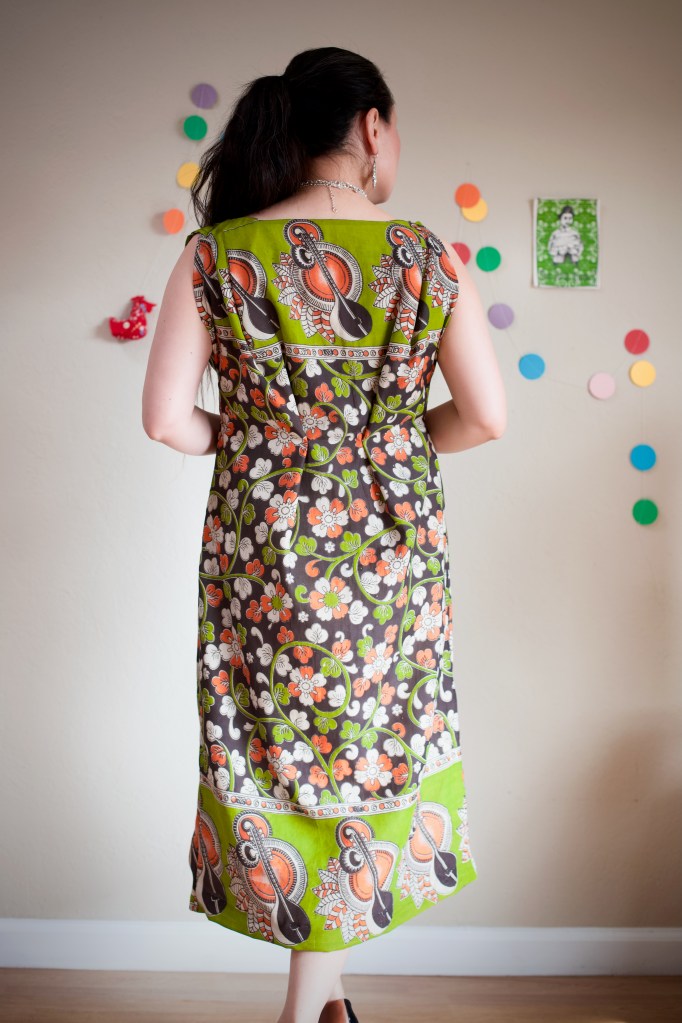
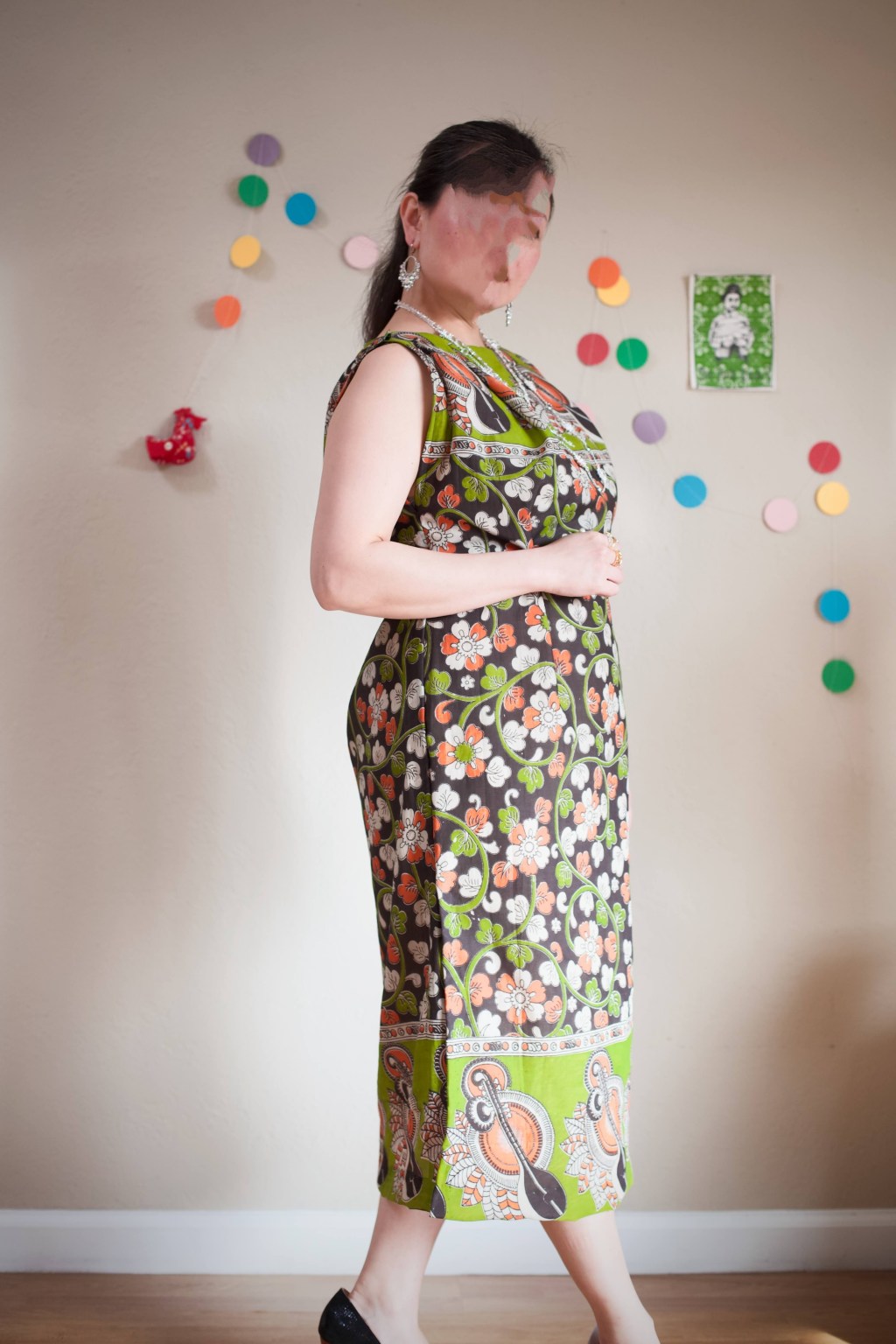
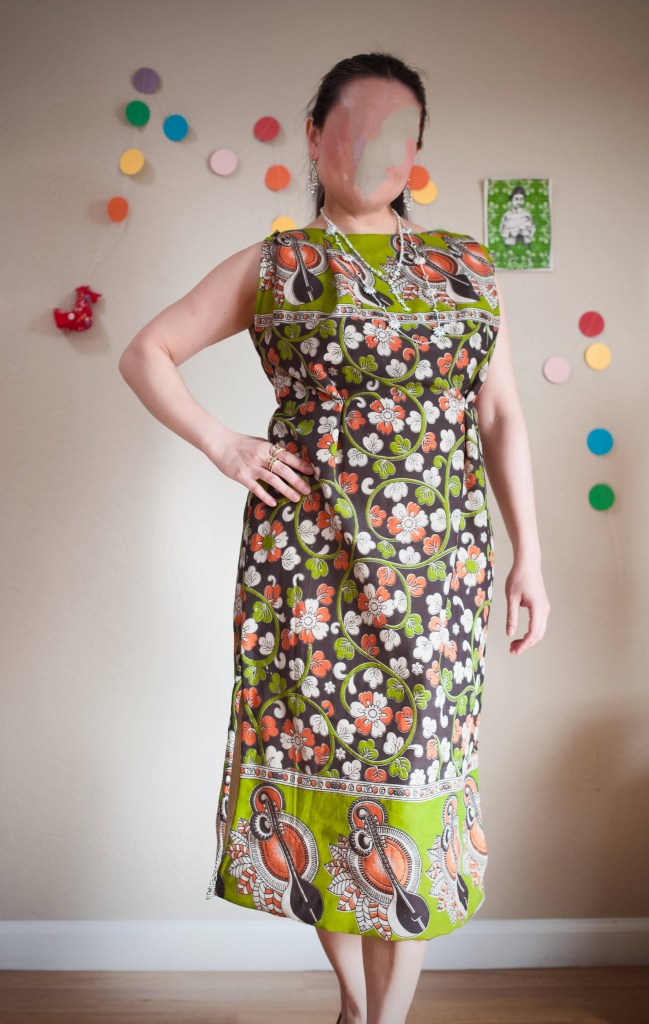
Visiting the Taj Mahal, Jackie wore a green cotton shift dress in floral print. It was a rare departure from her usual solid-color pastels in crisp, shimmering silks. The dress’ designer was Joan “Tiger” Morse, a NYC socialite turned bohemian boutique owner, who traveled the world in search of exotic textiles and accessories for her Upper East Side establishment, A La Carte. Her dresses may have been crafted from flea-market finds, but they were carried by Bloomingdale’s and Bonwit Teller and cost thousands. “I can’t sew, drape, or cut a pattern,” Morse once said, “but I play with a piece of fabric and it comes up wild and it sells.” This dress is not a replica of Jackie’s cotton shift dress, but an inspiration from it. It is molded from two cotton rectangles, which come from a vintage sari.*
*Kimberly Chrisman-Campbell, Worn on This Day: The Clothes That Made History.
 hardlyplaying.blog