“And live! Oh, let him live!
Deck him out in Sheba gold.
Offer prayers unceasing to him,
bless him from morning to night.
Fields of golden grain in the land,
cresting the mountains in wild exuberance,
Cornucopias of praise, praises
springing from the city like grass from the earth.”
– Psalm 72:15-16, translated by Eugene Peterson (d. 1993)
In Disney’s 1995 animation of Pocahontas, when John Smith asked about gold, Pocahontas handed him an ear of corn. It is a scene of word play, as older versions of the Bible indeed referred to grain as corn. Over time, the word “corn” has come to take on different meanings, such as salt, as in corned beef, a staple crop of the New World, and cornrows for a hairstyle originated in Africa. Hence this translated version of the Bible by Eugene Peterson in 1993, which updated the word “corn” to “grain,” referencing “fields of golden grain in the land” in Psalm 72.
Among the grains, the golden grain must be the wheat, for it is the staple crop of Western civilization, beginning in the ancient Near East, then spreading to North Africa and Europe. The 11th-century Moorish writer Ibn Rashiq wrote the poem Debauch, comparing decadent luxury to flowing liquid gold while analogizing wheat to stable, sustaining gold:
All my life I never spent
Such a night of merriment;
Not a sin omitted I
In my after days to try.
Closeted with wine, my love,
Slumber from my eyes I drove,
And my pearl of price untold
Overflowed with liquid gold.
Eagerly I stooped, to kiss
Glowing cheeks in perfect bliss,
As the sparrow stoops, to eat
Hungrily the golden wheat.
Since ancient times, gold had been the most precious among metals, symbolizing superiority and excellence. The Latin word for gold is “aurum”, which shares the same ancestor with “aurora”, or dawn. In Roman mythology, Aurora is the daughter of the Sun God Hyperion. She renews herself every morning and flies across the sky, announcing the arrival of the Sun. As gold was the most desirable metal, the ancient branch of natural philosophy, alchemy, was set out to transmute base metals such as lead into gold. Alchemists sought to create the philosopher’s stone in order to perform such a miracle. The tradition of alchemy continued throughout the ages and went on to play a significant role in the development of early modern science, particularly chemistry and medicine.
Not surprisingly, gold is featured prominently in artworks of every civilization of every age. Of the European modern art era, the Austrian painter Gustav Klimt is best known for his “Golden Period,” when a number of his works feature a bedazzling quantity of gold motifs. Among his most admired works is The Tree of Life frieze in the Palais Stoclet dining room, giving the guest the impression of dining in the middle of a sparkling enchanted garden. The frieze bestows one of the oldest motifs that is the golden Tree of Life, which rises up each of the two long walls, whose volute-shaped boughs scroll outwards above a colorful meadow of flowers to fill the entire mural. Black Horus falcons are perched on some of the branches, and butterflies surround two of the rose bushes and the flower meadow.
At the north end of the dining room, an abstract figure in a portrait-format mosaic of “the Knight” watches over the scene. The Dancing Girl, lavishly adorned with the finest jewelry, stands in the flowering meadow in front of the tree of life on the west wall. Opposite her on the east wall, a Pair of Lovers are wrapped in an embrace, the man’s coat almost entirely enveloped the delicate female figure clasping him in her flowery dress. The frieze was admired as a work without compare by the artist’s contemporaries. In this work paid tribute to Vienna’s historical role as Europe’s portal to the East, showcasing influences from ancient Egypt, Persia, the Far East, and Early Christianity. Abundant quantities of gold and other precious metals, pearls, and semi-precious stones make up the frieze. Hundreds of gold and silver mosaic pieces and colorful enamel blossoms form the flowering meadow. However, the most important element in this interplay of architecture, art, and furnishing is light. Just as it was for light that mosaics were invented and created, so every detail of the dining room of the Palais Stoclet took account of light and its reflection. The tradition of light multiplication via mosaics goes back to the art of ancient Egypt, Byzantium, and Early Christianity. Although mosaics reflect daylight, their most important function is to reflect candlelight.
Far Eastern cultures, too, see gold as the precious metal to illuminate darkness. As Jun’ichirō Tanizaki wrote in In Praise of Shadows, “the darkness of the innermost rooms of these huge buildings, to which sunlight never penetrates, how the gold leaf of a sliding door or screen will pick up a distant glimmer from the garden, then suddenly send forth an ethereal glow, a faint golden light cast into the enveloping darkness, like the glow upon the horizon at sunset. In no other setting is gold quite so exquisitely beautiful. You walk past, turning to look again, and yet again; and as you move away the golden surface of the paper glows ever more deeply, changing not in a flash, but growing slowly, steadily brighter, like color rising in the face of a giant. … Modern man, in his well-lit house, knows nothing of the beauty of gold; but those who lived in the dark houses of the past were not merely captivated by its beauty, they also knew its practical value; for gold, in these dim rooms, must have served the function of a reflector.”
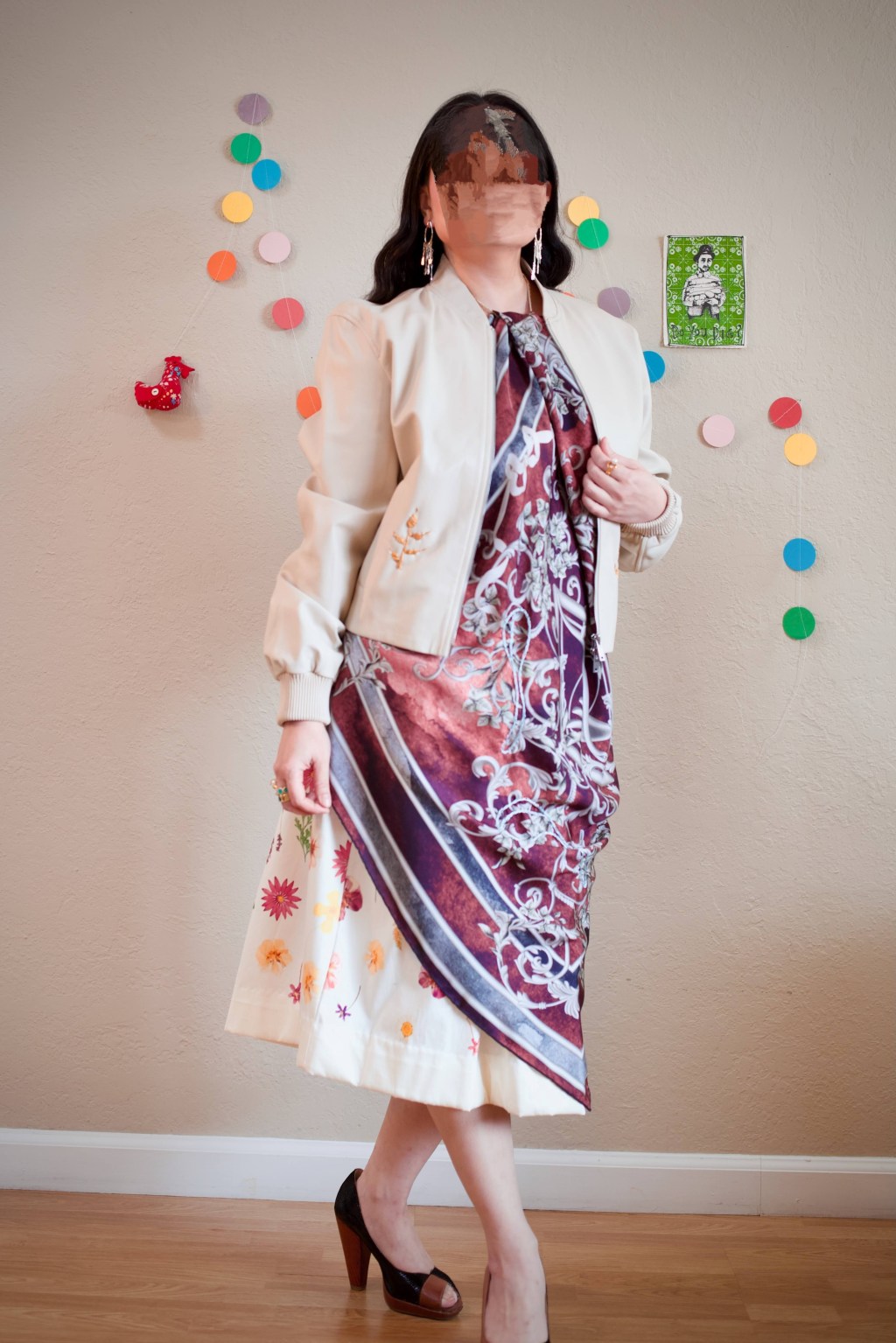
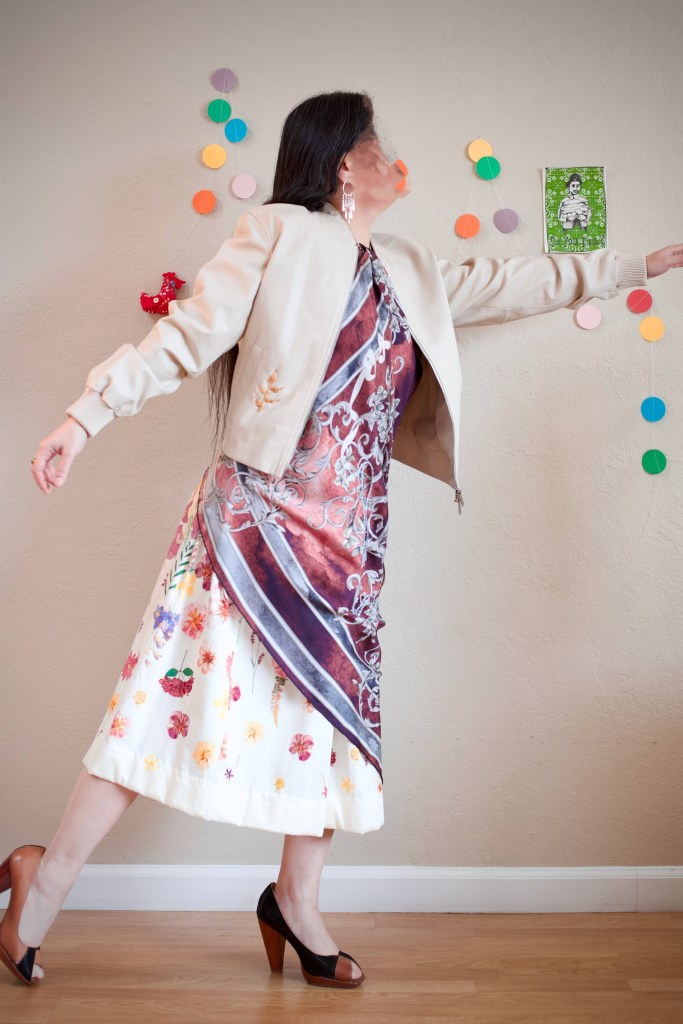
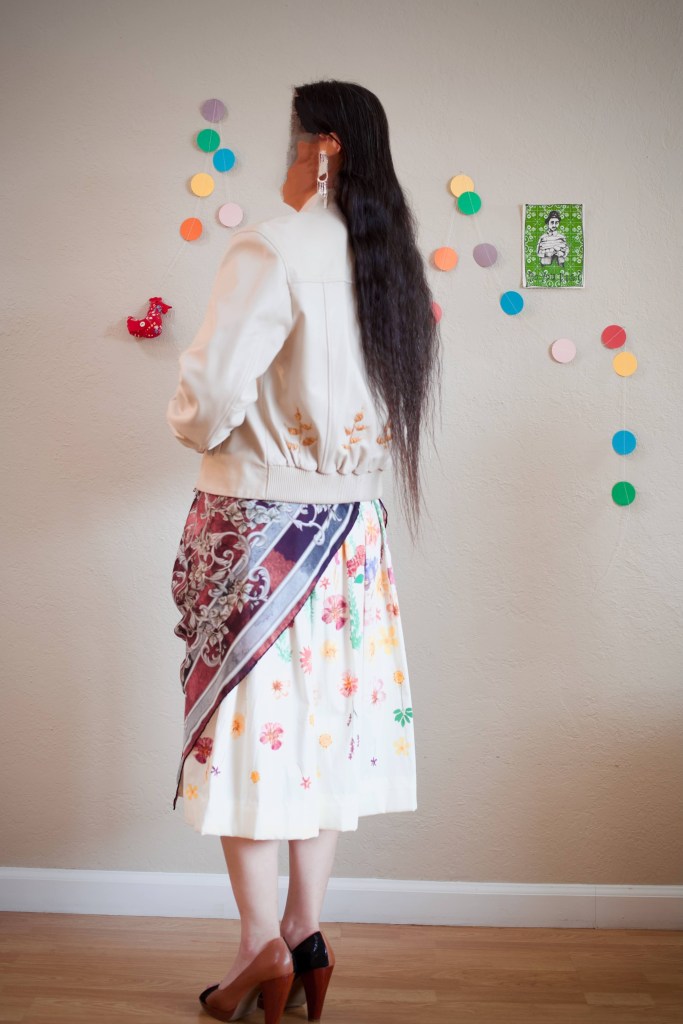
This leather jacket is embroidered with barley motifs to symbolize the Fields of Gold in Sting’s 1993 album Ten Summoner’s Tales. The singer described the view from his 16th-century Wiltshire manor house, which served as the main inspiration behind Fields of Gold: “In England, our house is surrounded by barley fields, and in the summer it’s fascinating to watch the wind moving over the shimmering surface, like waves on an ocean of gold. There’s something inherently sexy about the sight, something primal, as if the wind were making love to the barley. Lovers have made promises here, I’m sure, their bonds strengthened by the comforting cycle of the seasons.”

