While the white color has become mainstream for wedding dresses across the modern world, it was not the only color considered historically. In fact, in numerous cultures, white has been the color reserved for funerals. Yet today, even societies using white traditionally to pay respect to the dead have embraced this color for their wedding attire. Indeed, the white bridal gown has been popularized through the globalization of Western culture.
But even in Western societies, wedding dresses were of all different colors for many centuries. For practicality, brides bought a dress that could be worn again or wore the best that they already owned, and white is not a practical color to keep clean. The white bridal gown trend only started with Queen Victoria’s wedding to Prince Albert in 1840. She wore a cream-colored satin gown made from fabric woven in Spitalfields and decorated with Honiton lace produced by the British lace industry, which was floundering at the time. When her daughter Victoria wedded Prince Frederick of Prussia in 1858, she donned a white gown ornamented with 3 flounces of Honiton lace. The train of her gown was more than 3 yards and trimmed with 2 rows of Honiton lace, surrounded by wreaths of orange and myrtle blossoms, the first symbolizing fertility and the second being the bridal flower of Germany. The white bridal gown was initially embraced by wealthier brides, eventually spreading across the economic strata and cemented as “tradition” in the 20th century.
In America, the former First Lady Jacqueline Bouvier was a fashion icon of her time, and her bridal dress to wed John F. Kennedy in 1953 won worldwide acclaim. She wore a gown of ivory silk taffeta, featuring a portrait neckline and a bouffant skirt. A lace-and-orange-blossom tiara tied the veil to her hair. Her lace veil had belonged to her grandmother, and her pearl necklace was a family heirloom. In her image she aimed to emphasize her noble roots, particularly her French lineage. But in actuality, she was more Irish than French. At the time of her wedding, the gown’s design was attributed to a colored woman. It was not until the mid 1960’s that the gown’s designer was publicly acknowledged to be Ann Lowe.
The grand scale of bridal outfitting reached its height in 15th-to-18th-century Europe, where powerful marriages spared no expense to flaunt their wealth and influence. When Catherine de’ Medici wedded the Duke of Orleans, she brought along enormous diamonds, rubies, emeralds, and pearls. Large quantities of gold, silver, and silk were sent to Florence’s artisans to embroider and make into exquisite dresses, underwear, and bed sheets. Brocade and damask abounded. So richly bejewelled was her wedding gown that it was impossible to tell its color. So extravagant was her bridal outfitting that a tax was levied to pay for the expenses.
Yet the most impressive gown must be Helena Slicher’s for her wedding to Aelbrecht baron van Slingelandt in 1759. Touted as the widest dress in the Netherlands, its hoop was more than 6-ft wide. The gown’s petticoat to support the hoop was made of linen ribbed with whalebone, or baleen, the strong but lightweight and flexible material that takes place of teeth in baleen whales. The plain white silk combined with the enormous hoop, triple sleeve ruffles, and train left ample space for an embroidered garden motif of parrot tulips, auricula, dianthus, and Oriental poppies.
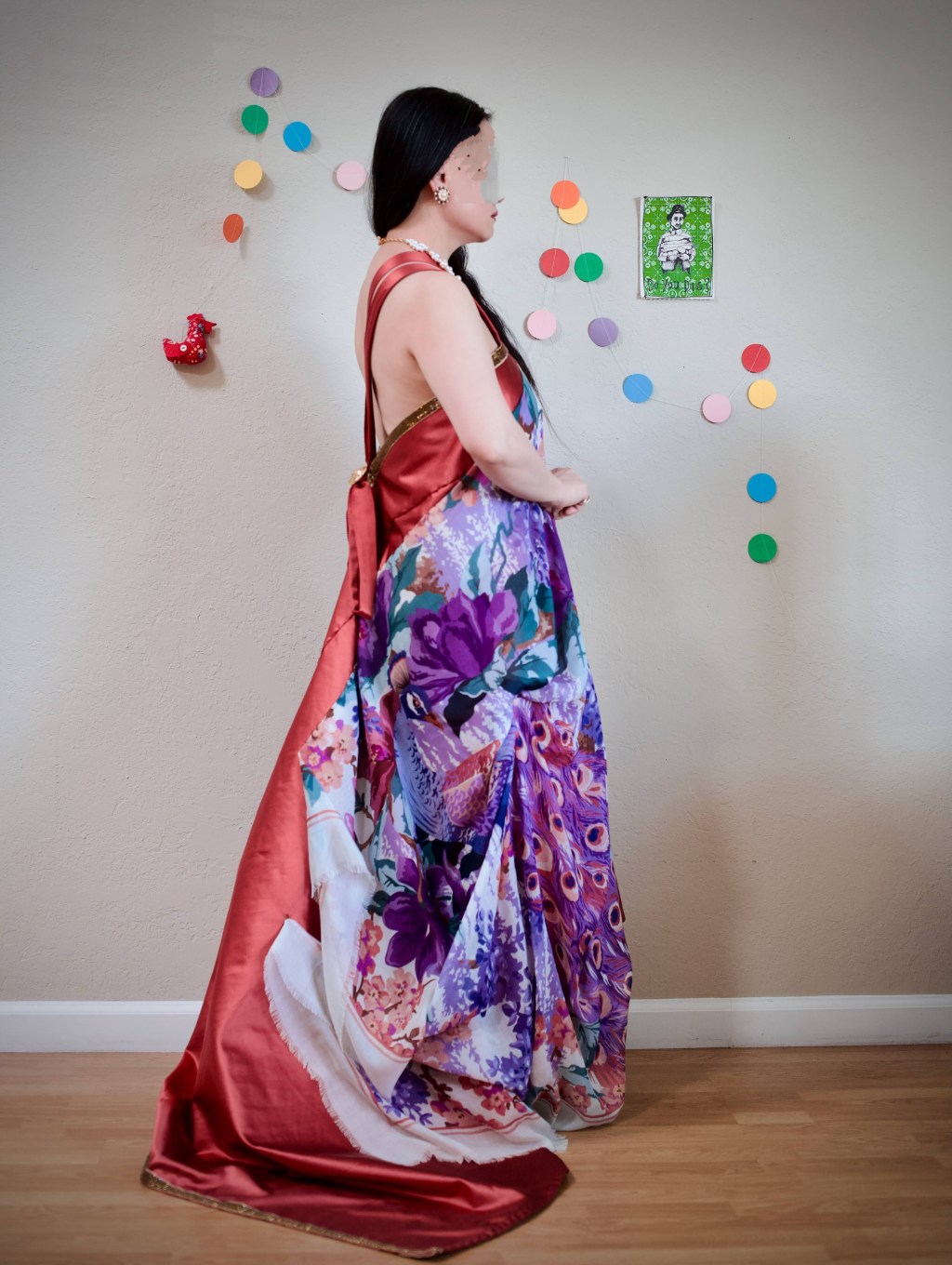
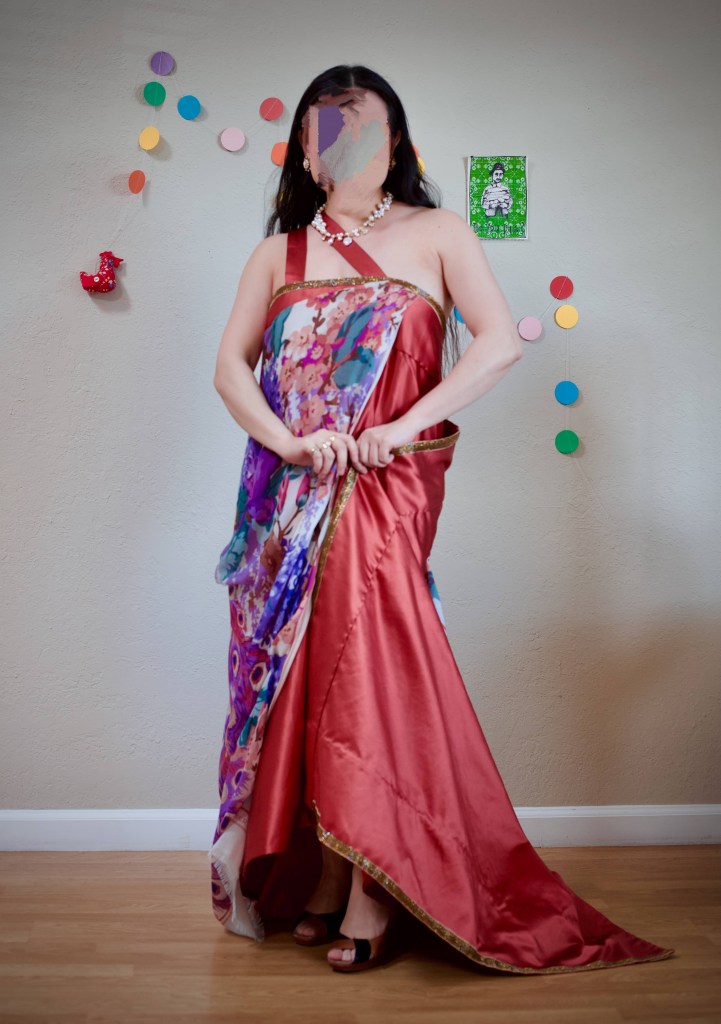
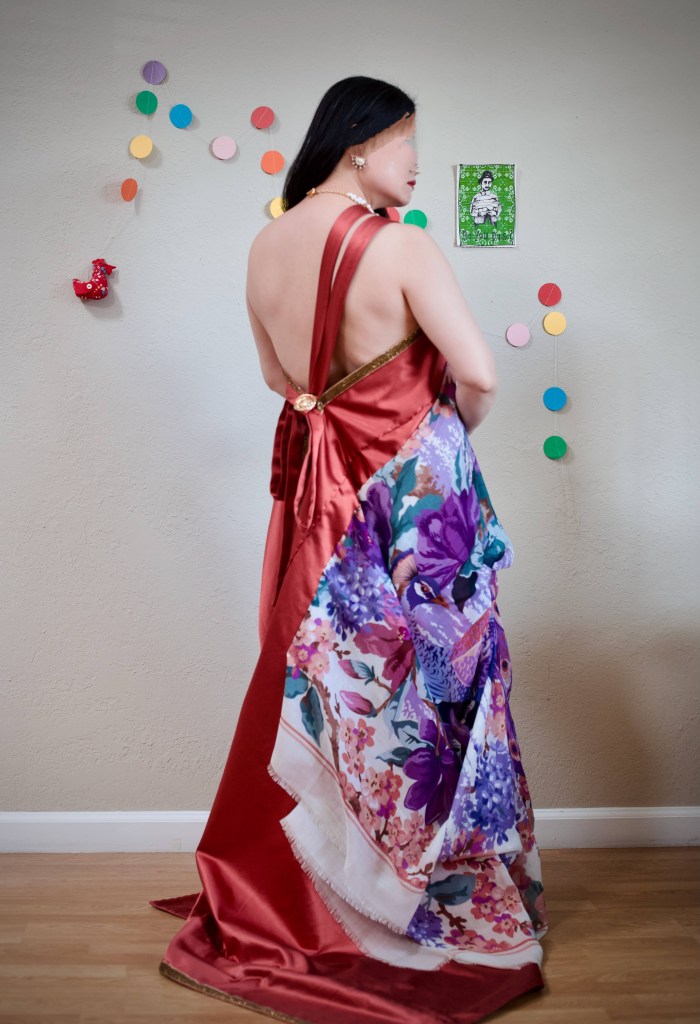
Because why not? For the powerful influencer, no expense is too large, no effort is too grand, for the return on that investment could be setting the trend to become tradition for the incoming centuries. To celebrate the peacock bride, this gown is molded from a silk rectangle, framed with bead trims and bedecked with a silk-cashmere scarf of a most gorgeous peacock motif.
 hardlyplaying.blog