
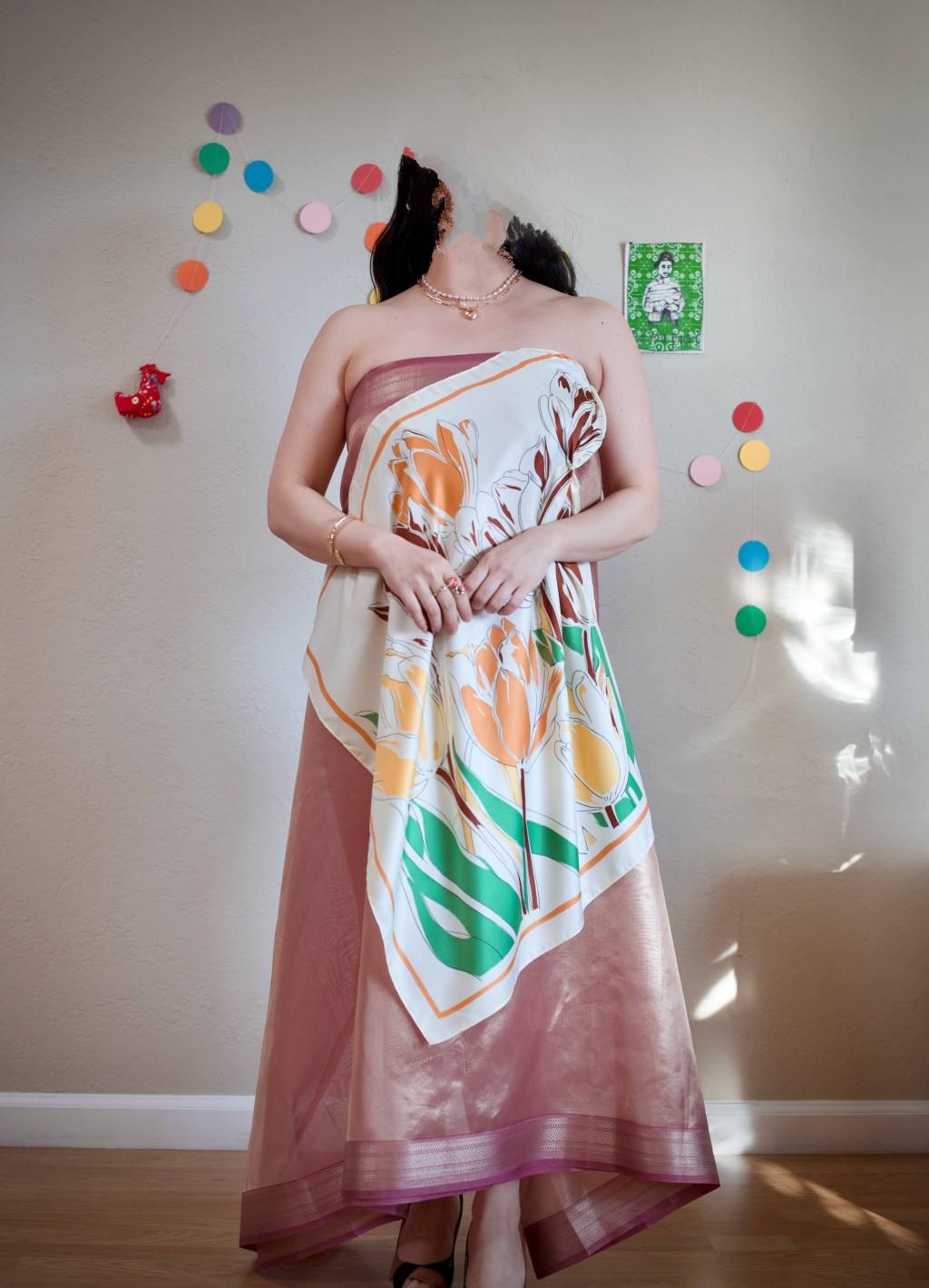
Of the abundance of financial crises around the world, most boil down to mismanaging money, such as debt and currency. More than enough come in bubbles, such as the 2008 U.S. housing bubble that burst into the Great Recession and then spread into a global financial crisis, the 1973 oil embargo during the Yom Kippur War which raised oil prices by 300%, the 1910 Chinese rubber bubble, and the Roaring Twenties’ economic bubble, causing the infamous stock market crash of 1929, which led to the Great Depression during the 1930’s. But most often retold is the Netherland’s tulip bubble of 1637. Gordon Gekko, in Wall Street: Money Never Sleeps, calls it “the greatest bubble story of all time.” On the contrary, modern scholars maintain the tulip mania’s economic impact negligible, only affecting a small number of wealthy merchants and skilled craftsmen. Perhaps the glory in the story is that it was all because of a flower.
Originally found growing wild in the Tien Shan mountain ranges of Central Asia, tulips were cultivated in Istanbul as early as 1055. By the 15th century, tulips were the most prized flowers in the 12 gardens of Sultan Mehmed II of the Ottoman Empire. The flower became a symbol of the Ottomans, whose robes and armor were emblazoned with tulips from Topkapi Palace’s courtyard gardens. By the 16th century, the flower made its way to the Netherlands, who were becoming enormously wealthy and increasingly fascinated with exotic and luxury goods.
The Dutch learned that tulips could be grown from either seeds or buds that grew on the mother bulb. While a bulb grown from seed would take 7 to 12 years to flower, a bulb itself could flower in a year. Of particular interest were the “broken” bulbs – those cultivated after about 9 years whose petals would adorn a striped, multicolor pattern rather than a single solid color. The speckled pattern is actually a disease caused by a mosaic virus, but it was not known at the time. Carolus Clusius of Arras, who first observed the “broken” plant also dying, wrote in A Treatise on Tulips, “any tulip thus changing its original colour is usually ruined afterwards and so wanted only to delight its master’s eyes with this variety of colours before dying, as if to bid him a last farewell.” The flower’s unpredictable patterns and rarity thus made them most desirable.
In 1624, 1200 guilders was offered for one bulb of the extremely rare Semper Augustus, the most coveted tulip variety. Yet it was not enough to secure a deal. By 1634, bulbs were being sold by weight while still in the ground with only a promissory note to indicate details of the bulb, including its weight at planting and when it would be lifted, typically in June, after its flower had bloomed. Because a bulb planted in October would likely weigh substantially more when lifted the following June, speculations ensued in what would today be called a futures market. Buyers speculated upon the bulbs’ future values, then sold them to another in hope of realizing a profit. By 1636, 10,000 guilders was listed for one Semper Augustus bulb, equivalent to the price of a most fashionable canal house in Amsterdam. Used as a form of money, actual properties were sold for a handful of bulbs.
The tulip bubble reached its peak in the winter of 1636, and then as if overnight, burst in early February 1637. Most speculators could no longer afford even the cheapest bulbs. Demand disappeared, and the tulips tumbled to a tenth of their former values. When the market crashed, traders were left with as little as 5% of their original investments. In 1882, Jean-Léon Gérôme painted The Tulip Folly, depicting government soldiers trampling on tulip flower beds. At the forefront, an aristocrat in lace collar and pearl earrings stands on guard to defend his tiny broken tulip flower. The painting’s poignant yet tender expression of frivolity is striking.
In the Topkapi Palace lies another treasure – a dagger inlaid with three emeralds from South America. For its rarity, emerald was historically valued above the flashiest diamonds. A favorite of the Egyptian Queen Cleopatra, she studded her palace with the jewel in her mission to seduce the Roman General Julius Caesar. Then in the 15th century, the Spanish discovered emerald mines in Colombia, whose emeralds were larger, brighter, and clearer than anyone in Europe, Asia, or Africa had seen. Soon, emeralds were coming in by the half-million-carat loads, and the market virtually collapsed. In his English lapidary of 1652, Thomas Nicols told the story of a Spaniard showing an Italian jeweler an emerald of excellent luster and form. He valued it at 100 ducats. Then the Spaniard showed him an even larger, finer one, which he valued at 300 ducats. “The Spaniard drunke with this discourse carried him to his lodging, shewing him a casket full. The Italian seeing so great a number of emeralds, sayde unto him, ‘Sir, these are well worth a crowne [~⅛ of a ducat] a peece.’” Now that the jewel and the flower are not as valuable in the public eyes, are they any less beautiful? Perhaps beauty can only be truly appreciated in the private eyes of its beholder, completely detached from money.
 hardlyplaying.blog