Aquarius means “the water-bearer” in Latin. The constellation Aquarius lies in a region of the sky referred to as the Sea, because it contains other constellations associated with water, such as Pisces the Fish, Eridanus the River, and Cetus the Whale.
The Greek astronomer Ptolemy’s Almagest depicted Aquarius as a young man pouring water from an amphora through a stream of more than 20 stars into the mouth of the Southern Fish, represented by the star Fomalhaut in the constellation Piscis Austrinus. The stream of stars representing the water flowing towards Fomalhaut may be spotted on a clear, dark night.
The constellation Aquarius has been catalogued since ancient times and was often associated with flood and flood myths. The 18th-century-BCE Akkadian epic, Atra-Hasis, told of the great flood sent by the gods to destroy humanity. Atrahasis, his name meaning “exceedingly wise”, was warned of the impending deluge by the god Enki who instructed him to build a ship to save himself. The ship should be cube-shaped and be watertight from above with a roof like the Abzû itself. The Abzû, described in the Sumerian Genesis, is a freshwater primordial ocean below and above the earth. Underneath the Abzû is an air bubble clinging to the earth’s surface. When clouds and winds began to roar from all ends of the world, Atrahasis and at least one fertile woman climbed into the ship and sealed its entrance hatch from inside with bitumen. The ark swirled like a pot on the waves of the mighty flood thundering down from the open floodgates of the cosmic primordial ocean. How furious was the god Enlil at his foiled plan to destroy mankind!
Beyond myths and legends, there is considerable archaeological interest to investigate whether the great flood in fact happened. One method is to analyze sediment deposits composed of materials from the ocean floor, called chevrons. Enormous chevrons found in Madagascar, along with others found across the earth at the same time period, point to evidence of mega-tsunamis carrying these sediment deposits onto land 4800 years ago. It is theorized that there was then a large asteroid impact in the Indian Ocean. Another method is called structural analysis of myth. For example, Dr. Bruce Masse at the Los Alamos National Laboratory in New Mexico studied 175 flood myths from around the world. He cross-analyzed them with natural events such as solar eclipses and volcanic eruptions. A half of the myths describe torrential downpour; a third of them mention a tsunami. They all depict hurricane force winds and darkness during the storm, pointing to evidence of a mega-tsunami. Among other evidence, 14 flood myths mention a full solar eclipse, which could have been the one that occurred in May 2807 BCE.

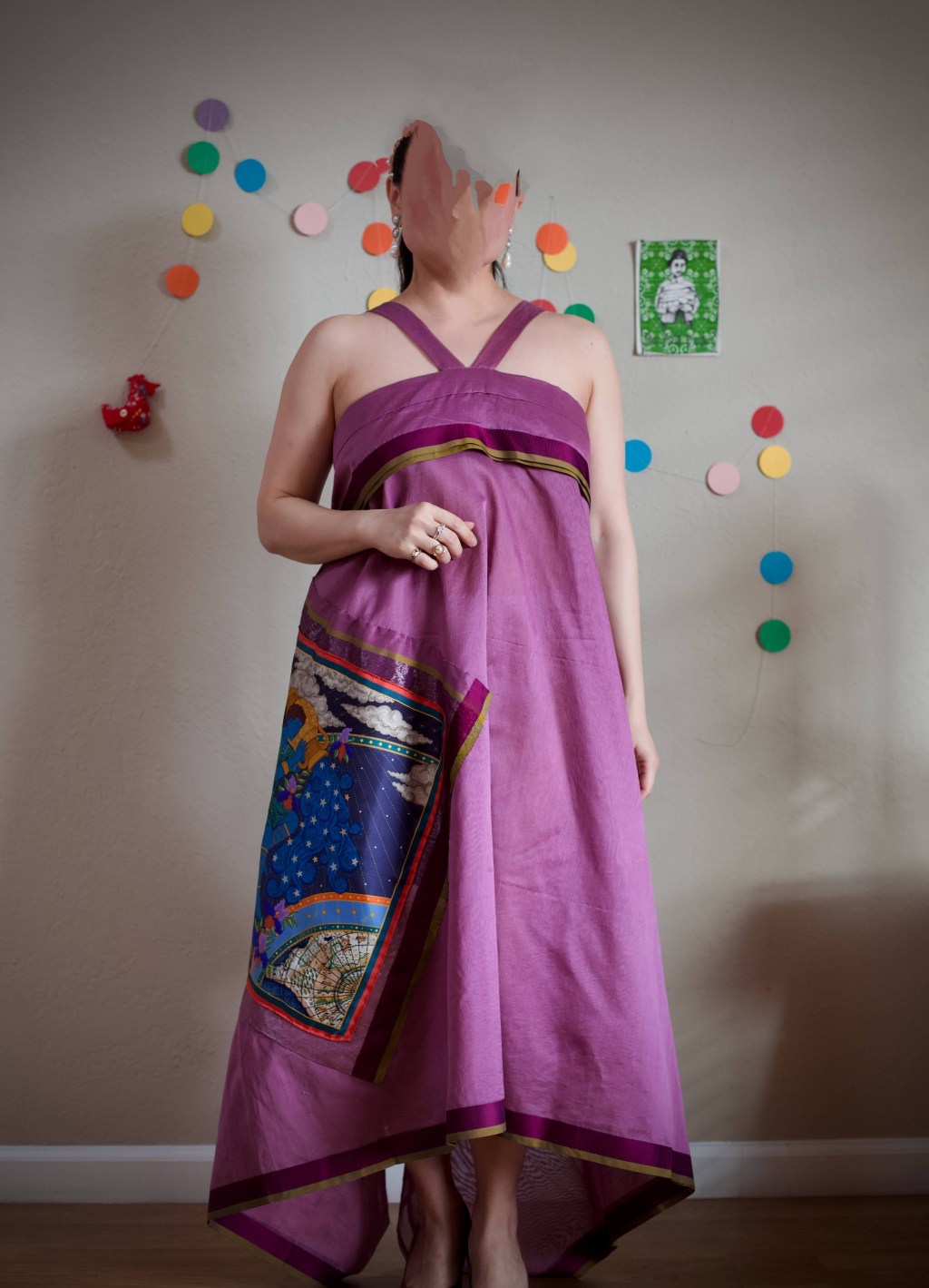
In Jewels, Victoria Finlay wrote, “Archeology is all about guesswork and speculation: a pinch of facts mixed with a trowel of trust.” It reads like witty comedy, but the study of history is of the same manner. Napoleon Bonaparte famously said, “history is but a fable agreed upon.” It is the victor who writes the history and counts the dead. But it is not an implication to distrust all that’s been written. Ultimately, we read to understand where we come from and who we are. And when the evidence points in a different direction, we should be wise to alter our course. To celebrate the month of Aquarius, this gown, molded from a silk-blend rectangle, is bedecked with a silk scarf depicting Ptolemy’s Aquarius constellation. The beautiful Trojan youth pouring water from the amphora, according to Greek mythology, is Ganymede, son of King Tros. Ganymede was carried by Zeus to Olympus to serve as cupbearer to the gods.
 hardlyplaying.blog
