Tourism is big business in Hawai’i. Between the balmy air, gorgeous sunsets, huge surfs, and all things American convenience, the stream of tourists flows non-stop year round. It’s pleasant enough to laze on the shore, admiring the view of pretty boys and girls running at them waves, licking up a cone of shaved ice, while all worries and troubles seem to ease away. At least for a while, all life would seem to revolve around the sun, sand, and salt. Indeed, this tropical paradise could soak up all of one’s attention that another life in the background is often forgotten, that of regular folks who tend the land, who make a living, who breathe the same air but their troubles do not ease away.
I’m driving across the Big Island toward Hilo, passing lava fields, still virgin that it is barren and black. The entire landscape feels eerie and alien-like, save for the sweeping view of the blue water to remind me that I’m still on earth. Further inland, pink knotweeds gradually gain a foothold, dotting atop the lava fields. Where wind has smoothed volcanic rocks to gentle, bucolic grassland covers mountainsides for miles and miles, seemingly endless until suddenly cutting into view is a training base for the US military, the PTA, large enough to have its own airstrip. It’s a reminder that after tourism, the military is the next largest industry here. There are over 300 thousand military personnels and their families residing in the 14 military bases and stations across Hawai’i. Do the service men and women enjoy the beach often, I wonder. I’ve always seen more than a few at the airport, but hardly ever a few mingling with tourists by the shore.
Now the cloud is looming overhead as I descend down from the highland, cueing that Hilo is near. And when it starts to rain, I know that I am in Hilo. Situated on the east end of the Big Island, Hilo is wet and humid, an ideal locale for a botanical tropical garden. 7 miles of scenic coastal driveway from Hilo resides such a garden in Onomea Valley. Built manually over 7 years, trails were hewn from lava rock with picks and shovels to avoid disturbing the natural environment. No tractors were used, excess rock was removed, and gravel brought in by wheelbarrow. From an overgrown jungle, choked with weed and thorn thickets, a few botanical enthusiasts transformed it into a garden filled with gingers and orchids. The orchids came with Chinese immigrants to work on the sugarcane plantations in the early 1900’s. Today, it has bloomed into several hundred orchid farms and nearly 20 orchid societies across Hawai’i, adorning the Big Island its nickname, the Orchid Isle.
Now I’m heading for Waimea, home to some of the largest cattle ranches in the country. Even before the popularization of the myth of the American wild west cowboy, the Hawaiian cowboys were already wrangling longhorn cattles on the Big Island. Known as the paniolo, a Hawaiianized version of the word español, they learned how to rope, slaughter, breed cattle, cure hides, about fences, grass, and paddocks from the vaqueros, the Mexican cowboys. They crafted their own saddles and gear, and tended hundreds of thousands of acres of pastoral grassland with a boundless vista of water to their front and snow-capped mountain peaks to their back.
I’m back on the dry side of the island, strolling by the harbor. The air is hot and arid; the sun bears down upon my head. I pause for a while next to a truck, gazing vacantly at the calm waterfront. It appears the lad in the truck is arguing with his woman, but I act as if I’m not paying attention to them at all. Then the door swings open, he walks out. I glance at him and feel a shiver down my spine – because he looks just like the farm boy I dated in college, but a better looking version. I remember how we used to argue in his truck in the middle of nowhere. It is then that I have an epiphany: if I plant a piece of the heartland in the middle of the ocean, this would be it – isolated, lonely like the end of the earth, and breathtaking.
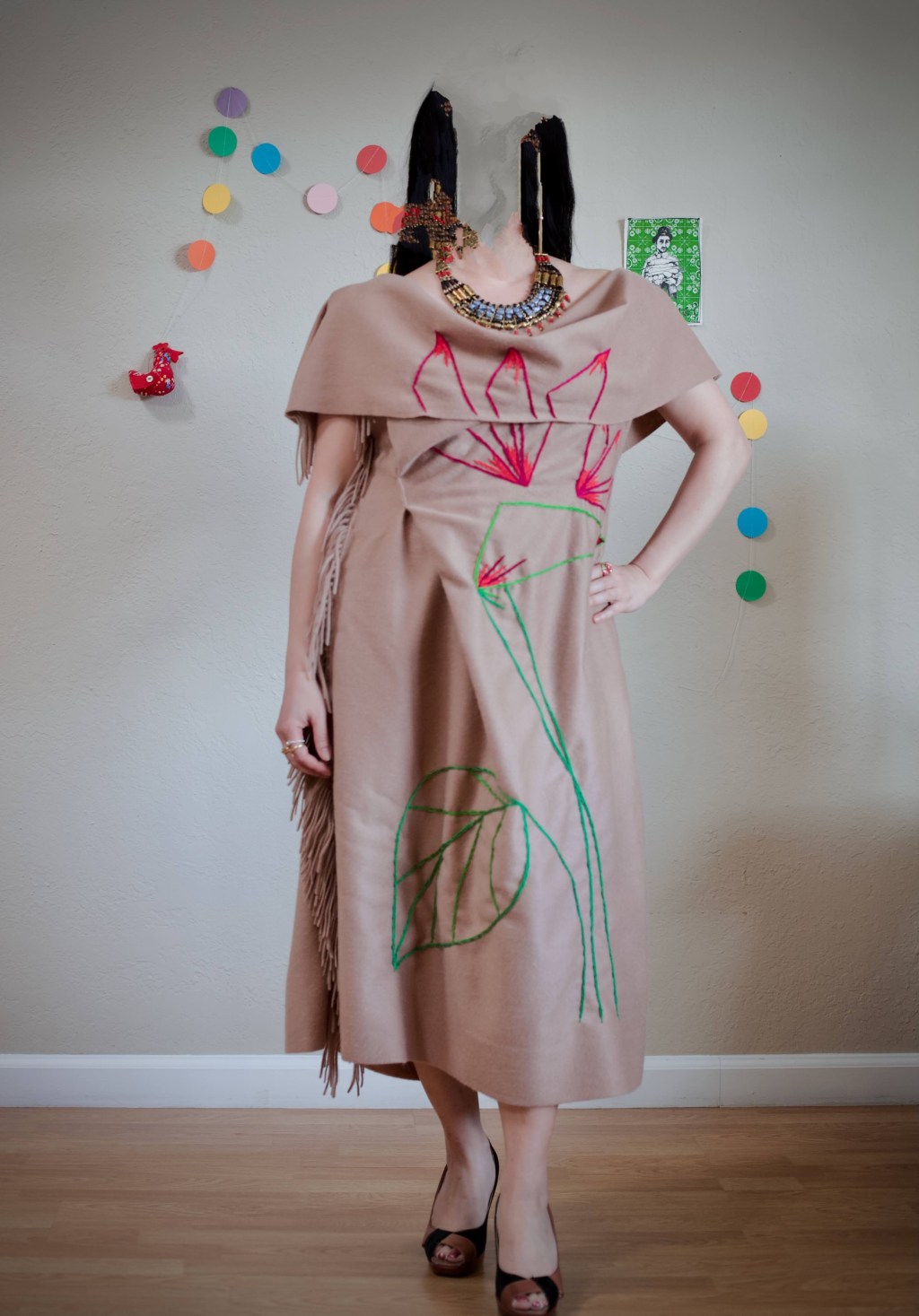
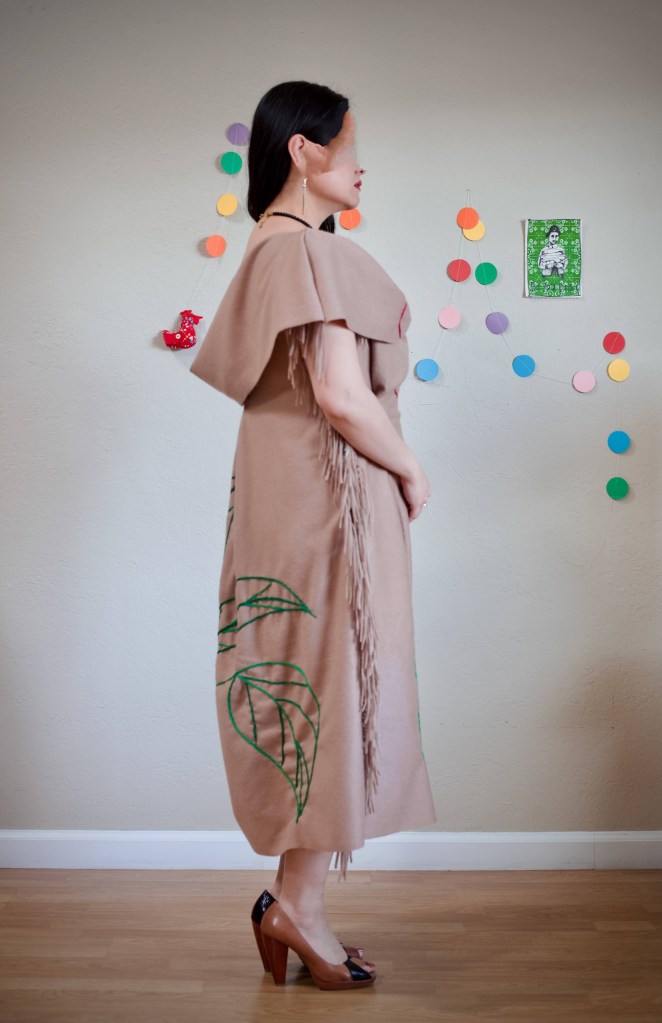
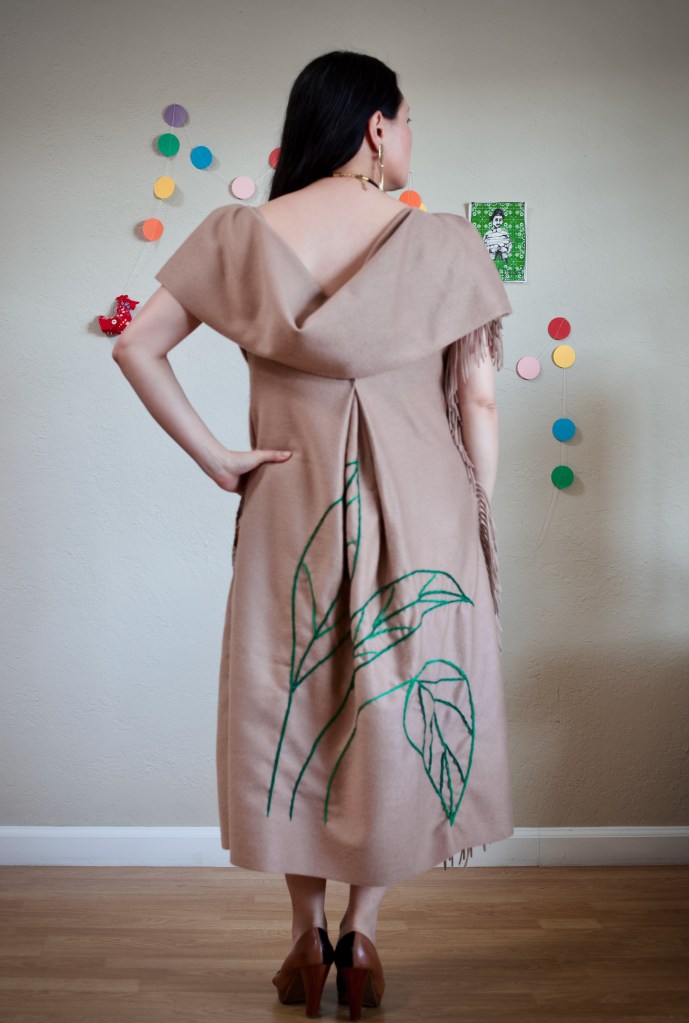
I’m at the beach now. There’s a child of the sea sauntering barefoot in her bird-of-paradise bathing suit. She’s spooning papaya flesh like she’s scooping sunset. This dress, molded from two cashmere rectangles and adorned with embroidery motifs of the bird-of-paradise flower, is for her – she with Aurora’s face in saffron dreads, like a rag doll. My eye candy.
 hardlyplaying.blog