A wreathed garland of deserved praise,
Of praise deserved, unto thee I give,
I give to thee, who knowest all my wayes,
My crooked winding wayes, wherein I live,
Wherein I die, not live: for life is straight,
Straight as a line, and ever tends to thee,
To thee, who art more farre above deceit,
Then deceit seems above simplicitie.
Give me simplicitie, that I may live,
So live and like, that I may know thy wayes,
Know them and practise them: then shall I give
For this poore wreath, give thee a crown of praise.
– George Herbert
Written by George Herbert in 1633, the poem A Wreath contains neat, short verses that link backwards and forwards, emulating the structure of the wreath. The overlap is an essential technique for a firm and durable coronet, as each new sprig must be interwoven and folded back into its predecessor. The poem’s ending links back to the beginning like a closed loop that mimics the circular nature of the wreath. Here Herbert instructed a simple life in order to please God. Deceit seems above simplicity, yet the crooked path is not above the Almighty. It is through practicing simplicity that one may give God a wreathed garland of deserved praise.
Herbert’s wreathed garland of praise must be a laurel wreath, a symbol of victory and triumph tracing back to ancient Greece. It is tied to the myth of Apollo, the patron god of sport, and the nymph Daphne. Laurel wreaths were used to crown victorious athletes at the original Olympic Games. Ancient Rome continued the wreath tradition, with Roman leaders and military personnel wearing crowns made of laurel, oak, or myrtle. “Of all the crowns with which, in the days of its majesty, the all-sovereign people, the ruler of the earth, recompensed the valour of its citizens, there was none attended with higher glory than the crown of grass,” wrote Pliny the Elder. “The crowns bedecked with gems of gold, the vallar, mural, rostrate, civic, and triumphal crowns, were, all of them, inferior to this.” The grass crown, also known as the obsidional crown, from the circumstance of a beleaguered army being delivered, was made of green grass gathered on the spot where the troops were besieged.
Beside military victory and honor, wreaths were also worn during festivities and celebrations, such as the Floralia festival held in honor of Flora, goddess of flowers, vegetation, and spring. The paganistic wreath fell into obscurity during the early years of Christianity until the Renaissance, when artists and scholars looked back to classical art for inspiration. On the backside of Leonardo da Vinci’s painting Ginevra de’ Benci is an image of Lady Ginevra’s emblem: a wreath of laurel, palm, and juniper with a scroll encircling all three elements. The central juniper, “ginepro” in Italian, a cognate of Ginevra’s name and thus her symbol, represents chastity. The palm stands for moral virtue, and the laurel indicates artistic or literary inclinations. The scroll is inscribed in Latin, “Virtutem Forma Decorat”, which means “Beauty Adorns Virtue”.
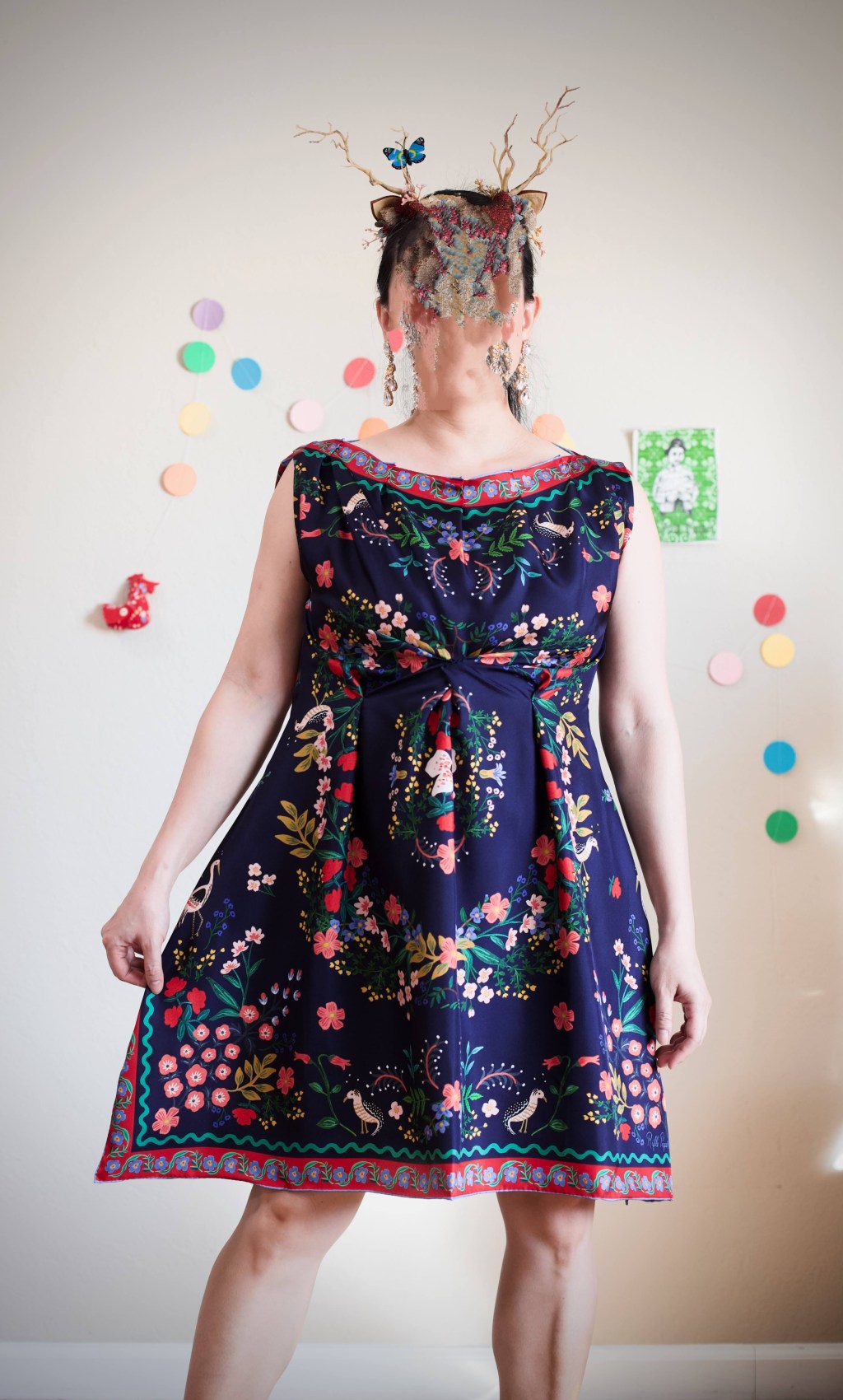
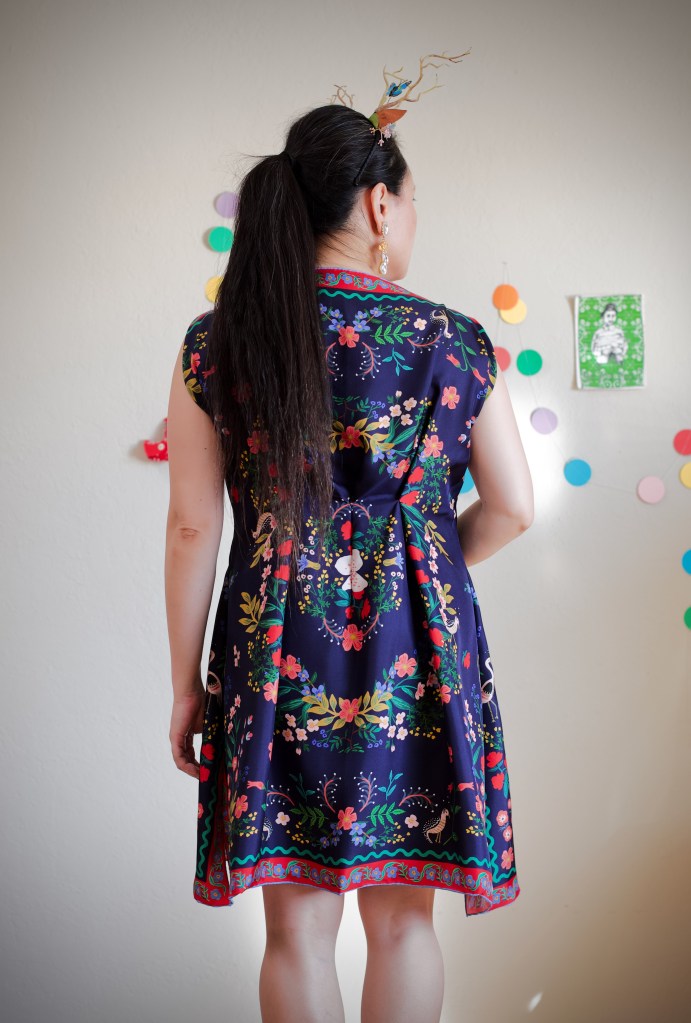
Today, the wreath is still adorned symbolically upon the emblems of prominent organizations such as the United Nations. And it still serves ornamentally as a symbol for victory, celebration, love, romance, and femininity. These silk scarfs feature holiday motifs of animals and floral wreaths. To make the dress requires two identical silk squares without any cutting. The neckline is pleated into a boatneck style, and the waistline is pleated to create a flattering A-line silhouette.
 hardlyplaying.blog