Kantha is more than one thousand years old, dating back to the pre-Vedic era in ancient India. Traditionally a utilitarian, functional craft, kantha has evolved into a unique way of portraying and celebrating life events.
Today, the word kantha has come to describe the stitching style rather than the object itself. Beyond simple running stitches to sew multiple cloths together into a quilt, kantha stitching can range from simple motifs to elaborate scenes. Kantha designs tell of folktales and mythologies, elements of nature, and what the makers saw around them, such as palanquins, chariots, and temples.
Kanthas serve a wide variety of domestic and ritual functions. They may be a woman’s dowry, gifts for customary occasions, shrouding a tomb, wrapping a newborn, or enclosing meaningful personal items. Elaborately embroidered and especially beloved kanthas are passed down through generations. Kantha design is found on many clothing items such as stoles and shawls, saris, and kurtas. New fabrics are often used, and the style is regarded with pride as a symbol of Bangladeshi culture.
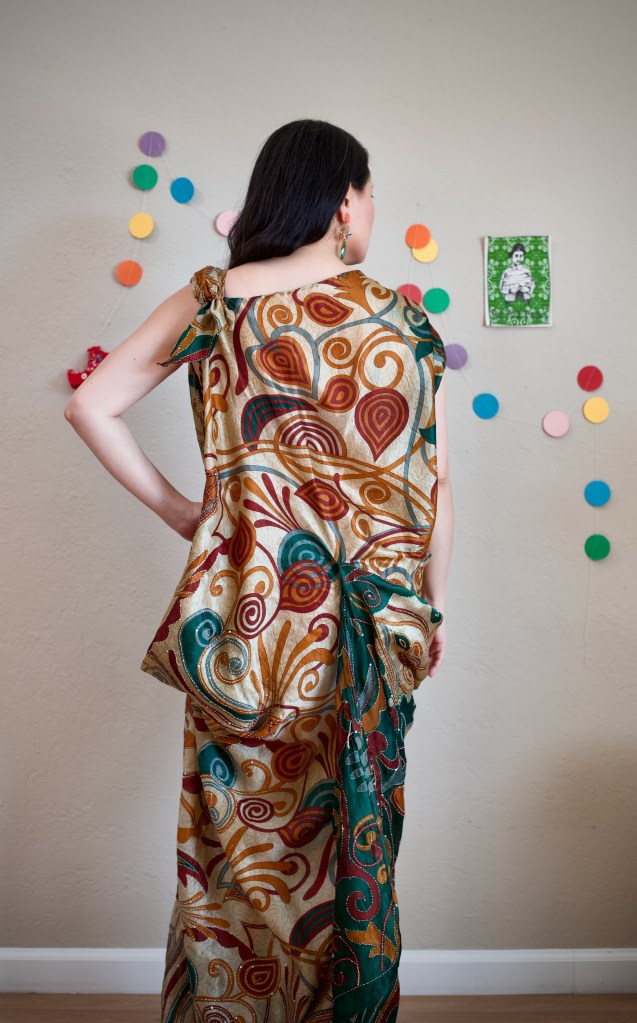
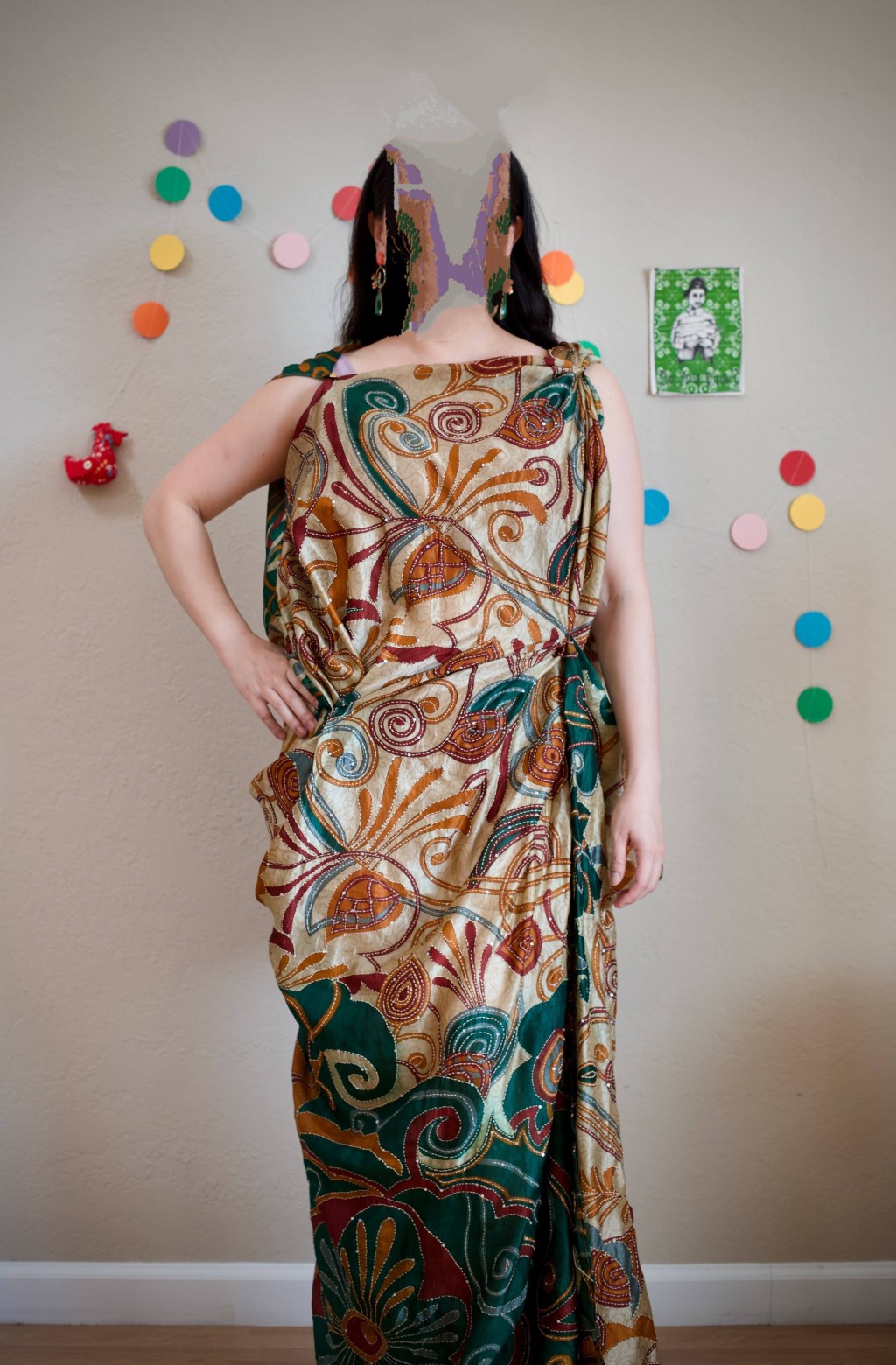
This vintage kantha sari is an example of the echo quilting technique, which is to trace the printed motifs by running stitches. The cloth is made of fine silk, giving it an ethereal feel. The sumptuous design with lavishing colors, echo quilting, and sequins work makes it befitted for a stately gown. I have created from the sari two rectangles of the same dimension. From the two rectangles, the gown is crafted without any cutting. A small button to tie at the shoulder makes putting on this gown a breezy task.
 hardlyplaying.blog