Kantha, meaning “patched cloth”, refers to both the traditional craft of making quilted blankets as well as the stitch itself. The craft is native to rural Eastern South Asia, particularly Bangladesh and the neighboring Indian states of West Bengal and Odisha, along the Bay of Bengal. Originally made from old, recycled saris, the traditional kantha cloth is an example of ‘flat’, or unwadded quilting, worked on multiple layers of fabric. Kantha stitching, at its essence, consists of running stitches. Additionally, the stitching technique that traces the embroidered or printed motifs is known as echo quilting.
To quilt a kantha blanket, layers of cloth are stacked, and bricks are placed on the edges to pull them taut. Basting stitches are first sewn to hold the structure together. Then the remainder of the blanket is stitched in. Finally, the edges are fastened. A kantha blanket can be as thin as 2 layers or thick as 6 layers of cloth.

Kantha may owe its name to “kontha”, the Sanskrit word for rags. It was first mentioned in the 500-year-old book Chaitanya Charitamrita by the Bengali poet Krishnadasa Kaviraja, in which the mother of the 15th-century saint, Chaitanya Mahaprabhu, sent a kantha with traveling pilgrims for her son. Bangladeshi and Bengali women made kantha cloths for use in their own homes as bedspreads, rugs, and wrappers. New-borns were swaddled in kantha made of old cloth to fend off the evil eyes.
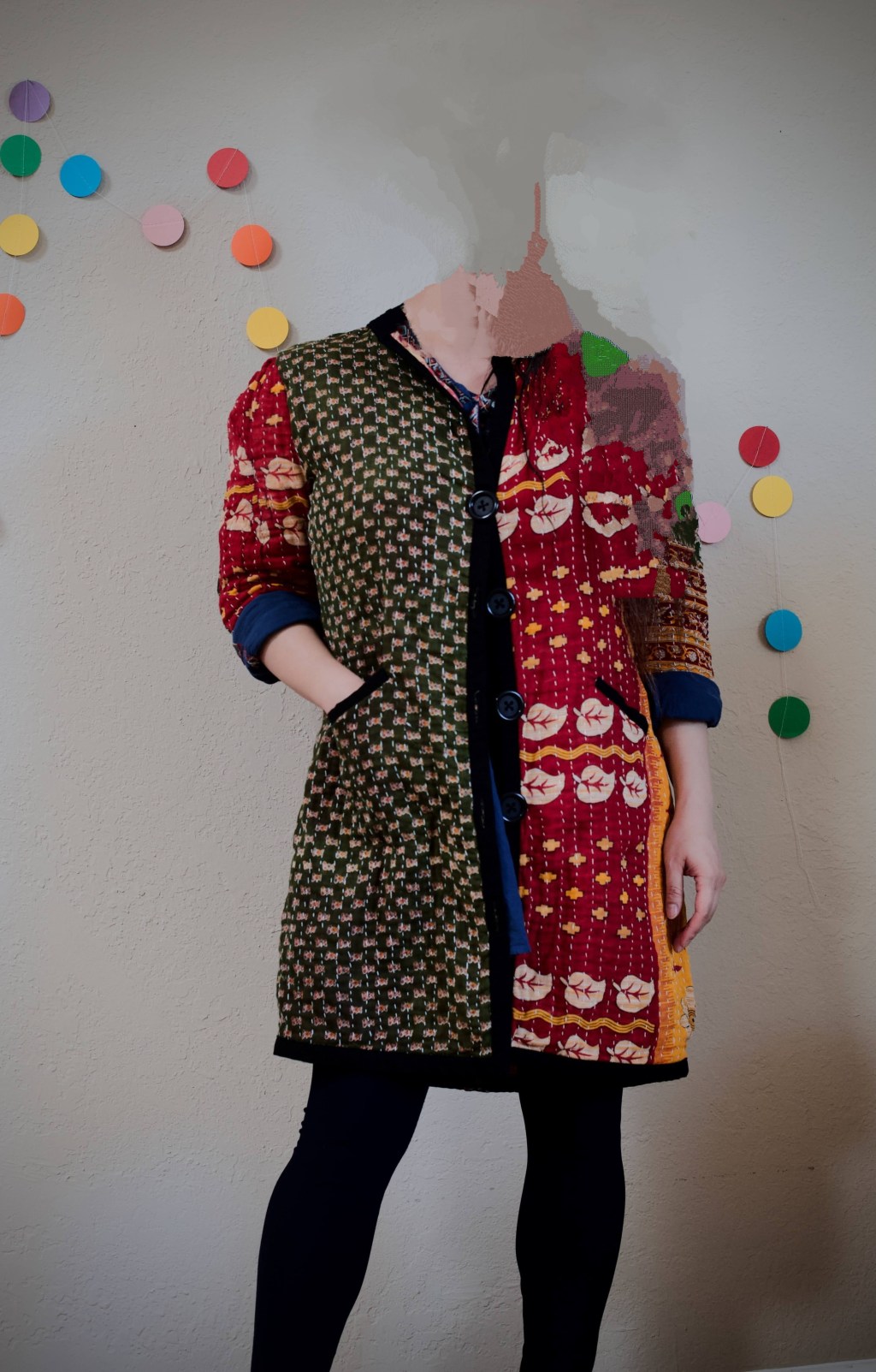
This jacket is made with a kantha quilt sewn from 3 layers of cloth. The black trims and large buttons anchor the jacket, while also giving it a mandarin collar effect. The two front welt pockets are also lined with black trims. Of medium thickness, this jacket offers warmth for a cool summer night.
 hardlyplaying.blog