
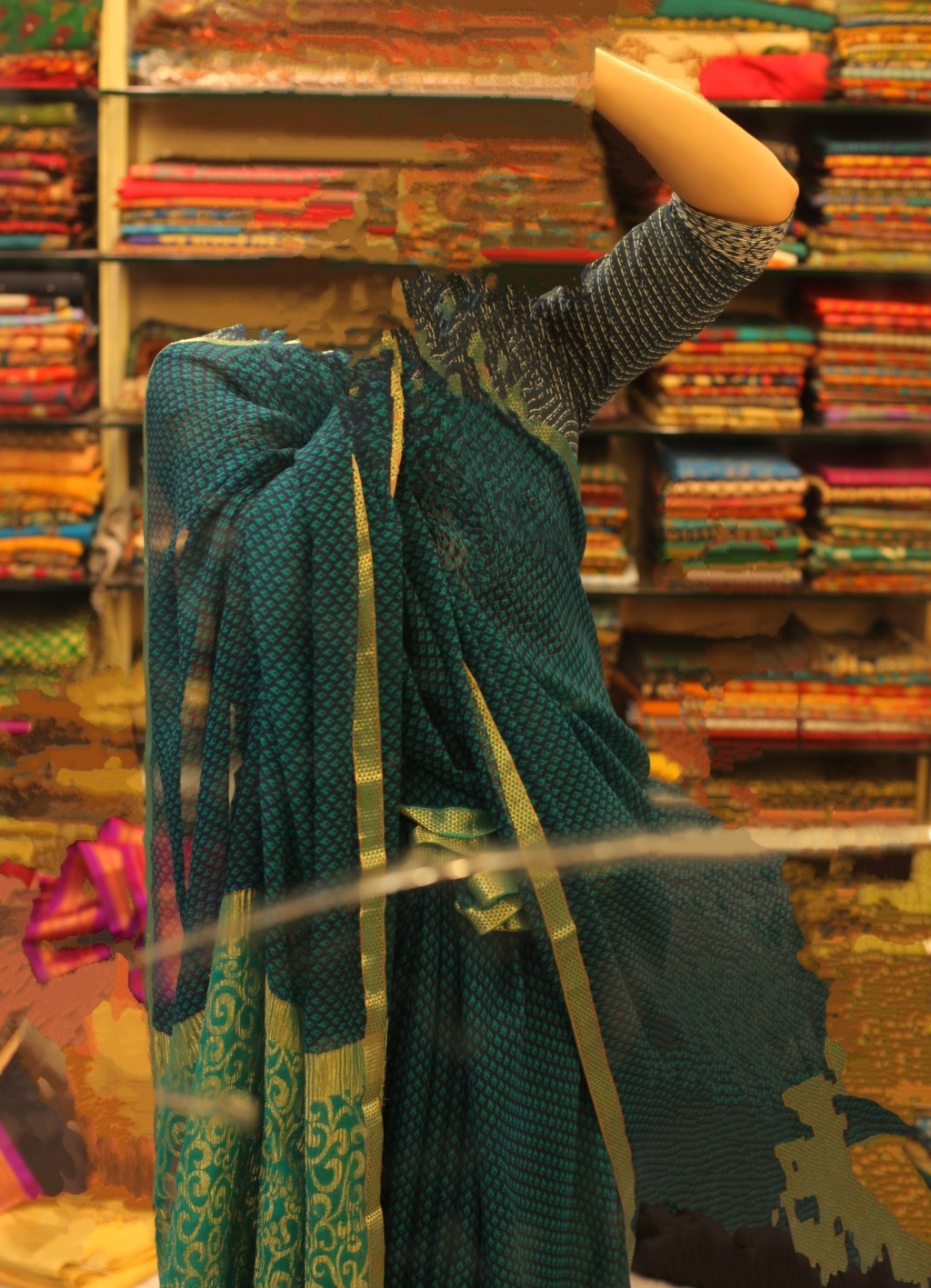
When does a piece of cloth become clothing?
In ancient Rome, the formal dress was the toga, to be worn during civic occasions. Using a large piece of wool cloth, between 12 to 16 meters in length, it was only folded into pleats and tucks to become an outer garment. To wear an ancient Roman toga with dignity and grace, the Roman educator and rhetorician Quintillian wrote, “Its front edge should reach to the middle of the shin, while the back should be higher in proportion as the girdle is higher behind than in front. The fold is most becoming if it falls to a point a little above the lower edge of the tunic, and should certainly never fall below it. The other fold, which passes obliquely like a belt under the right shoulder and over the left, should neither be too tight nor too loose. The portion of the toga which is last to be arranged should fall rather low, since it will sit better thus and be kept in its place. A portion of the tunic also should be drawn back in order that it may not fall over the arm when we are pleading, and the fold should be thrown over the shoulder, while it will not be unbecoming if the edge be turned back. On the other hand, we should not cover the shoulder and the whole of the throat, otherwise our dress will be unduly narrowed and will lose the impressive effect produced by breadth at the chest. The left arm should only be raised so far as to form a right angle at the elbow, while the edge of the toga should fall in equal lengths on either side.”
So it was the act of folding and draping the cloth in a specific manner that determined the wearer’s position in society. By creating hidden spaces within the cloth itself, the spaces of the body are skillfully exposed, suggesting one’s status of wealth and class. 5000 miles to the east of Rome, the women of the Indus Valley Civilization have been draping themselves in saris since the 3rd millennium BC. How one wears her sari depends upon her locale, her caste and profession, and the occasion. Using a 9-yard piece of cotton cloth, there are more than 80 recorded ways to wear a sari. It can be worn fishtail-like, by covering the legs loosely, then passed in between, and flowed into long, decorative pleats at the front of legs. It can be wrapped as a shawl-like veil over the shoulder and head. While covering the lower and upper body, the midriff is always left bare, but the navel never exposed. Traditionally a mark of modesty, the modern sari has come to symbolize seduction, beauty, grace, and style.
Yet perhaps no other culture reveres the aesthetic of hidden spaces like that of East Asia. It is inherent from the jewels we cherish to how we live our daily lives. In jade, we admire “its faintly muddy light, like the crystallized air of the centuries, melting dimly, dully back, deeper and deeper…We seem to find in its cloudiness the accumulation of the long Chinese past,” wrote Jun’ichirō Tanizaki in In Praise of Shadows. In cooking, we revere each grain of rice, gleaming like pearl, against the glistening black lacquer cask in a dark corner. “In making for ourselves a place to live, we first spread a parasol to throw a shadow on the earth, and in the pale light of the shadow we put together a house…And so it has come to be that the beauty of a Japanese room depends on a variation of shadows, heavy shadows against light shadows – it has nothing else.” We find beauty not in the thing itself but in the patterns of shadows, the light and the darkness, that one thing against another creates. A phosphorescent jewel gives off its glow and color in the dark and loses its beauty in the light of day. Were it not for shadows and hidden spaces, there would be no beauty.
Like the silence in between the notes that makes the music, the shadows that make the room, it is the folds that make the clothes. The hidden spaces they create, the shadows they enable allow the light to reflect upon that which captivates attention, piquing curiosity and imagination, and empowering creativity.
 hardlyplaying.blog