
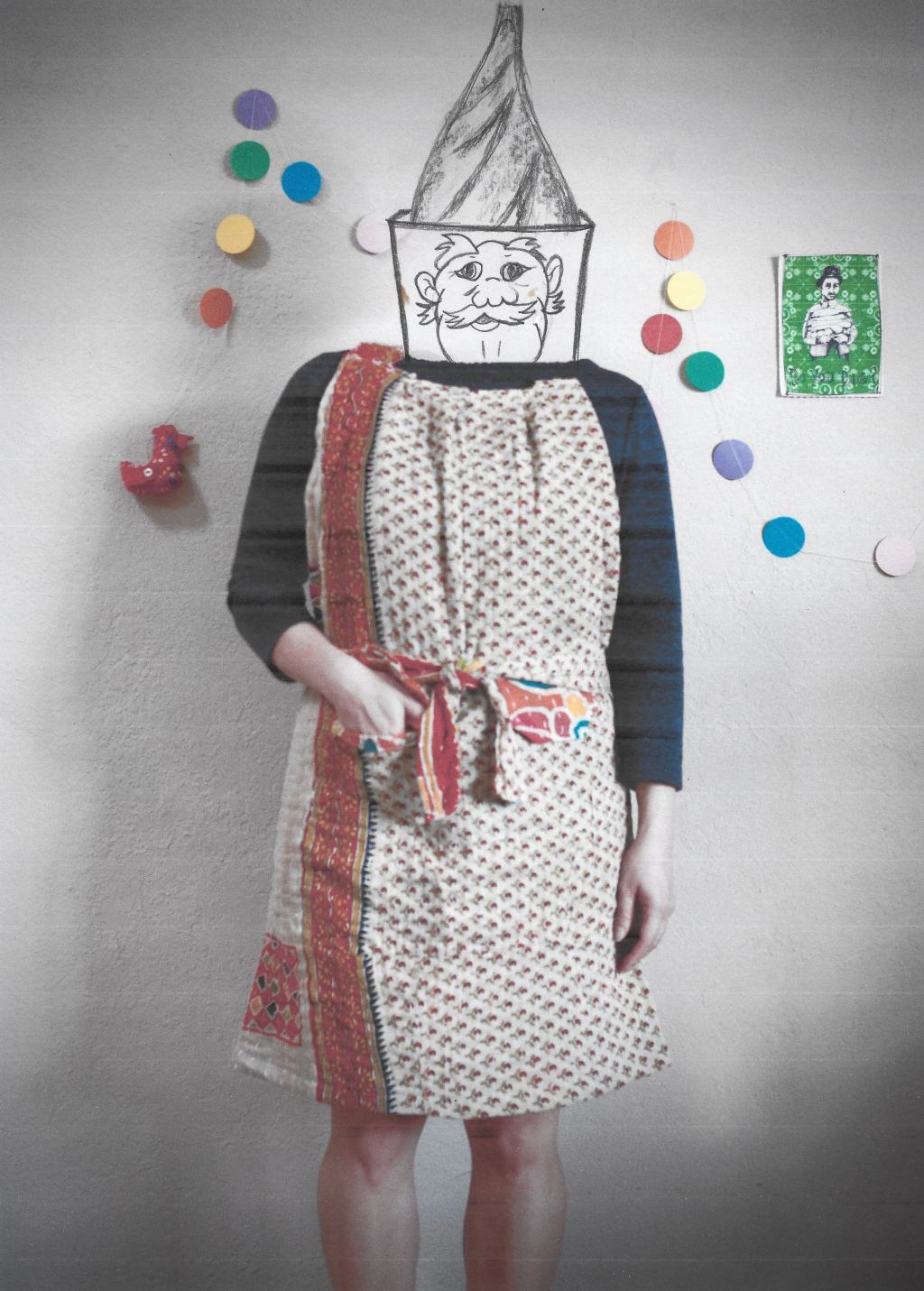
I wanted to design an apron for home cooks like me, those with penchants for random experiments in the kitchen. Which is to say that though I do not work in a restaurant, I spend lots of time cooking, from baking croissants, coagulating tofu out of soybeans, to fermenting ciders. Consequently, spending lots of time in my apron revealed to me the missing details that I would like to have on it. If I would spend tons of time in it, I would like to have it be as comfortable and pleasing as any other clothing item in my closet.
The straps – The apron commonly comes with neck-tie straps, which causes neck strain over time. The better design for long wear is cross-back straps, which distributes pressure evenly on the shoulder. However, a challenge with the cross-back straps is that they tend to fall over the shoulder if not securely fitted. When I’m busy cooking and my hands are tied, the last thing I want is for these straps to fall over my shoulder. To solve this problem, the straps need to cross at the back before they turn to tie across the waist. Thus I created 4 belt loops, 2 on each side in order to get them to cross at my back.
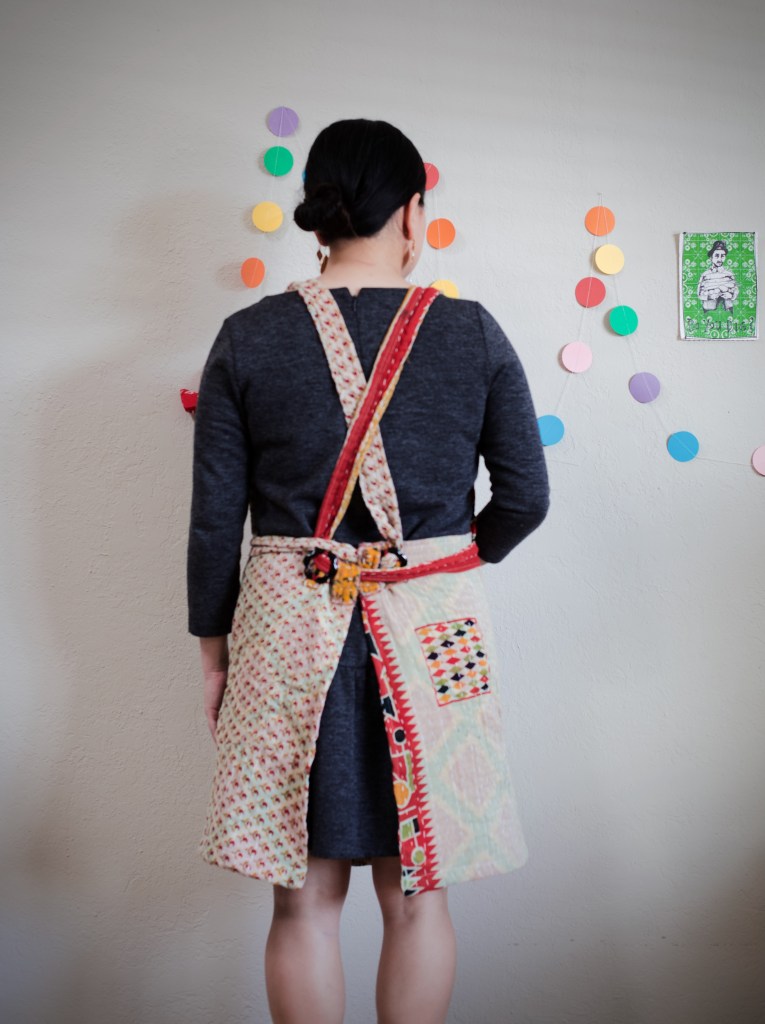
The pockets – Aprons like to come with many pockets, advertised as being useful for holding utensils, towels, etcetera. Personally, I find that attempting to wear these items on myself while moving about in the kitchen can become hazardous. The only use I have for these pockets is to rest my hands and to hold my phone. Yet, when pockets are made big and exposed in front of the apron, they tend to catch onto the cabinet knobs. This problem is amplified when the apron fits loose. It’s evidently annoying when your apron’s pocket pulls out the drawer as you walk away from it. The solution is hidden pockets – pockets made on the wrong side of the apron instead of its front.
Coverage – Ideally, the apron should provide full frontal coverage. It should be knee-length. Its straps should be comfortably wide and long enough to wrap around the waist to be tied at the front.
Flairs – Instead of punching a couple of holes for grommets, I opted for something like belt buckles so the straps can sieve through smoothly. Pocket flaps add charm. This apron is made with vintage kantha quilts, which are stitched together from recycled cotton saris.
 hardlyplaying.blog