
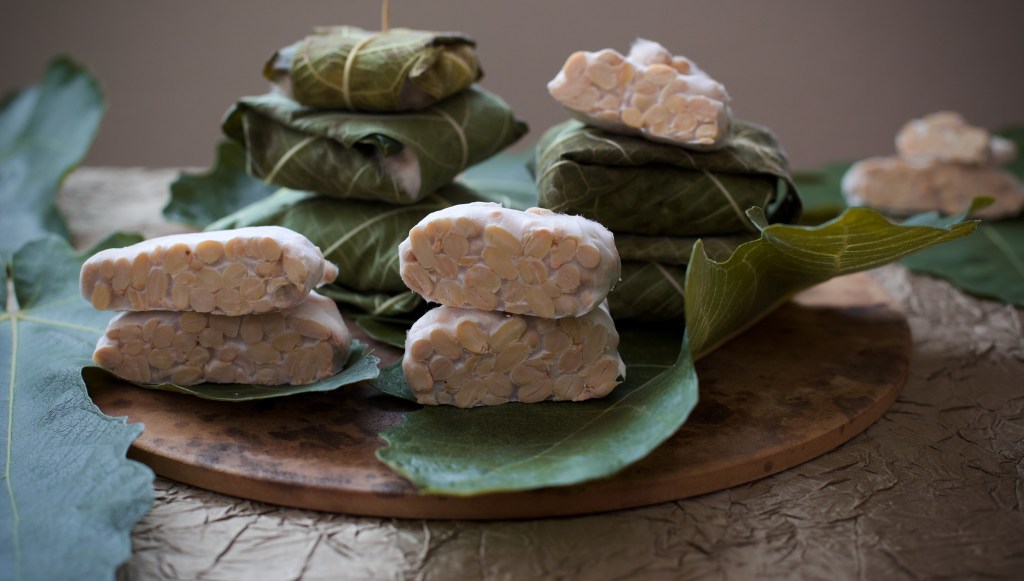
I wanted to learn about growing molds so that I could ferment soybean. A basic white rice mold, called Kōji Rice, can be purchased online to make Miso. But in order to make other types of fermented soybean, I needed to delve deeper. For example, sweet rice molds are used to make Vietnamese fermented soybean, called Tương.
It can be intimidating to peep into the world of mold growing. Instructions are lengthy and tedious; and the wrong molds can be harmful. Perhaps it’s comforting to keep in mind that the tastiest food is made with molds, such as cheese, cured meat and fish, and of course, fermented soybean. People have been playing with molds since eons without the aid of modern technologies to control temperature and humidity.
Using mold spores as the seed takes away most of the guess work, as they get a head start to dominate the incubating environment. 400gr of steamed sweet rice uses ½ tsp of mold spores. I spread the cooked rice on a tray lined with a linen towel and waited for it to cool down, then sprinkled on the mold spores with my fingers and covered the entire tray with cling film, poking a few holes atop for air ventilation. No gadget to control humidity or temperature was necessary. I left the tray in the oven, turning the oven light on for a few hours every morning to keep it warm.
Within 3 days, mold grew across the bed of rice, smelling warm, floral, and mushroom-like. I imagine growing mushrooms would be just as exciting and intimidating. I crumpled the moldy rice to mix and let the mold grow fully for 4 more days. To harvest my own mold spores, I let it mature for another 3 days before collecting.
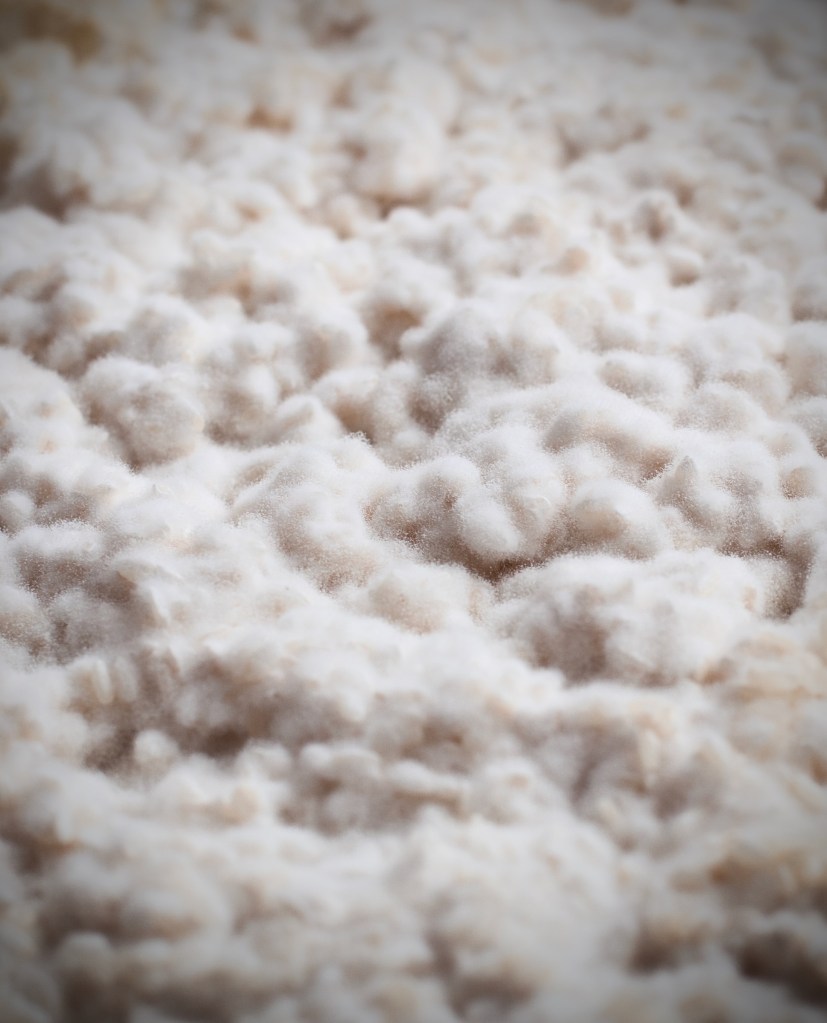
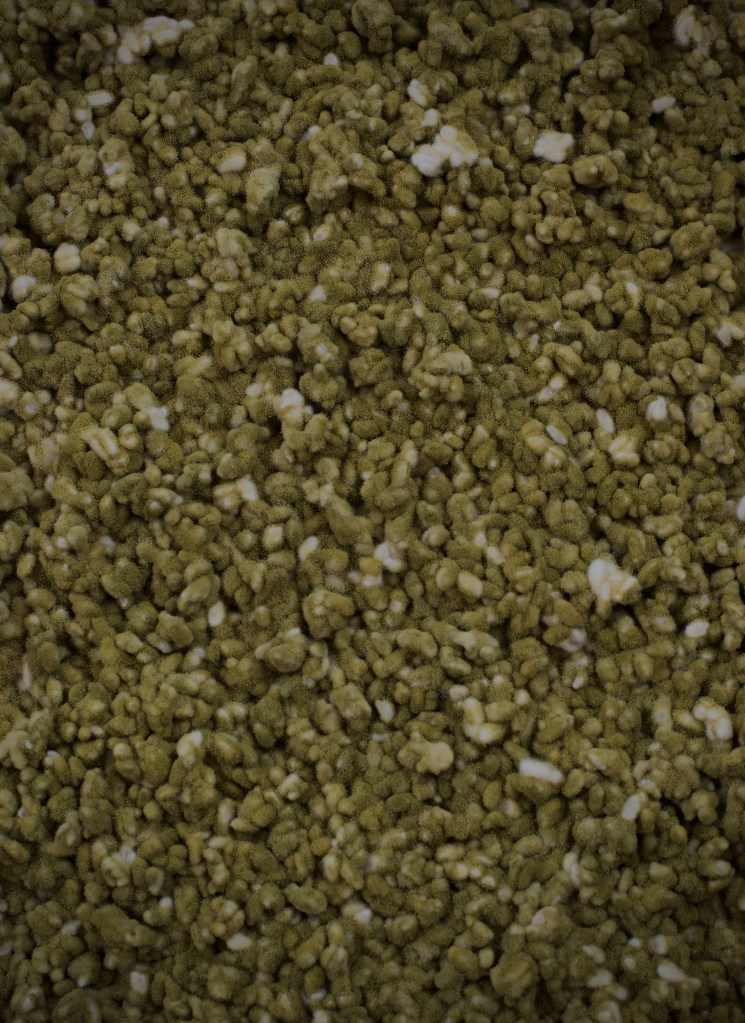
In Indonesia, rhizopus oligosporus is grown on cooked soybeans. The mold binds the soybeans into a cake, called Tempeh. Another variety, rhizopus oryzae, is popular over here in the United States. Perhaps rhizopus oligosporus is more suitable to Indonesia’s hot and humid climate, but I was able to grow rhizopus oryzae with the same incubation environment to grow aspergillus oryzae – an oven with a working light. It took less than 48 hours from soybeans to Tempeh.
The most laborious part of the process is hulling the soybeans. I tried to hull them after soaking, after cooking, and while drying. It doesn’t affect fermentation development, but only the texture of the final product. For 400gr or 2⅓ cup of dried soybeans, use 2 tbsp of rice vinegar and ¾ tsp of rhizopus oryzae culture. Once the soybeans are cooked to tender and dried to the touch, add the starter, then the vinegar, stirring well to mix with each addition. Traditional Tempeh is wrapped in banana leaves. I used fig leaves to wrap these Tempeh. They were heated in the oven at 120F for 10 minutes to soften. I feel their earthy flavor complimented the Tempeh well. I would try grape leaves next time. Otherwise, perforated plastic sandwich bags will do. Similarly, parcels of soybeans were placed on a tray lined with a linen towel. The entire tray was covered with cling film, poked with holes atop for air ventilation
These Tempeh were pan-fried and they were delicious – tender, nutty, rich, and filling. They are not salty at all, so a condiment is required. A simple blend of soy sauce, sugar, and balsamic vinegar was all that’s needed.

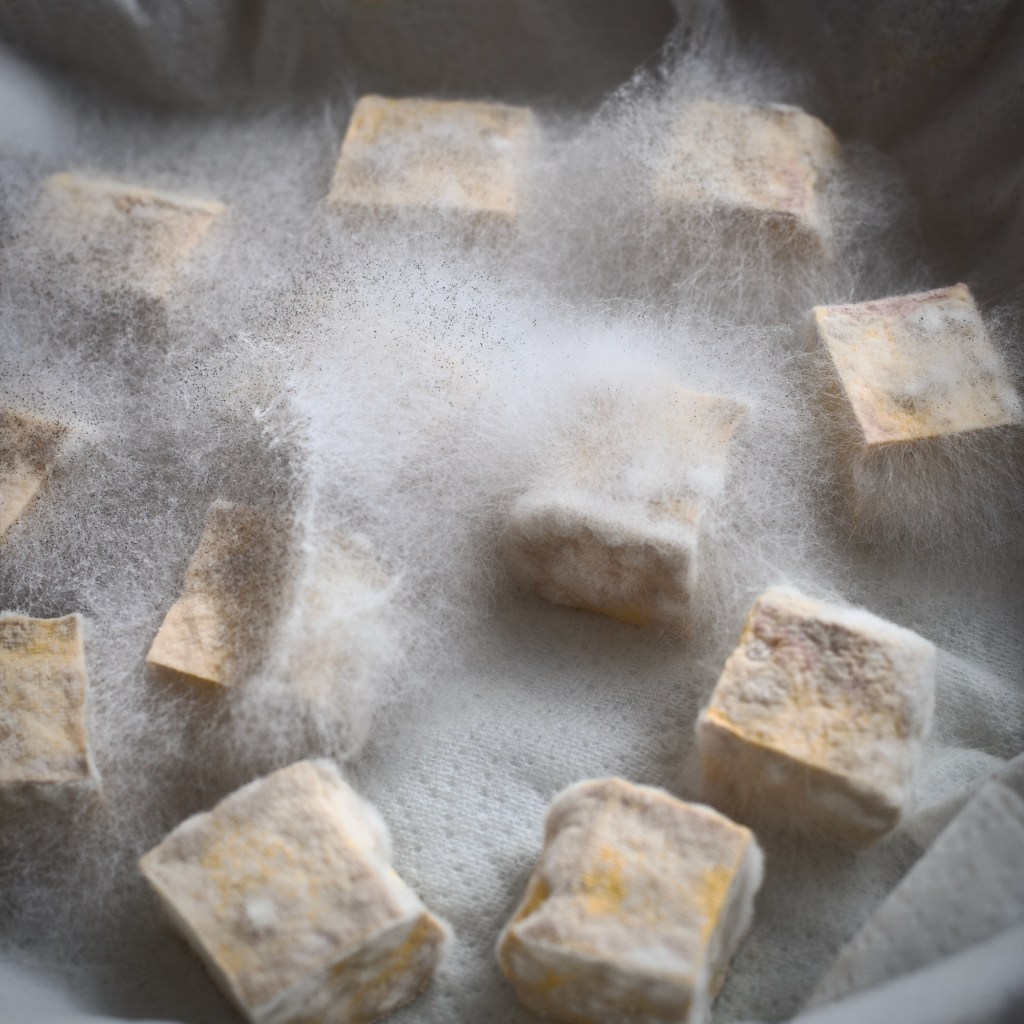
Like Tempeh, rhizopus also grows on tofu. It is a delicacy of the Anhui province of China, called Mao Tofu. Within 3 to 6 days in the incubating environment, much like how they do with cooked soybeans, hair-like filaments spring while the tofu itself softens and becomes fragrant. The longer it is left to ferment, the creamier its texture, but also more pungent in flavor. Frying retains best its flavors and textures, and its moldy hairs act like a protective coating to prevent moisture lost during frying.
 hardlyplaying.blog
4 responses to “Edible Molds”
[…] Taking water into consideration, I started with a ratio of 50%. As I had previously written about growing both white and green Aspergillus mold, I also made tương with both molds, for some fun and […]
LikeLike
[…] An example is Mao Tofu with hair-like filaments, enabled by rhizopus oryzae, the same mold grown on Tempeh. The longer it is left to ferment, the more pungent and creamier it becomes. Frying retains best […]
LikeLike
[…] year, I made tempeh, a fermented soybean from Indonesia. It is a quick ferment, ready within 48 hours. The […]
LikeLike
[…] first step is to use a third of the sweet rice to grow rice koji, which takes about a week. The sweet rice needs to be soaked overnight, then steamed until […]
LikeLike