
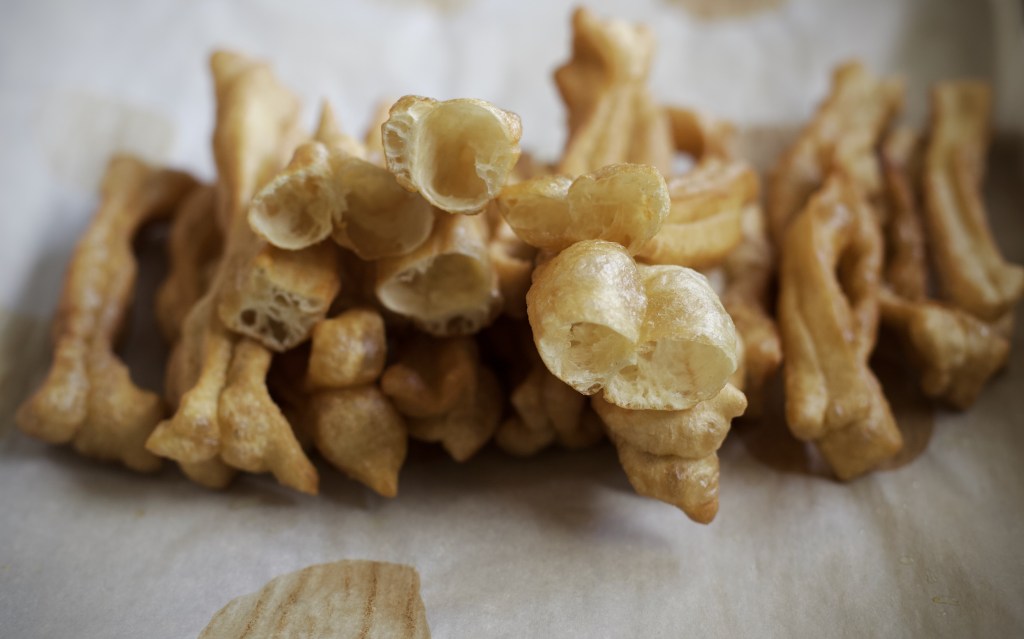
Horn salt, aka piss salt, is deer horns ground into salt, used as a leavening agent for baking. It does bewilder me to consider the first one to think of grinding antlers into powder, and then proceeded to add it to flour to be baked into flat breads and cookies, especially that it smells like piss until it evaporates during baking, the reason why it’s also known as piss salt.
It’s also the reason why horn salt is not so popular any more. The chemical compound that makes it smell like urine is ammonia, and ammonium bicarbonate is the active ingredient. The man-made rather than deer-made stuff is still around if you look hard enough, but nowadays, it has largely been replaced with baking powder.
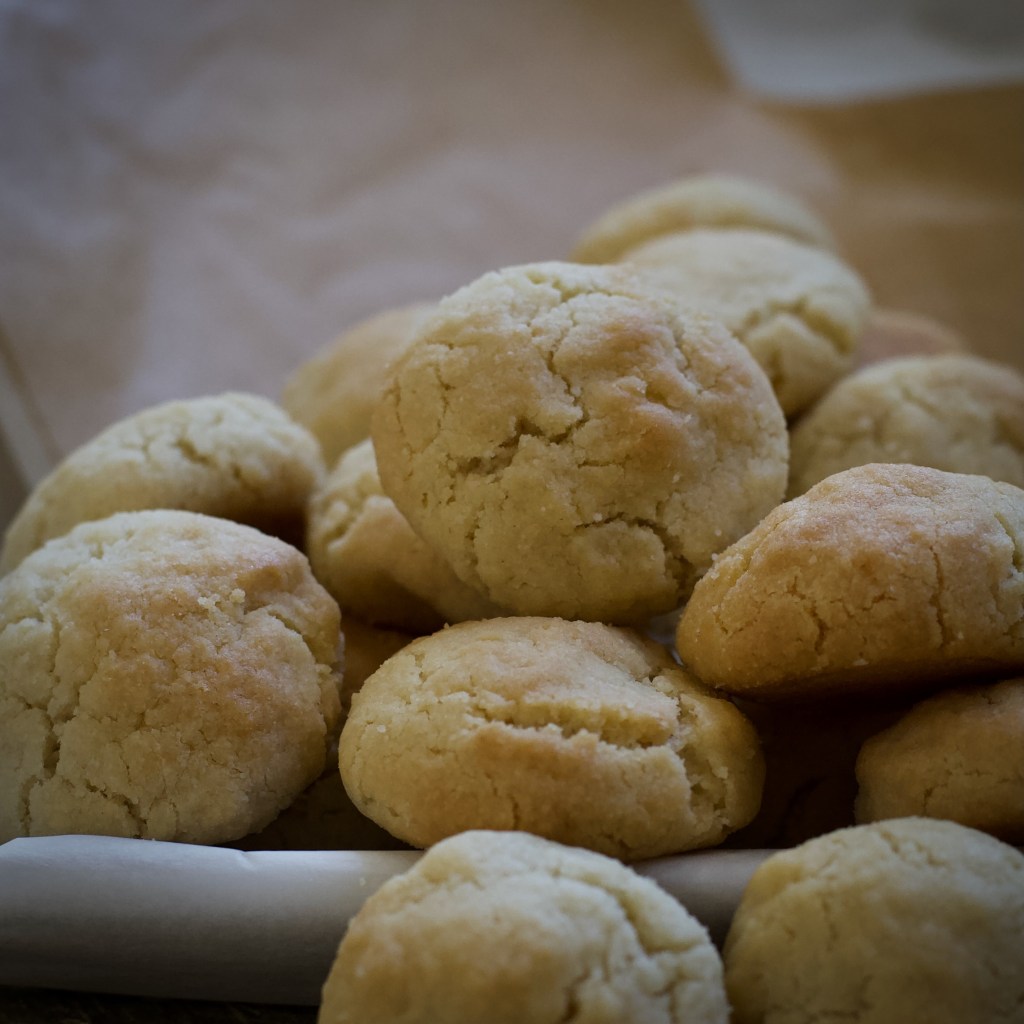
In my opinion though, the two agents are not interchangeable. Horn salt rises crisp, light, and airy cookies and crackers, whereas baking powder makes soft and tender cakes and cookies. I first knew of horn salt through youtiao, a Chinese doughnut eaten for breakfast. It is also a popular breakfast food in Vietnam. The two versions look the same, yet their texture completely different. Youtiao is soft and chewy, whereas quẩy, the Vietnamese version, is airy and crisp. Youtiao’s interior is denser, whereas quẩy is hollow inside. Upon research, I discovered that horn salt was what made all the difference, to which begs the question: how did horn salt travel from Nordic Land all the way down to South East Asia?
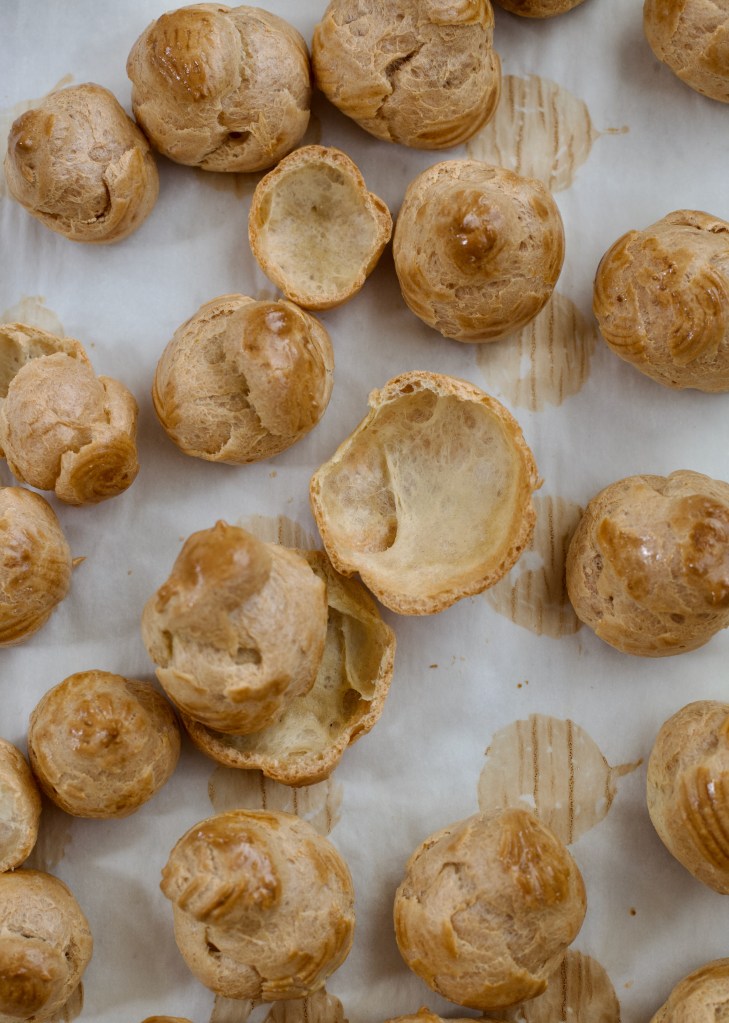
Perhaps it made a stop in France. There is a French pastry that strives for a dry and crisp interior, the pâte à choux. By itself, it’s not particularly notable, for the choux pastry is meant to be filled with creams and cheeses. Its bland taste and hollow and dry interior shows off the moist and creamy stuffing. Yet the recipe for choux pastry is fussy. Getting it to puff high with only flour, water, butter, and eggs requires a twice cooked dough and a fully steamed oven at a high heat setting. Adding horn salt to the dough, however, takes away the fuss and creates desirable volume and textures without fail.
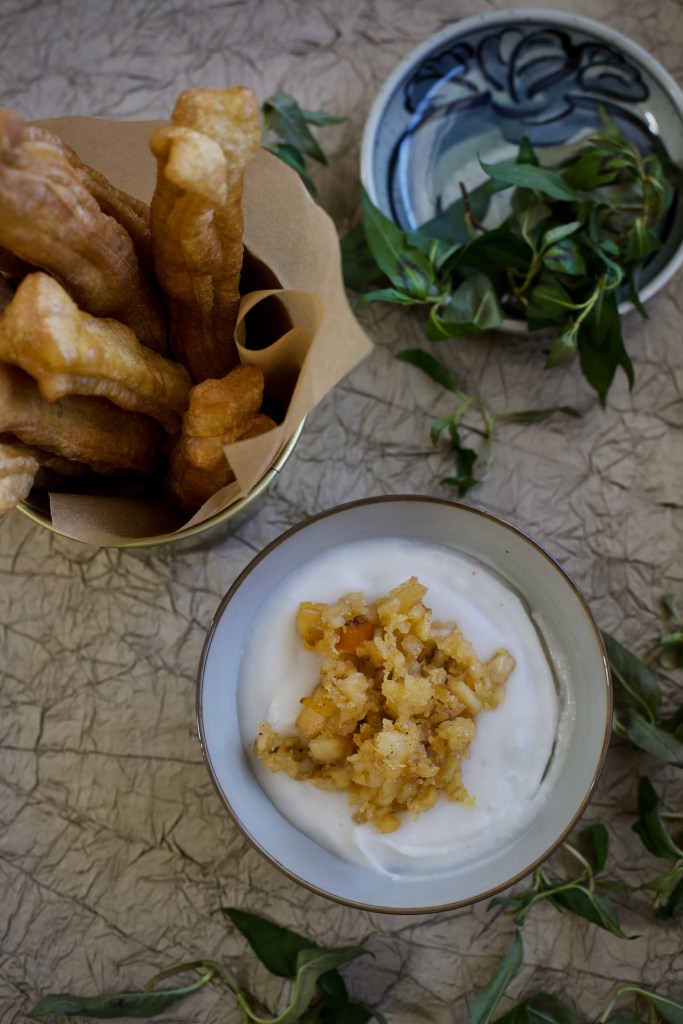
Getting quẩy to the desirable puff and consistency is also a fussy matter. Saved for horn salt, it consists of common kitchen ingredients. But it’s all about techniques and trainings with the hands. When two strips of flat doughs are pressed together, then dinted length-wise, they rise much higher than frying a single strip. To achieve the maximum hollow puff however, it takes skilled hands to elongate the pair by pulling on both ends just right before dropping it into the frying oil.
120 gr or 1 cup wheat flour
¼ tsp baking soda
¼ tsp ammonium bicarbonate
¼ tsp salt
½ tsp sugar
60 ml water
Ensure even distribution by dissolving the leaveners in water before adding flour. The dough should be pliable and not so wet that it sticks to the surface. Once the dough is coherent, cover and let it rest overnight, kneading thrice in between. Roll it very flat and cut into ½-inch wide, 2½-inch long strips. Stack each strip on top of another and let them rest for ~10 minutes, covered with a damp towel, so that the gluten is again relaxed, which will make it easier to stretch before frying. Make a central groove length-wise with a long thin stick; a wooden skewer works well. If the ends stick together, gently separate them. Fingers at the center, pull quickly but gently, so that the pair of dough strips stretches but does not break apart. It takes a few tries to see what works best. Keep the dough strips submerged in hot oil until it is fully puffed and golden. Ensure the oil is not overheated that the dough is burnt.
 hardlyplaying.blog
One response to “Horn Salt”
[…] years from many bakers. I am, in many ways, enjoying the fruits of their labors. While toying with the pâte-à-choux, the popovers caught my attention. Whereas the choux are hollow and bland “cabbages” in need of […]
LikeLike