“To laugh often and much; to win the respect of intelligent people and the affection of children; to earn the appreciation of honest critics and endure the betrayal of false friends; to appreciate beauty; to find beauty in others; to leave the world a bit better whether by a healthy child, a garden patch, or a redeemed social condition; to know even one life has breathed easier because you have lived. This is to have succeeded.”
— Ralph Waldo Emerson
I used to walk in agony, smart enough to know that I hadn’t done much to leave the world better than I found it, yet knowing that I was not smart enough to make a difference. Then I found this by Emerson and carried it close to my heart. I thought if all else failed, I could tend a patch of earth.
So when there was enough time and budget on this corner of the world, I went for it. I would grow flowers and fruit trees to feed the animals, and myself too. A bird bath was a must ‘cause they needed water. There’d be nooks for reading and hammocks for afternoon naps, cooking and grilling and chilling, tables and cushions and conversations. So many wants, where to start?
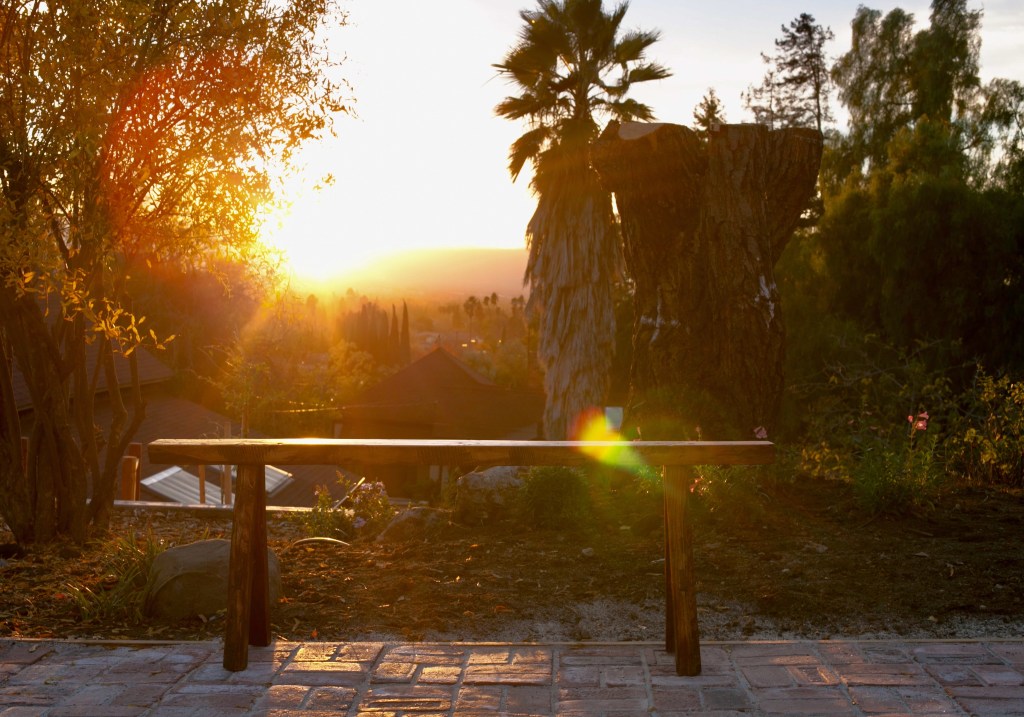
Yet, I knew nothing about gardening. I started with books from the library, learning about garden designs – how styles, soil types, and climates influence a garden’s planning and planting. My one favorite book was The Water Garden by Leslie Geddes-Brown. Reading about a garden was like seeing the soul of its birthplace, tightly woven into the history and artistic mood of the time. My one favorite TV series was Monty Don’s, especially his Italian garden series. California’s climate mirrors the Mediterranean sea’s, making it suitable for a Mediterranean-style garden.
A lab notebook was convenient to sketch my design, each little square making a square foot. After clearing out overgrows, there was a formidable lot to play with, especially for a newbie like me. I knew I didn’t want any grass lawn because of the lack of water in this area, so having footpaths was a good idea. Not only they provided walkways to move across the garden, they also divided it into different areas of interest. I first drew in the existing features: the pomegranate tree, the gazebo, and the shack. Then I drew my footpaths to connect them, dividing the garden into four major planting areas.
Inspired by the Japanese tea garden in San Francisco’s Golden Gate Park, I thought about having a koi pond in addition to the birdbath. I certainly had space for it, so I drew it in as the main piece of my garden. It reminded me a bit of interior design: decide on a central piece and design around it. Once all the flowers and fruit trees were drawn in, the three drip irrigation lines were added. Not all in my drawing came into real life, however. The kumquat tree replaced the Japanese maple tree. The wisteria vine replaced the honeysuckle. The honeysuckle was instead planted by the pond as a ground cover. There was no fern in the end.
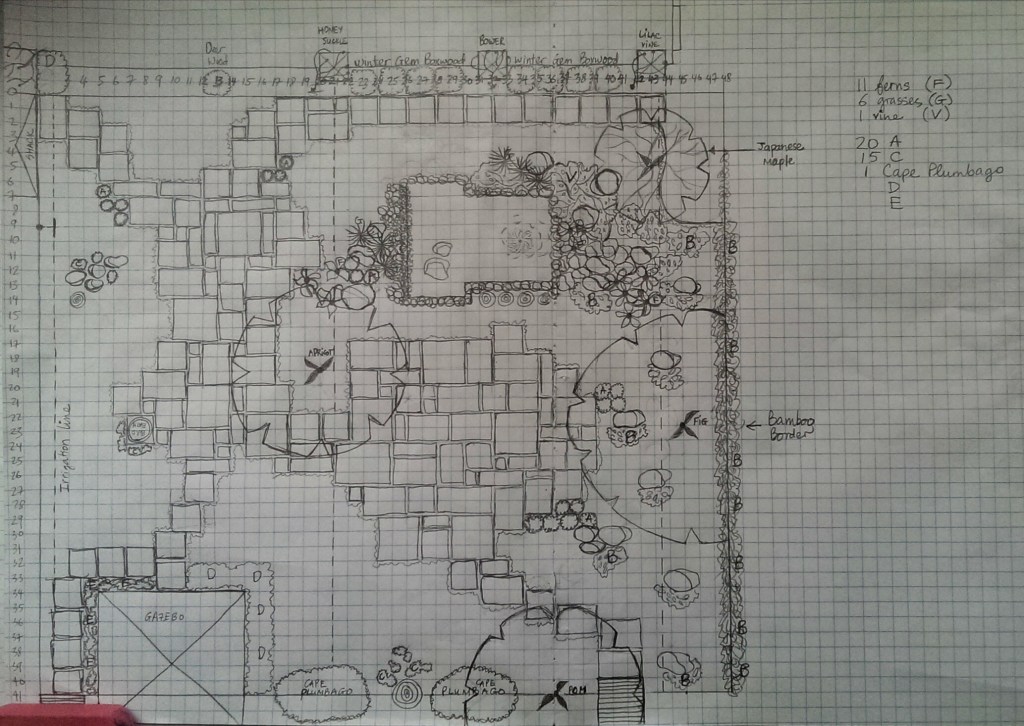
One important feature I forgot entirely was the power line. It was done at the last minute, buried across the garden somewhat randomly. Perhaps it stresses the importance of requirements, as my engineering hat would say. What I wanted most for the garden included no lighting in it, so I didn’t think of it, despite that it was among the most basic needs for an outdoor space.
It took me years to find where sun lights were most gentle or harshest, where the soil needed more caring before I could put a fussy plant there. I learned to never leave the soil barren, always to plant something to keep it nurtured, even if it was just a simple ground cover that would live. I also learned to appreciate seasonal plants that would bring me joy when the others I planted had not thrived. I learned to always have something to pull me into the garden, even when planting wasn’t going well.
Learning how to garden, in a way, is like learning how to live. If I were a control freak, I would soon figure out that planning did not make everything go according to plan. Nature had her way of wielding what she wanted, and it’d be in my best interest that I yielded to her. If I were impatient, I’d realize in time that “nature does not hurry, yet everything is accomplished”. If I were sad, I’d find beauty in seeing that everything was impermanent, always something was dying while others started anew with each changing season.
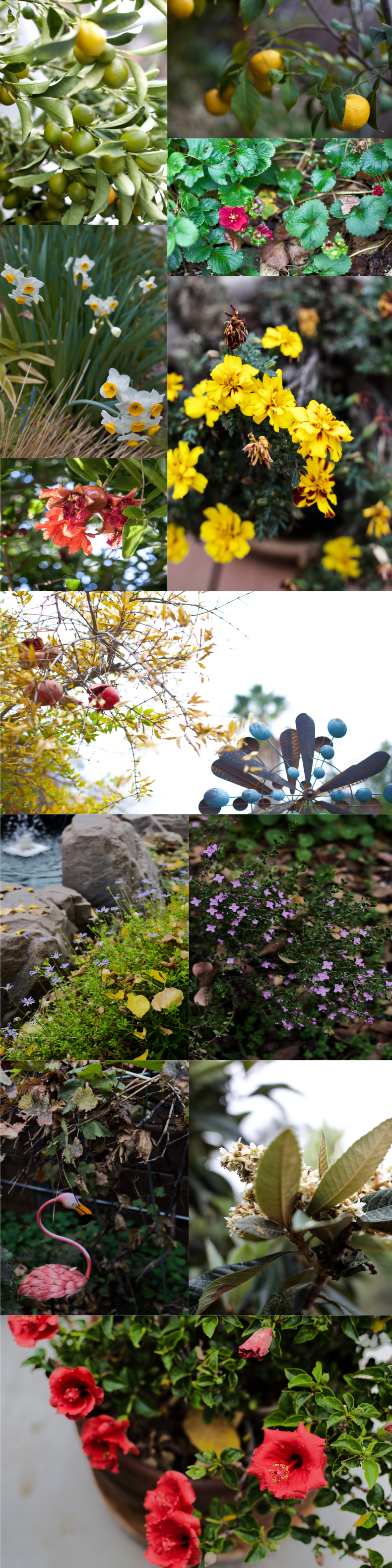
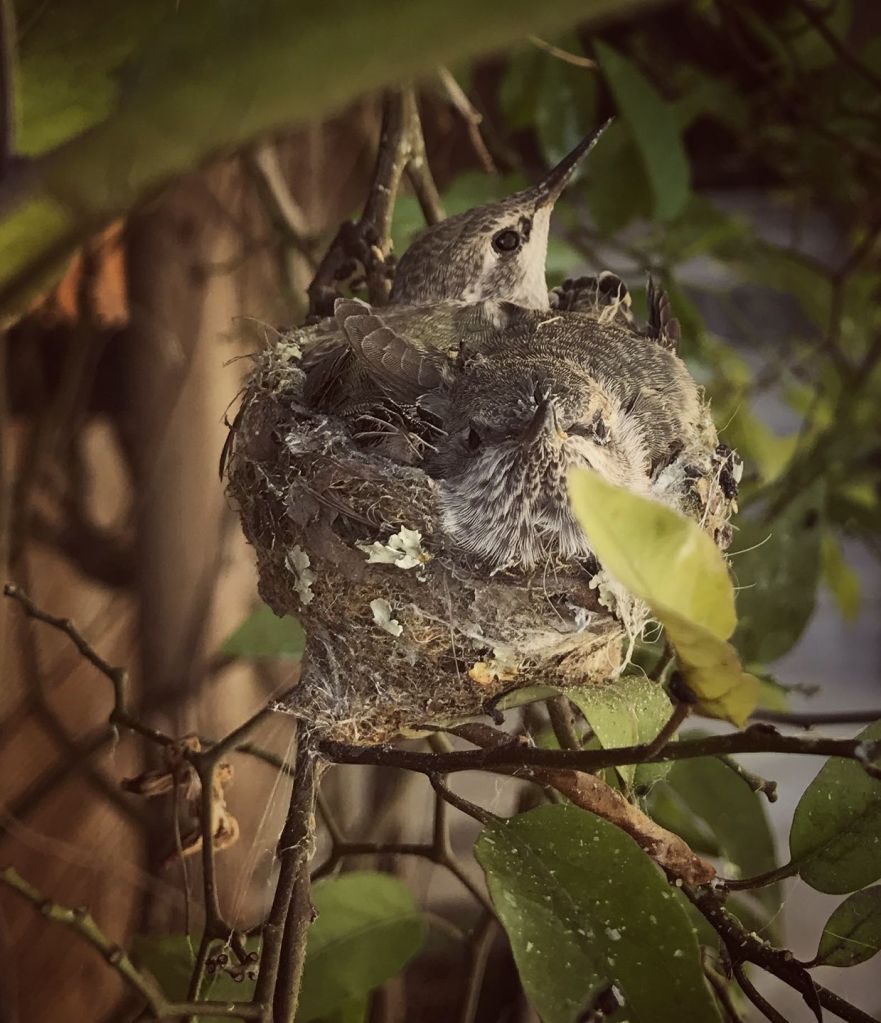
Over time, the birds made themselves at home, despite the frequent presence of a few neighbor cats. They made nests in unexpected places, hidden in the lemon and pomegranate trees. Hummingbirds’ nests were most fascinating. They made neat, plush cups with grasses and spider silk, usually only big enough to raise one chick. If all the stars aligned, there’d be two chicks, swelling out of their nest like a pair of bulging pants.
Squirrels stayed for apricots, plums, and persimmons. Bees loved the lavenders and sages. The occasional butterfly was always a treat. Most pleasing were a pair of blue and orange dragonflies visiting the pond every summer. Even herons and pelicans came by for the koi during the most arid months.
“Near yonder narrow road stands an old knight’s castle; thick ivy creeps over the old ruined walls, leaf over leaf, even to the balcony, in which stands a beautiful maiden. She bends over the balustrades, and looks up the road. No rose on its stems is fresher than she; no apple-blossom, wafted by the wind, floats more lightly than she moves. Her rich silk rustles as she bends over and exclaims, ‘Will he not come?’ “. A story of my dream was to make a garden. Only I now know they’re not just lines in a fairy tale. They’re the gardens of Ninfa, of Annevoie, of which I shall see one day.
 hardlyplaying.blog
One response to “To Make a Garden”
[…] to different areas of study. For example, utilize systems engineering methodology from designing gardens, aircrafts, medicine, to addressing social […]
LikeLike