

Panettone is an Italian sweet bread eaten during the Christmas holiday. A search for a traditional panettone recipe will prescribe that it is made with a sourdough starter, 3 different refreshes before reaching the final dough mix, taking around 3 days to finish. A search for the perfect picture panettone will show a dome shaped mound of bread, 8 inches high with large air pockets inside when cut opened, its strands silky and airy, pulling away like cotton candy. I once heard someone comparing the panettone to the Louis Vuitton of bread.
This year, I have decided that my holiday baking expedition shall be to make panettone, or more accurately, panettoni. Because it’s hard, you know, we-go-to-the-moon-because-it’s-hard sort of thing. There’s plenty of limitation though. I wanted to make a panettone with packaged yeast because maintaining a sourdough starter is labor intensive in itself. It requires regular feeding and tending to, and I’ve given up this idea a long while ago. I also wanted to make use of ingredients that a home baker typically has on hands like all-purpose flour and active dry yeast. I am searching for the best version of panettone I can churn out without access to specialty ingredients, hence, a modified panettone.
First take: King Arthur Baking Company’s overnight panettone recipe makes a starter using instant yeast to add to the final dough on the second day. I substituted lemon extract for orange oil and added 25% more for active dry yeast. My choice of dried fruits were golden raisins, sweetened cherries, sweetened cranberries, and apricots. I loved the flavor profile, but found the bread too dense, dry, and brittle.
Second take: I found another panettone recipe from the Chicago Tribune. I was first hesitated about using liquor to flavor the fruits, since liquor kills the yeast, but following this recipe, I soaked the fruits with rum. This one lets the entire dough ferment on both days, which allows for a more flavorful final product. Long fermentation time also allows for less yeast, only one and a half teaspoon rather than one and a half tablespoon of active dry yeast. I kept the same flavor profile as before, using dried fruits with citrus and vanilla essence rather than adding chocolate. However, I reduced them down to one third instead of one half cup for each fruit. The bread came out softer, but was still dense and did not make the classic dome shape that a typical panettone makes when it rises properly.
I then thought of brioche, as it is also a light and airy no-sourdough yeasted sweet bread made with butter and sugar. The difference is that a panettone, as a bread, is made with a copious amount of butter and sugar; and sugar and fat both inhibit gluten development, making it difficult for a yeasted dough to rise fully. According to our ultimate brioche recipe in Bake Wise, which also uses an inordinate quantity of butter and sugar, the trick to getting this type of dough to rise is to knead the flour with the liquid to develop most of the gluten before adding the butter.
Third take: I used the same ingredients as my second panettone, but followed Bake Wise’s mixing method. I let the dough knead for a good 15 minutes before adding the softened butter. I also incorporated the fruits before the second rise on the second day rather than adding them to the dough on the first day. It helped cut down the preparation time by one day, since the fruit soaking took a day in itself. By adding the fruits on the second day, I could start the fruit soaking on the same day I started the dough. The third panettone was soft, flavorful, and with air pockets. But I knew that it should be fluffier, rise higher. It was a good sweet bread, but it could be better.
Fourth take: Then I thought about tangzhong used in the making of the Hokkaido milk bread, the latest rage for incredibly light, airy, and fluffy brioche. I found a recipe by Lorraine Elliot which incorporates tangzhong into the panettone. Her recipe reads a typical quantity of sugar and butter, which is actually more than what I had been following from the second panettone. Truth be told, there was a little voice in my heart screaming to my head that 5 eggs and 2 sticks of butter were just too much for my arteries to handle, so I had been sticking to one and a half sticks of butter and just 3 full eggs. All things considered, it should also help the dough rise more easily. However, the final dough actually could not rise even as well as the third dough. Its crumbs were tight, but its texture soft.
I should note that once completely cooled, like bread, a slice of panettone tastes best toasted. I like it even better with a spread of butter. I also read that french-toast panettone is fantastic, and probably will give it a try someday.
Fifth take: This time I found a panettone recipe from the wild yeast blog. As its title implies, the recipe prescribes a sourdough starter, but it was Susan’s mixing method that caught my most attention. Initially, the dough is mixed using 60% of the water. Then the sugar is added slowly in small increments while mixing the dough until gluten is fully developed. Only then is butter added, and after that, the remaining 40% of the water. After 30 minutes to an hour of kneading, when the gluten is fully developed, stretching a piece of dough should make a smooth and translucent window plane. I returned to only using water without tangzhong and also increased the active dry yeast to 1 tbsp. All panettone recipes call for osmotolerant yeast or at the least, instant dry yeast because they ferment well despite sugar’s presence. Susan’s recipe even calls for diastatic malt to help the dough rise further. However, this household only stores active dry yeast and I’ve been upping its quantity to make up for the lack of the proper fungus.
The fifth panettone rose high; and tasted like the Louis Vuitton of brioche!
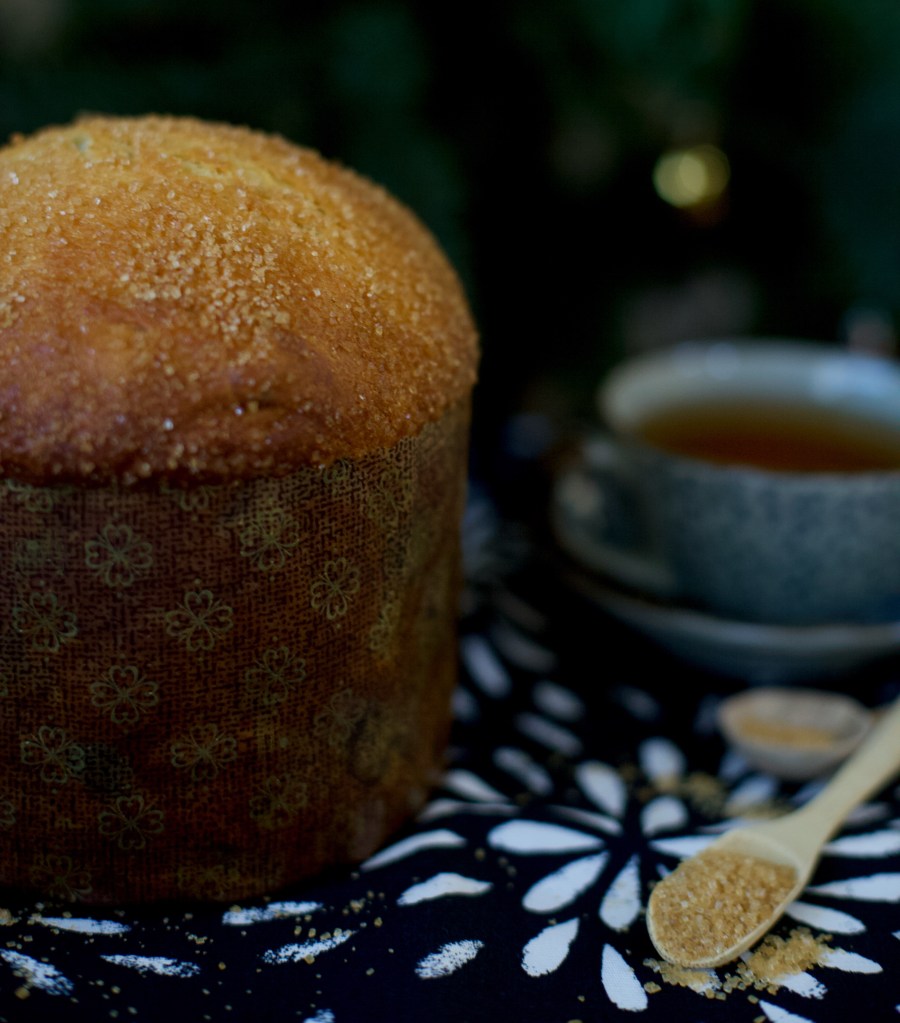
Next, I will try adding tangzhong again, using only water. Then I will try adding tangzhong using milk. I will also start the oven at 350F to see if the bread could rise a bit higher before dialing it down to 325F. But until then, this modified panettone recipe is a keeper.
Ingredients:
450 gr wheat flour, high-protein > 10%
⅔ cup water, tepid
3 large eggs, room temp.
2 tbsp orange zest
1 tbsp active dry yeast
¾ cup granulated white sugar
1 tsp vanilla extract
1 tsp lemon extract
1 scant tsp salt
1 tbsp honey
12 tbsp butter, very softened but not melted
⅓ cup golden raisins
⅓ cup sweetened dried cherries
⅓ cup sweetened dried cranberries
⅓ cup dried apricots, chopped
2 tbsp rum
Topping: 2 tbsp raw sugar
Equipment:
Stand-mixer with dough hook attachment
Panettone molds
Skewers
Day 1:
Soak the dried fruits in rum to use on day 2.
Mix 1 tbsp of the sugar with 60% of the water and the yeast. Wait until the liquid is full of bubbles on its surface.
Add to the flour the orange zest, the eggs, and the yeasty liquid in the stand-mixer’s mixing bowl. Knead the flour mixture using its dough hook attachment until well incorporated, about 10 minutes. Slowly add the sugar in small increments while kneading the dough, alternating speed between 2 and 4/10, until it passes the window pane test. It will take between 30-50 minutes.
Once the dough passes the window pane test, add to it 1 tbsp butter at a time while continue kneading. The dough should pull its strands away from the mixing bowl.
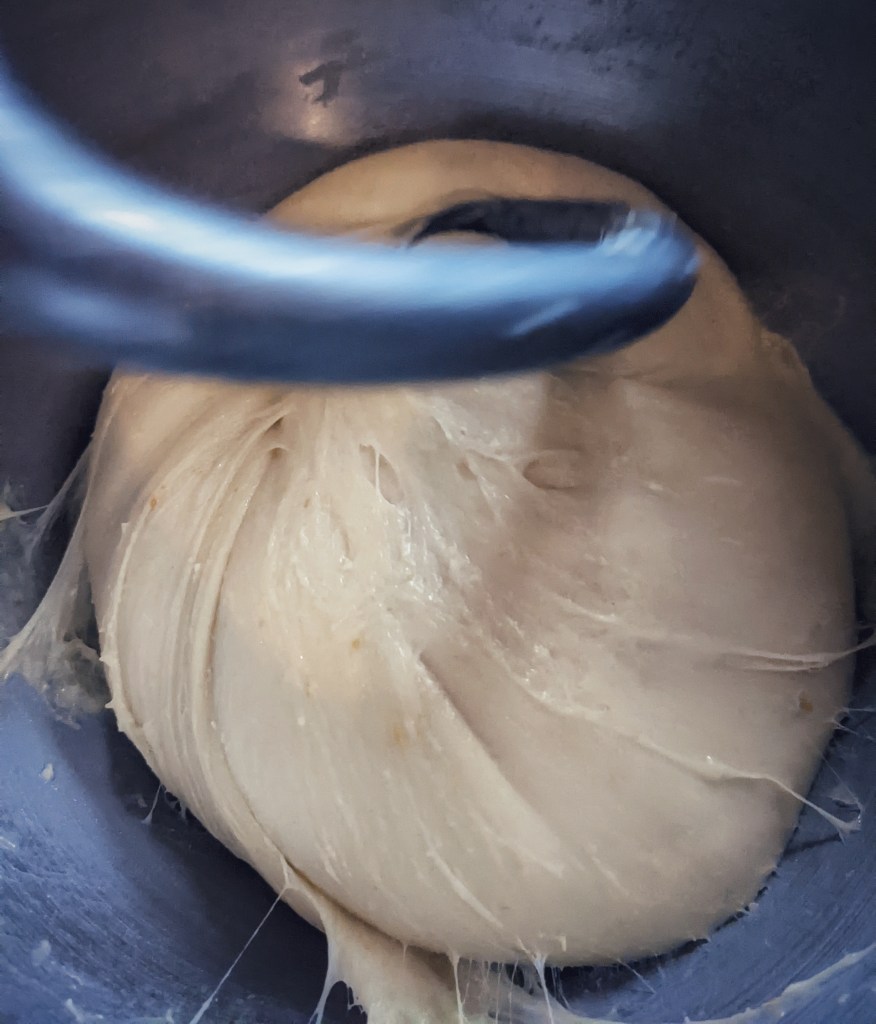
Meanwhile, mix the salt, vanilla extract, lemon extract, and honey with the remaining 40% of the water.
After all of the butter is added, add half of the remaining liquid. You may need to fold the liquid into the dough with a spatula in between kneading to help it along. Then add the final half of the remaining liquid, continue to fold and knead until the dough is well incorporated, soft, and smooth.
Transfer dough to a large buttered tub. Cover and let it ferment slowly. It should take between 18-24 hours for the dough to quadruple in volume. If it rises in half the time prescribed, punch it down to let it rise again.
Day 2:
Fold the dried fruits into the dough, then transfer it into one 6.75-in or two 5.25-in wide panettone molds. Cover and let the dough rise again in a warm place. I left it by the oven light bulb. It should take about 4 hours for the dough top to reach the height of the mold. Sprinkle with plenty of raw sugar.
325F, 60 minutes for 1 large, 45 minutes for 2 smaller panettoni.
Once it is out of the oven, insert 2 skewers at the bottom and invert it to let cool so that the bread does not collapse onto itself. How to keep it suspending up-side-down? -I hung it over a stockpot.
 hardlyplaying.blog
2 responses to “Holiday Baking Expedition: A Modified Panettone”
[…] all started with the holiday baking project – fermenting flour, sugar, and butter into decadent, fluffy, and buttery panettoni. Yeasted sweet […]
LikeLike
[…] and long fermentation time, and adding tangzhong requires adjustment to the hydration percentage. The previous panettone was at 65.5% hydration, but we want it to be at least 75% using tangzhong. A lower hydration […]
LikeLike