
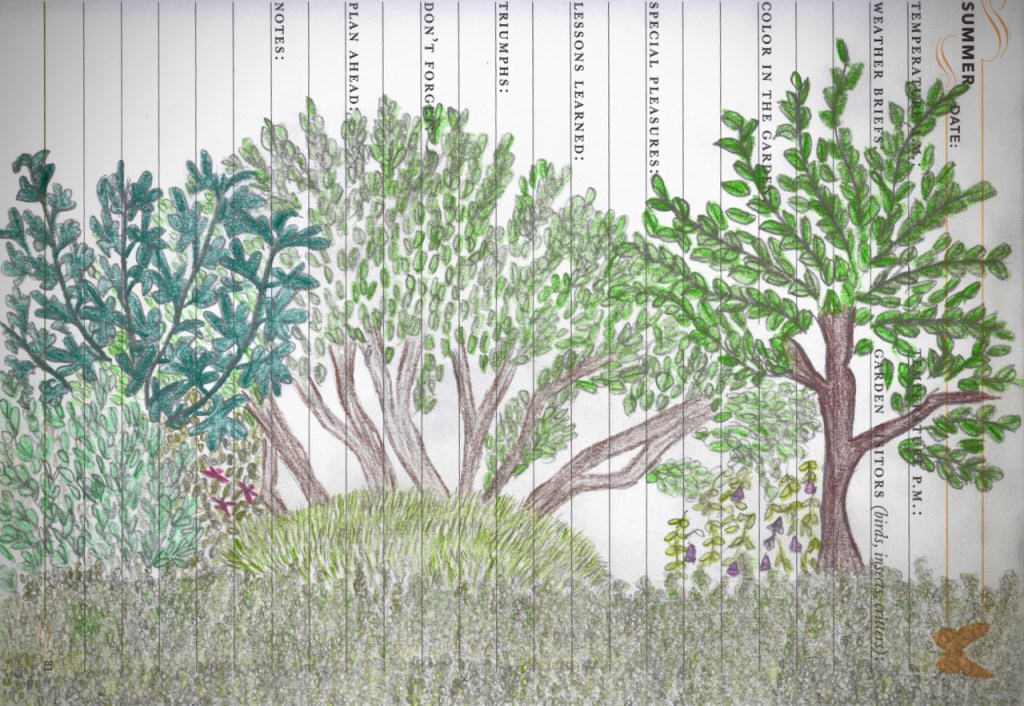
During the dog days of summer, the women of ancient Athens fashioned little gardens in baskets and pots, each holding a mix of quick-sprouting grain and herbs. These makeshift seedbeds were carried up the ladders onto the flat roofs of private houses and left to wilt in the sun – a botanical reenactment of the premature death of Adonis, the fallen hunter slain by a wild boar. Then, beyond the public gaze of men and civic authority began the rooftop rites. Women of all classes of Athenian society grieved, got intoxicated, and performed other ecstatic behaviors.
Historians agree that the root of this women’s cult lies in Mesopotanian fertility rites of Dumuzid, the shepherd-god. Dumuzid was associated with fertility and vegetation, and Mesopotamia’s hot, dry summers were believed to be caused by his death. During the month in midsummer bearing his name, Mesopotamians engaged in public ritual mourning for him. Most likely, the worship of Adonis, his Greek incarnation, spread westward to Greece from Phoenicia during the Assyrian expansion in the 7th century BC.
In their book, The Dawn of Everything – A New History of Humanity, Graeber and Wengrow proposed a narrative of the Garden of Eden as the origins of farming. Harvesting and turning wild plants into food, medicine, and complex structures like basket and clothing is almost everywhere a female activity. Having plant-based knowledge meant developing fiber-based crafts and industries. Textiles, basketry, network, matting, and cordage were most likely always developed in parallel with the cultivation of edible plants, which also implies the development of mathematical and geometrical knowledge. Women’s association with such knowledge extends back to some of the earliest surviving depictions of human form, such as the ubiquitous sculpted female figurines of the last Ice Age with their woven headgear, string skirts, and corded belts. So it was these acts of garden play and experimentation that may have begun the evolution of agriculture.
Of the seven wonders of the ancient world, the Hellenic people told of the majestic gardens of the city of Babylon, the gate of the Gods. The Oxford scholar Stephanie Dalley proposed that these hanging gardens of Babylon were gardens constructed by the Assyrian king Sennacherib for his palace at Nineveh in the 7th century BC. King Sennacherib’s garden was admired not just for its beauty, an oasis of lush green in a dusty summer landscape, but also for the marvelous feats of water engineering that maintained the garden. The tradition of Assyrian royal garden building goes back further in time. In the 9th century BC, King Ashurnasirpal II already had a canal cutting through the mountains to feed a plethora of ornamental as well as edible plants. Pines, cypresses, and junipers were planted along almond trees, date trees, ebony, rosewood, olive, oak, tamarisk, walnut, terebinth, ash, fir, pomegranate, pear, quince, fig, and grapes.
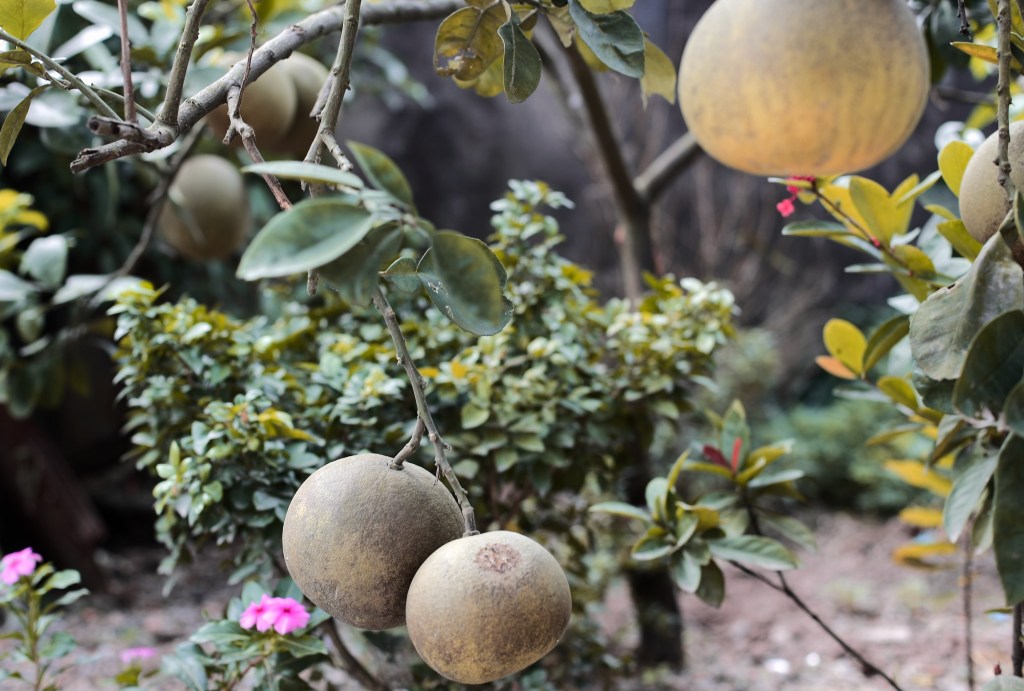
Seeing into the making of a garden gives us a glimpse into the soul of its birthplace, tightly woven into the history and artistic mood of its time. The European Renaissance of the 16th century would look back in time to Villa Adriana for inspiration, built by the Roman Emperor Hadrian in the 2nd century, which was then inspired by ancient Greek and Egyptian architecture. The Renaissance saw the ideal garden to be a work of art, that it should embody balance, order, and harmony. Garden making was an expression of wealth and power for its owners, who were primarily cardinals and popes. Their gardens were designed in grid-like geometry with formal structures and forms. Gardens such as Villa d’Este demonstrate an astonishing feat of hydro-engineering, consuming a third of the town’s water supply. The villa’s 51 fountains, 398 spouts, and 364 jets are powered by the natural pressure of the Aniene River and the force of gravity, from which every fountain has the same velocity, the same rhythm, and the same sound like a musical instrument.
By the 17th century, André Le Nôtre would give France its classic landscaped garden style, resonating the same ideal of order, structure, balance, and harmony. Le Nôtre’s gardens were organized around a dominant central axis projecting through the architecture of the château into the landscape beyond, often extending to infinity. Cross-axial paths divided the garden into geometrically ordered compartments of “parterres de broderie” alternating with bosques of trees planted on a grid or quincunx arrangement. Instead of the cascades of Italian Renaissance gardens, the dominant water elements of his designs were flat planes of water, in canals or water parterres, reflecting the restless drama of the sky. In molding living material to the laws of geometry and optical illusion, Le Nôtre’s gardens have come to serve as a paradigm for man’s control over nature. In laying out the modern plan for the Tuileries, he took to the cutting of the central axis, the Avenue de Tuileries, now the Champs-Elysées, which ran west through the garden to the countryside. As the spine of modern Paris, it now runs through the Arc de Triomphe to the financial district.
When a formal garden is allowed to age over time, it evolves into the romantic garden, embodying charm and effortlessness. Beginning in the late 18th century, landscape designers of the Romantic era sought to express the inherent beauty of nature, diverging from the strictly symmetrical and formal gardens. The Romantics looked to nature as a liberating force – a source of sensual pleasure, moral instruction, religious insight, and artistic inspiration. Accordingly, their ideal gardens were to inspire an emotion rather than an intellectual response.
Many truly romantic gardens are created by artists, who pour artistry into garden making and draw their art from their garden. While the designer’s garden is designed in and does not change in form, the artist’s garden evolves as they continue to work on it. Among the most romantic gardens must be Monet’s garden at Giverny. The garden was a visual feast prepared by the master colorist, about whom Cezanne once remarked, “Monet is nothing but an eye. But, my God, what an eye!” Visitors often described the garden as a paradise. The art critic Gustave Geffroy wrote, “As soon as you push the little entrance gate on the main street of Giverny, you think, in almost all seasons, that you are entering a paradise. It is the colorful and fragrant kingdom of flowers. Moreover, the spaces created by the lush vegetation of Monet’s garden were filled with a rich array of sounds, scents, and textures as well as the visual delights one would expect in a painter’s paradise.”

As a little girl, I would take the 3-hour bus ride with my mom to visit my grandparents in the countryside during summertime. They lived in a mud-straw house surrounded by a large garden and a pond. My grandfather caught a fish out of the pond to bury it under a mound of rice straws. Then he lit the straws and they’d crackle while smoke came billowing atop. My cousin picked lotus fruits from a nearby lake. There was still no electricity, so we sat on the porch and chattered over lotus seeds, underneath the pitch-black night sky where the stars revealed themselves in myriad shapes of animals and things. In that pitch-black night sky I dreamed of having my own garden, like one written in a fairytale:
“Near yonder narrow road stands an old knight’s castle; thick ivy creeps over the old ruined walls, leaf over leaf, even to the balcony, in which stands a beautiful maiden. She bends over the balustrades, and looks up the road. No rose on its stems is fresher than she; no apple-blossom, wafted by the wind, floats more lightly than she moves. Her rich silk rustles as she bends over and exclaims, ‘Will he not come?’”
Only I now know they’re not just lines in a fairytale. They’re the gardens of Ninfa, of Annevoie, of Giverny, of which I shall see one day.
 hardlyplaying.blog