
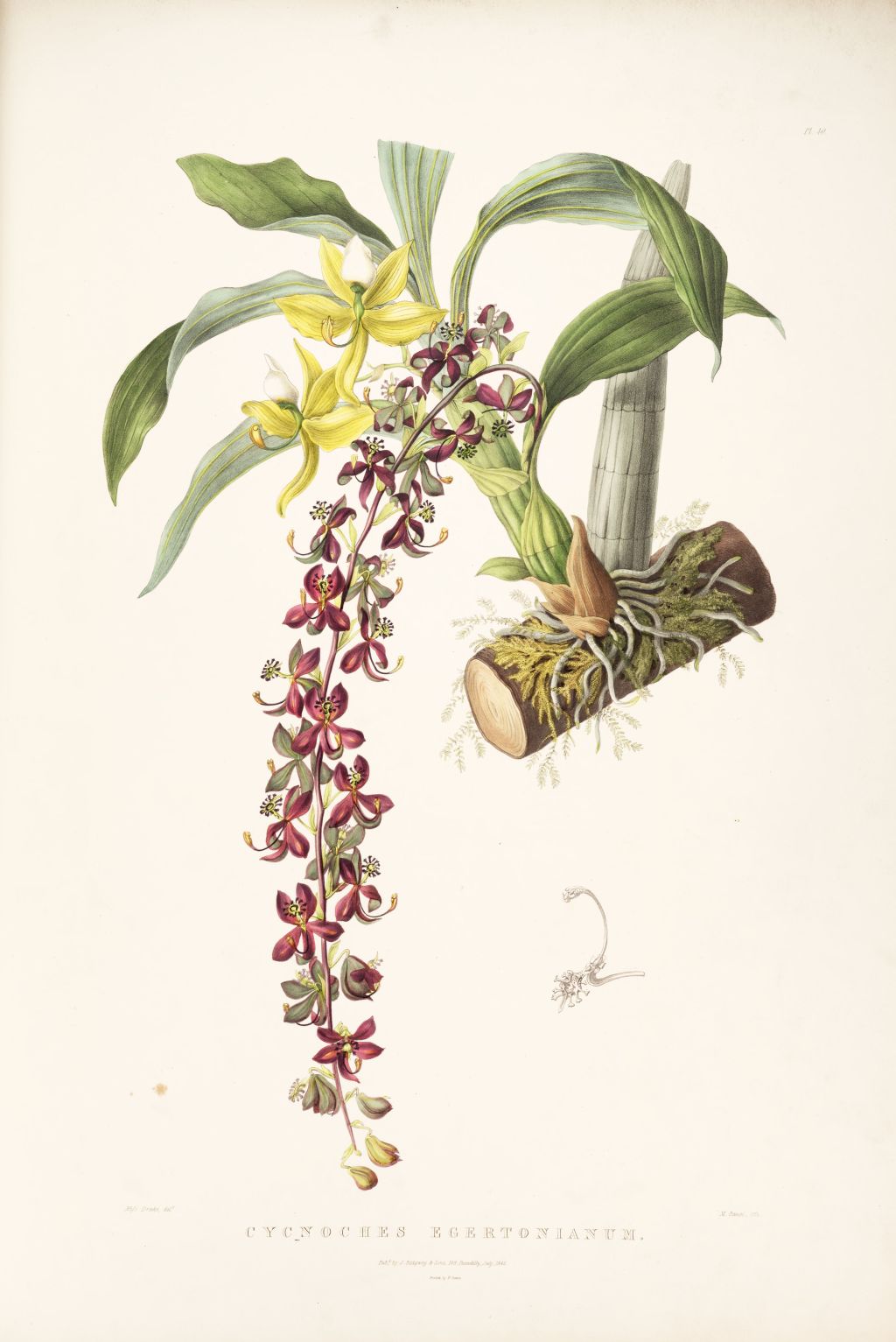
I close my eyes and imagine where I would like to be at my death. I think I’d want to be like Alma, hugging a tree far from home, perhaps a magnolia in Tahiti or a cinnamon in the Amazon. Alma Whittaker, the heroine in Elizabeth Gilbert’s The Signature of All Things, was the gifted daughter of a botanical expert in Philadelphia. She would live her life studying mosses, sailing the world, and like Darwin, discovering the evolution of life.
The novel was widely praised for its feminist theme. That Alma was not pretty was made evident by contrasting her with Prudence, her adopted sister. “Where Prudence was dainty, Alma was large. Where Prudence had hair spun from golden-white silk, Alma’s hair was the color and texture of rust – and it grew, most unflatteringly, in every direction except downward. Prudence’s nose was a little blossom; Alma’s was a growing yam.” But what she lacked in physical beauty, she overfilled with exceptional academic brilliance. By the age of nine, she could already read Caesar’s Commentaries and Cornelius Nepos and defend Theophrastus over Pliny. Despite her spectacular failure in marital love, she enjoyed her long and adventurous life in natural science endeavors, studying the life of mosses, and through mosses, devised the theory of evolution.
Yet beyond the feminist narrative, this is a masterfully written book with layers of complexity. I find myself fascinated by the narrative of Alma’s adventures in love. Alma’s first love for George Hawkes and her obliviousness of his love for Prudence would reveal that her sister had sacrificed her own happiness for her. Alma was not only the center of her own universe, but everyone around her had treated her thus. That her father always gave her a place at his table that seated the most prominent men of the time and that he left her his entire inheritance at his death showed that he loved her the most. Her mother Beatrix was not one to show affection to her daughter. It was only upon her death that Beatrix’s love for her daughter was understood. With Henry Whittaker being illiterate, she had taken all of the estate’s affairs upon herself, allowing Alma to focus on her academic interests. So it was being born into privilege and love that gave her the roots and wings she needed to excel into the prominent woman of science.
Titled after Jacob Boehme’s The Signature of All Things, the novel reveals its central tenet through the character of Ambrose Pike, Alma’s husband. At Harvard, Ambrose found Jacob Boehme’s words, that God had hidden clues for humanity’s betterment inside the design of every flower, leaf, fruit, and tree on earth, and that we could learn to read God’s prints. All the natural world was a divine code, containing the proof of our Creator’s love. Ambrose wished to be an angel of God. “The wisdom of God is an eternal virgin, chaste and pure, who stands as an image of God.” In Alma he asked for an exchange of the soul and not of the flesh. Hand in hand, Alma and Ambrose were reading each other’s mind in the binding closet. What Alma heard was bodily pleasure; what Ambrose heard was a communion of the souls. The bodily pleasure was akin to a religious experience.
Poor Alma, oblivious to the world but her own universe, once again, misread the signals. So she casted Ambrose away to Tahiti to manage the family’s vanilla plantation. In her adventure to understand her husband after his death, she got to know Tomorrow Morning, the Tahitian boy in Ambrose’s drawings and Reverend Welles’ adopted son. Tomorrow Morning was burnished in skin, his smile a slow moonrise. He was truly prodigious in stature, an Achilles in the flesh. Reverend Welles greeted him the blessed son of God. Both revered and terrified by the people of Matavai Bay, he gave thunderous sermons, like Demosthenes defending Ctesiphon, Pericles honoring the dead of Athens, Cicero rebuking Catiline.
In the course of European conquest, the Tahitians had suffered. Thus Tomorrow Morning pushed them to be strong again, but in the name of Jehovah, because the new God was more powerful than their old Gods. He ministered not through gentleness and persuasion, but like the Europeans, through power. He reflected that’s why he found success where others had failed. Ambrose saw in Tomorrow Morning a new kind of Adam, The First Man. Ambrose, the angel, surrendered his flesh to him, for he was the conqueror, and the nature of a conqueror was to acquire whatever he wished to acquire. We, the readers, see in Tomorrow Morning the evolution of colonialism, tracing all the way back to Henry Whittaker’s boss, Sir Joseph Banks, who took a Tahitian man back to England as his pet, then Henry himself, who witnessed captain Cook’s murder, and now a Tahitian man, the blessed son of God, who preached the words of God. In Tomorrow Morning we see the future of Christianity – the new Adam who would preserve the same spiritual qualities but shred its old world moral values.
And through Ambrose and Tomorrow Morning, we see Alma’s relationship to God, the link between science and the spiritual world. It was her love for Ambrose that had emboldened her, making her mind feel like an immaculate engine, pushing her to the revelation that mosses were algaes that had crawled up on dry land, a beginning of her discovery of evolution. It was in a cave throbbed with the most luxuriant mantle of mosses that Alma was on her knees, sucking on Tomorrow Morning, the new Adam’s, as though drawing breath through him – as though she was underwater and he was her only link to air, the only pleasure of another man’s flesh she would ever know.
I remember listening to Gilbert’s interview on Terry Gross’s Fresh Air. She had said that it took her 3 years to write the book, and that the money she earned from her best-selling memoir, Eat Pray Love, funded it. Well, it is a superbly researched and beautifully written book. It is full of complexities with many layered themes, and all the peripheries surrounding Alma are just as fascinating as her own adventures.
 hardlyplaying.blog