

The difference between broth and stock is not apparent. Some say stock is made of the animal’s bones, while broth is made from its meat. Others say broth is a reduced stock with additional aromatics and seasonings. Call it a broth or a stock, it is an essential potable in the kitchen, whether as a base for a braise or a stew, a soup or a sauce, or just to drink by itself.
A broth ranges from the most simple, such as tea, to the most complex, such as consommé, a broth strained of sediment so that it appears like tea, yet comprises all the essence of a rich and flavorful meat broth. There are multiple ways to classify a broth, and I categorize it with respect to time. The richest, deepest broth is made with bovines, such as cows and buffalos, over a long period of time. Tonkotsu ramen broth is particular in that it is made with pig bones over many hours, so that everything breaks down into a supremely gelatinous and rich texture.

Western cuisine usually prefers a rich broth. Animal bones and meat are roasted and then simmered for a long time, so that the broth’s color deepens and its flavors intensify. Broth made in East Asia, however, has a wider range. As a base for noodle soup, many are made with pork and poultry for just 2 hours, then further flavored with a plethora of condiments and fresh herbs. A clear and lighter broth is usually preferred, so that rather than being roasted, bones and meat are soaked in water to rid their blood, then parboiled and cleaned to further purify before being simmered into broth.
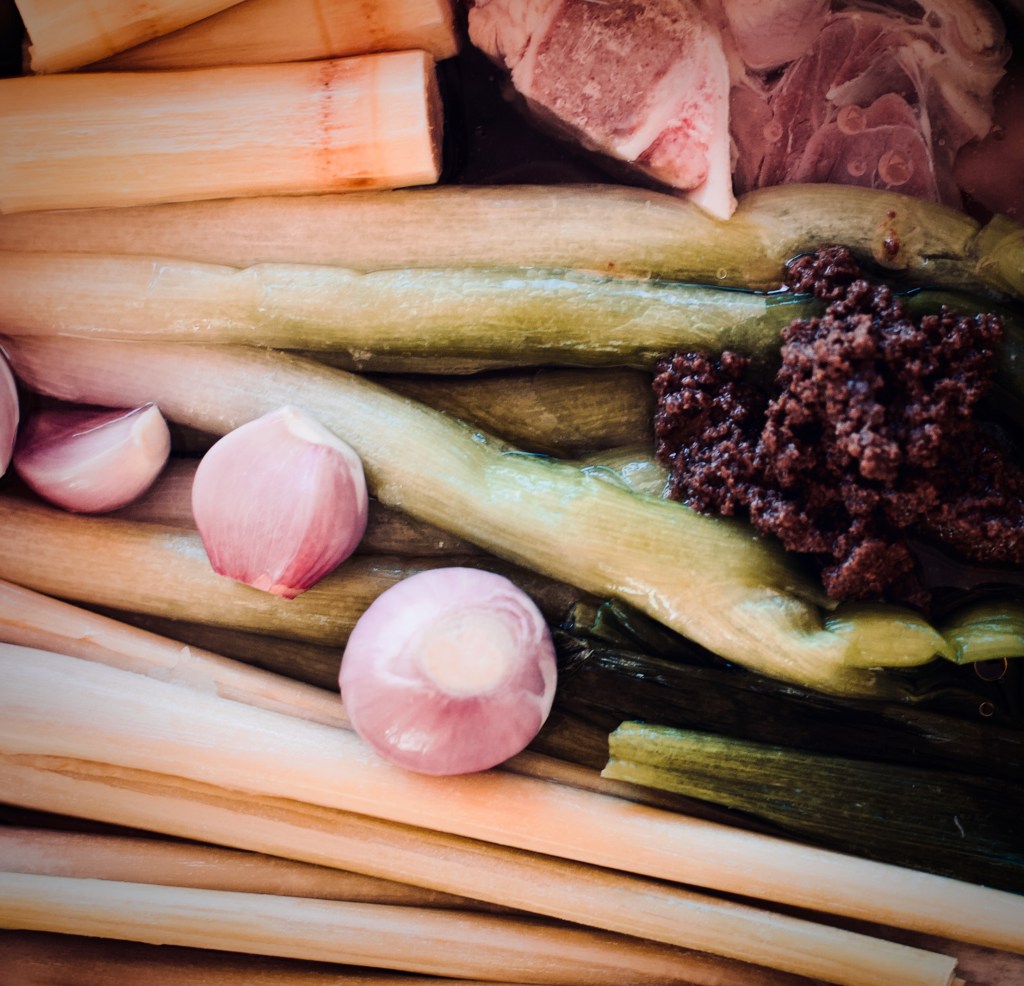
The fastest broth, taking less than an hour, is made with fish, seafood, and plants. This broth is the base for seafood soup, hot pot, and other lightly flavored soups such as miso soup. Even though appearing simple, it has the most umami flavors from preserved fish and sea kelps. Tea is mostly regarded as a beverage, but it is also taken as a savory broth. For example, chazuke is a Japanese dish made by pouring hot green tea over cooked rice with various toppings.
To arrive at the consommé, a broth has to be further purified by straining all of its sediment. Traditionally, this is done by stirring in a mixture of ground meat and egg whites into the broth. The mash of egg and meat then settles at the surface to trap in impurities and is then skimmed off, leaving the broth the appearance of tea – most clean and clear. The more modern method uses gelatin instead. It is less expensive, but takes longer and requires a refrigerator and freezer. Dissolve a small amount of gelatin in the strained broth, then freeze the liquid overnight. Place the frozen liquid in a strainer to let it drip slowly, and the result is the consommé. During the freezing process, the water forms solid ice crystals, while everything else is concentrated in the remaining liquid. The long gelatin molecules bond to each other to form an invisibly fine net that traps these elements in its crevices. The refrigerator keeps the net cold enough so that the gelatin doesn’t dissolve and the fat doesn’t melt. But the ice crystals, while melting, wash the dissolved flavors out of the net. Meanwhile the net’s crevices act like a microscopic filter, trapping particles, solid fat, and other impurities. What thaws and drips down is a clear, flavorful liquid – the broth essence.
 hardlyplaying.blog