The first time I heard the phrase, “art follows money,” was during a guided tour of the Hearst Castle, built in 1919 by the media tycoon William Randolph Hearst. Resting on a 40-thousand acre hilly estate with a sweeping view of the Pacific Ocean, it was described as “this is what God would have built if he had had the money.” With three houses of the Sun, Sea, and Mountain, surrounding Casa Grande, several wings and terraces, Neptune and Roman pools, and a zoo, the castle itself holds an eye-gouging collection of Greek and Roman arts, like a piece of ancient Europe on the American West Coast.
To succeed at making a living as an artist requires a certain amount of social and business savvy, and some are able to hide a part of themselves in order to do so. Leonardo Da Vinci, while producing masterpieces and being paid handsomely for them, kept his personal life hidden from the public eye. Suspected a homosexual, his sexuality was the subject of satire, analysis, and speculation. He scarcely made reference to his personal life in the thousands of pages of notebooks and manuscripts that he left behind. Even Botticelli, another suspected homosexual who squandered all of his money at the height of his career, was financially supported by the House of Medici until his death.
But for some, their essence is so woven into their art that it’s impossible to separate the two. William Blake, a poet, draughtsman, and printmaker, is regarded as one of the greatest figures in English cultural life of the 1800’s. Yet during his lifetime, his work was called “a farrago of nonsense, unintelligible, and egregious vanity, the wild effusion of a distempered brain.” Within the artist circle, Blake was highly esteemed for his clairvoyant modernity and esoteric mysticism. The writer Edward FitzGerald described him “a genius with a screw loose.” Blake declared himself to be a prophet. He claimed that his dead brother revealed to him in a vision the technique of “illuminated printing.” During the final decades of his life, isolated and struggling financially, his friend, the painter John Linnell, took great pains to find buyers for his “illuminated books,” additionally commissioned a series of illustrations to Dante’s Divine Comedy to keep him afloat.
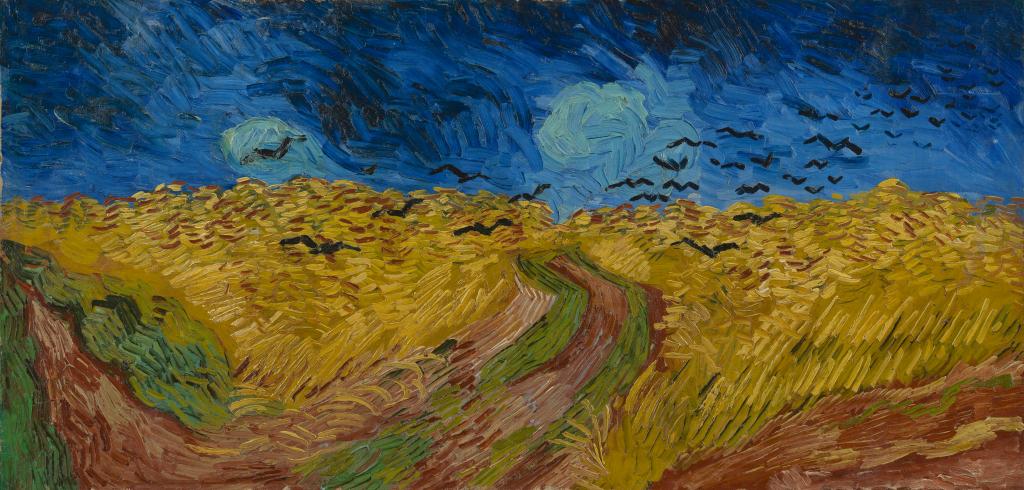
Most famous among the loose screws ought to be Vincent van Gogh, the Dutch painter of the late 1800’s. Though his work is now auctioned for tens to hundreds of millions of dollars, he lived under severe poverty and mental illness. Spending most of his money on painting materials and models, bread, coffee, and tobacco were his staple diet. He suffered illness from drinking and smoking, and tooth diseases from a poor diet. Throughout his artist life, his brother Theo was his chief supporter and his art dealer, connecting him to clients and other artists.
While in Arles, France, hoping to build an artists’ collective, he shared a studio with the painter Gauguin, whom he admired. They quarreled often. His frustrations and anxieties that Gauguin would desert him reached the crisis point when Van Gogh severed his left ear with a razor, beginning his lodging at mental wards until his death in 1890, when he shot himself at the age of 37. Theo, heartbroken at the death of his brother, died less than a year later. It takes a form of unconditional love to care for those who can give no monetary return on investment, if only to be able to see them continuing what they are passionate about doing. It was not until 20 years after his death that Van Gogh reached the fame to give his art the price tags they command today.
The Vietnamese poet, Ngân Giang, was called crazy by the critics of her time. They criticized that despite the volume of work she produced, only some were historically worthy, such as the one about the Trưng Sisters who rose up to fight against Chinese occupation in 40 AD. Her poetry depicting poverty or her love life was not as value-added. The artist portrays the life they live. The woman artist portrays the life of the woman of her time, continuing the arc of history of the Vietnamese woman, all the way back to the Trưng Sisters and onward.
 hardlyplaying.blog