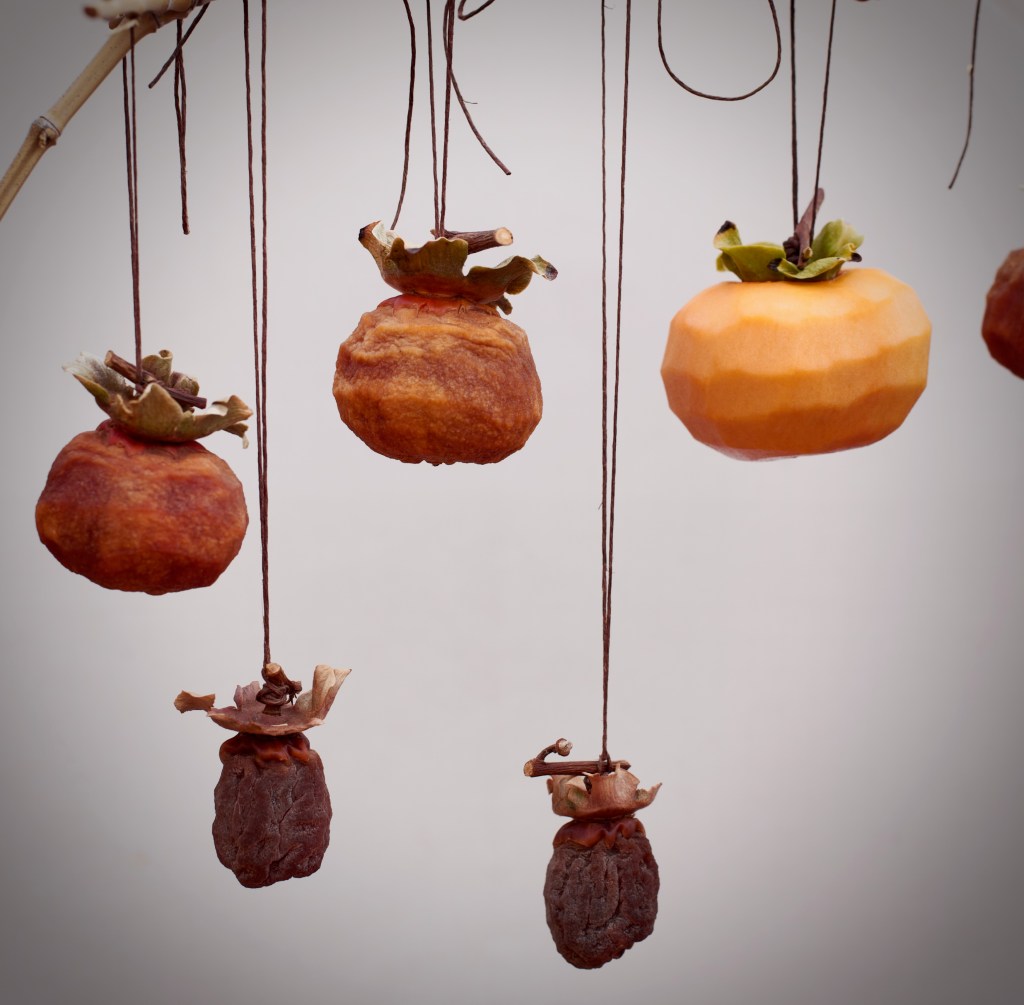
The persimmon is a gorgeous tree – of large, glossy foliage, – of tall, hard wood, and bedecked with orange-hued sweet fruits in globular or teardrop figures. Though not only is it ornamental, this fecund tree also nourishes throughout the cold winter. Revered in East Asia, particularly in Japan, it has inspired much poetry, perhaps throughout the winter of a poet’s life too.
Haiku emerged in Japanese literature during the 17th century as an unrhymed poetic form consisting of 17 syllables arranged in three lines of 5, 7, and 5 syllables respectively. The constraint of only 17 syllables enables the art of haiku to say much with little. An in-depth assessment of the poet’s background is often appreciated to gain a richer understanding of the haiku. Take, for example, the most famous haiku written by the poet Shiki, who wrote over 25 thousand haiku during his lifetime:
“I bite into a persimmon
and a bell resounds –
Hōryū-ji”
– translated by Janine Beichman
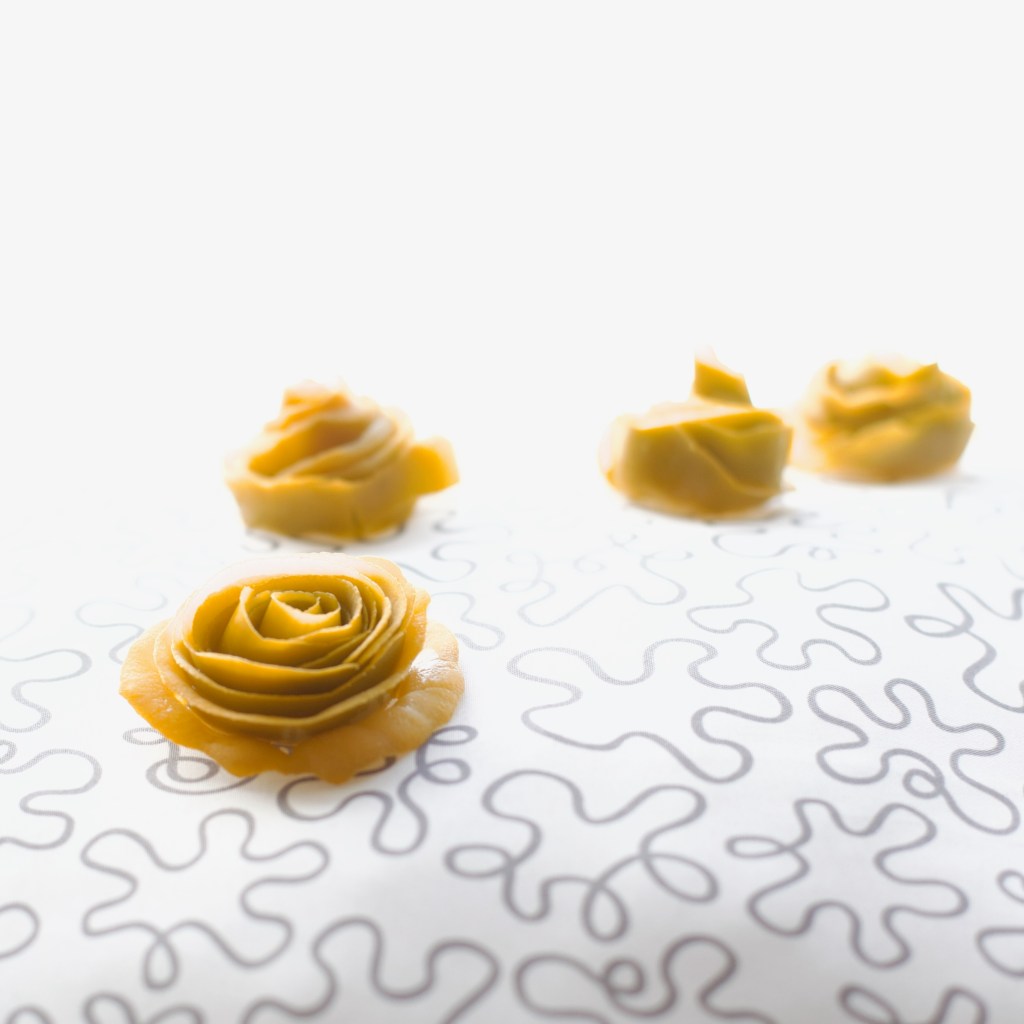
This haiku first gives the impression that the poet was enjoying a persimmon while the bell of Hōryū-ji, a temple in the town of Nara, resounded coincidentally. However, a closer look at the environs in which the haiku was conceived would suggest otherwise. Shiki had been eating a persimmon while hearing the bell of Tōdai-ji, telling the start of the previous night. He loved this moment so much that he could not wait for the following morning to experience the bell of Hōryū-ji while enjoying another persimmon. Thus it would suggest that he consciously went to Hōryū-ji Temple in order to write a haiku.
The haiku is famous for its usage of juxtaposition of Nara in the shape of Hōryū-ji Temple and the persimmon. Janine Beichman further noted that the juxtaposition works on many levels here, “between the sharpness of the act of biting and the long, mellow peal of the bell, as well as, on a more metaphysical level, the mortal moment of one human being biting into a piece of fruit and the broad, eternal expanse of time symbolized by the bell of the ancient temple.” Having known that Shiki had become very ill that year, and that it could possibly be his last visit to Nara, it would suggest the pleasure that the poet must have felt while savoring the persimmon at Hōryū-ji. [source: World Haiku Review]
Many a haiku have been written on the theme of the persimmon, albeit mostly by poets rather than poetesses. Shifting through persimmon haiku by various poets, one can glean into their layered motif – that of female beauty. The persimmon fruit becomes an analogy for the hue of her cheeks, the sweetness of her lips, the voluptuousness of her bosoms, the ripeness of her youth, the nostalgia of youth. So it is refreshing to read, once, a female perspective on the act of eating a persimmon. The poetess Chiyo-ni, upon her engagement to the servant of a samurai, wrote:
“Will it be bitter,
the first time I bite
an unripe persimmon?”
– translated by Michael R. Burch
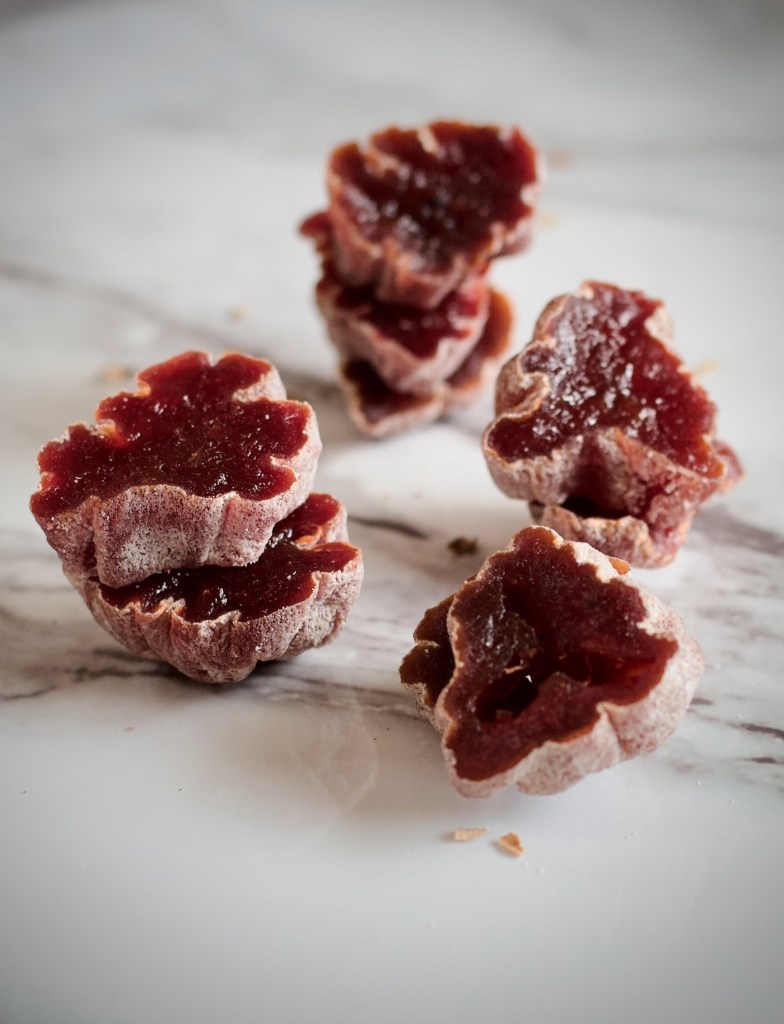
Furthermore, the haiku are written from the point of view of the persimmon eater and observer. I’ve yet to read one written from the point of view of the caretaker, the harvester, or the cook who prepares the fruit for enjoyment. Over this last autumn, I learned how to make hoshigaki, which is persimmon dried in a specifically prescribed method. To say that it is a labor of love is an understatement. The persimmons are peeled and hung out to dry. They are gently massaged by hands daily, and it takes between 4 to 6 weeks for them to be ready. But the reward is a soft, sweet globe coated with sugar powder that glistens like amber inside, its flesh sticky and jam-like. This act of making hoshigaki has inspired me to write several haiku myself:
Peeling persimmons
Stains my fingers sappy brown,
Bleeds winter sweetness.
Hanging persimmons
To dry under bamboo rods.
Windy flesh wrinkles.
Eating persimmons
Steeping in golden sunlight.
Brew honey sweet tea.
Poetic inspiration is all around us, be it about love, beauty, hard work, or perseverance. It requires empathy and compassion to feel it, and mindfulness to see it.
 hardlyplaying.blog