
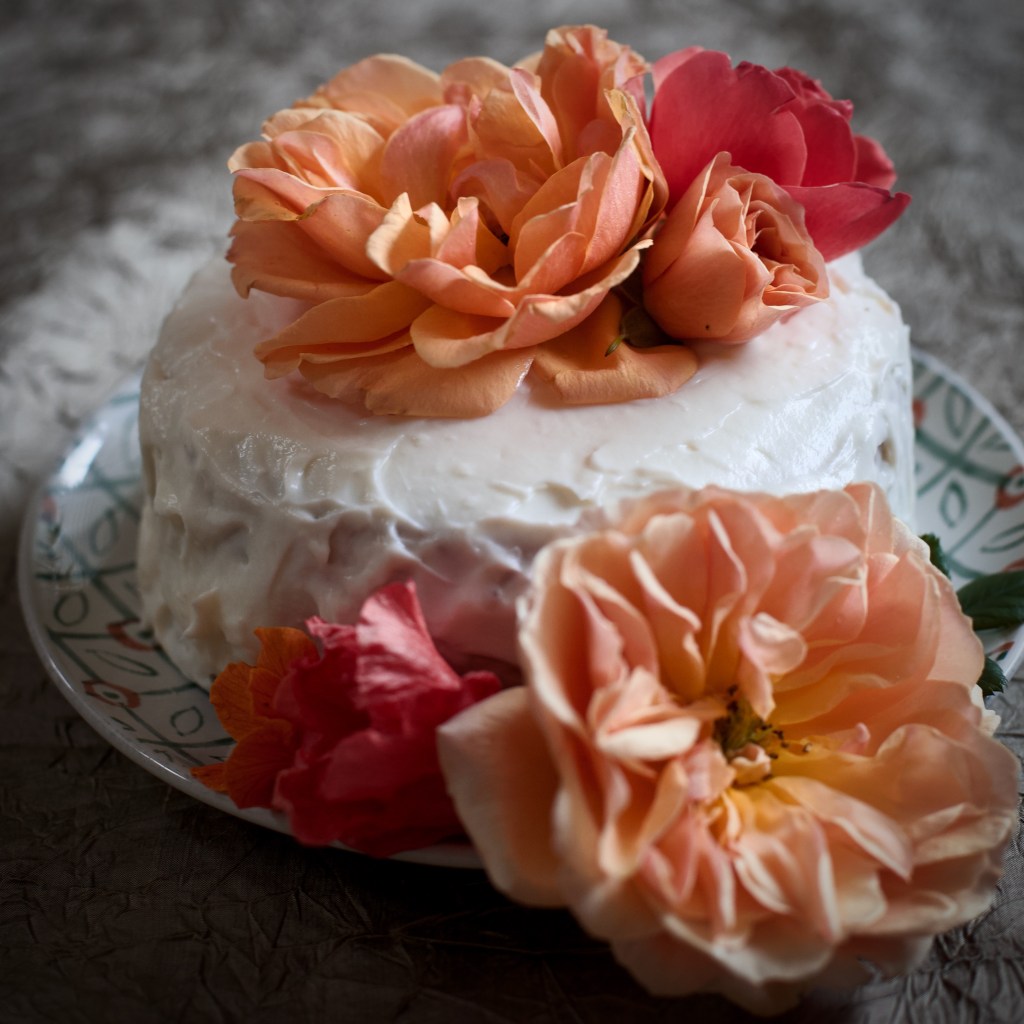
In making cakes, size matters.
Different baking pans require changes to the original proportion between ingredients, else it may no longer allow for a sufficient rise or may lead to over-leavening, causing the cake to collapse. As Shirley Corriher noted that “a sad cake is a happy cake”, a soft and moist cake, which is high in fat and sugar, may not form enough gluten to provide structure in order to rise itself in the same baking pan. As a remedy, bake in a tube pan. In modern days, a smaller party asks for a smaller cake, and using a smaller baking pan is also more forgiving in order to attain an appropriate rise, but still a soft and moist texture.
When ingredient quantity is adjusted, how it is made may need adjustment in order to retain the same quality characteristics. For example, mixing the cake batter generally demands vigorous beating, so if the original recipe calls for muscle strength, your arms may not be able to work a doubled recipe.
In making cakes, ingredients matter.
Whipping butter into the batter to add air gives a light and fluffy texture, while oil, being more effective at preventing gluten formation, makes a tender, moist, and denser cake.
An acidic cake batter is appreciated, for it helps the protein set faster. Some examples of acidic ingredients are yogurt, buttermilk, chocolate, honey, apple, lemon, vinegar. An acidic batter combined with baking soda also produces carbon dioxide much faster, allowing for a faster rise. Generally, each cup of flour requires 1 tsp of baking powder or ¼ tsp of baking soda. Over-leavening is usually caused by using too much baking soda. More leavening is needed, however, when using a smaller and deeper baking pan.
For an even texture without irregular-sized holes, use a self-rising flour, which is a low-protein cake flour already combined with leavening for an even distribution. Cake flour is not only lower in protein content, but is also ground finer and bleached by chlorination, helping fat to better adhere to it. Without cake flour, a softer texture can be obtained by replacing some flour with starch, such as corn starch, to add moisture and reduce protein content.
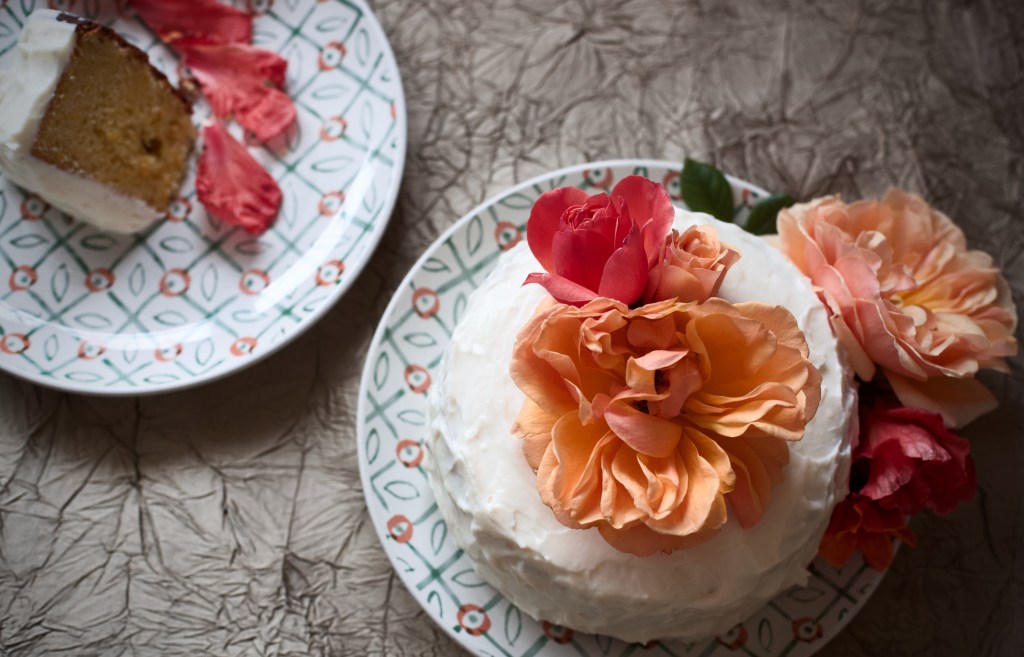
Whipping butter into this lemon cake endows it a light and fluffy texture. The recipe uses both baking powder and baking soda to take advantage of an acidic batter. The cake itself is not overly sweet in order to be sweetened further with frosting. The quantity of ingredients make well for a 6-inch round baking pan. Generally, I mix the dry and wet ingredients separately before combining them together. But for a cake batter with yogurt and lemon, I tend to add these last in order to avoid curdling.
Ingredients
1 cup cake flour, or sub 2 tbsp all-purpose flour for 2 tbsp cornstarch
1 tsp baking powder
¼ tsp baking soda
¼ tsp salt
¾ stick or 6 tbsp unsalted butter, cubed and soften
⅔ cup + 3 tbsp sugar
2 eggs
¼ cup plain yogurt, at room temperature
½ tsp lemon or ¼ tsp vanilla extract
1 tbsp lemon juice
Zest of 2 lemons
Instructions
Sift the flour, baking powder, baking soda, and salt into a bowl.
Whisk the eggs with sugar until pale and frothy. Add butter and continue to whisk until light and fluffy.
Stir together the lemon extract, yogurt, lemon juice, and lemon zest.
Fold the flour and yogurt mixtures into the egg mixture, ⅓ at a time, alternating between each. Line a 6-inch baking pan with parchment paper well above the top edge. 45-60 min @ 350F until a cake tester comes out clean.
This cake goes well with cream cheese frosting. Use a stand-mixer if you will make loads of it. Otherwise, it will mostly just stick to the bottom of the bowl and the tip of the whisk; resort to an electronic hand-mixer or your arms instead.
 hardlyplaying.blog