
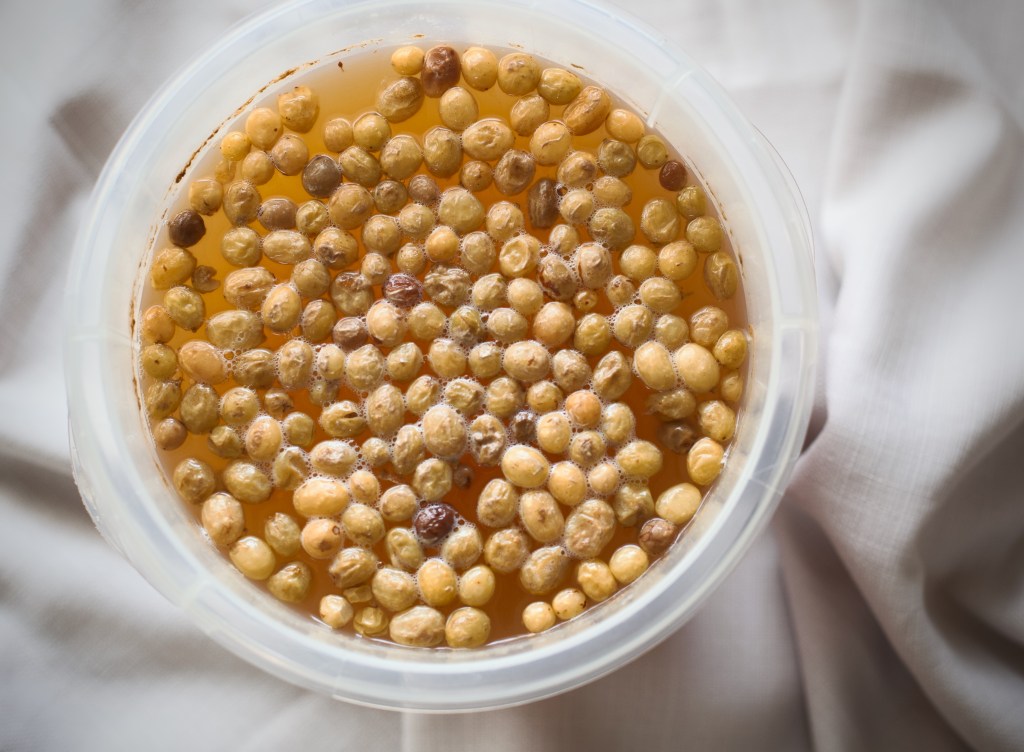
Mead is fermented honey water. Because honey is mostly constituted of a supersaturated solution of sugar glucose and fructose, mead can have as much alcohol as wine or more. Unlike cider, mead already carries an overt honey tone. Fermentation coaxes out its other floral and fruity aromas, reminiscing the flower nectar that bees feed upon. Though its super sweetness makes for a potent drink, mead does not have any tannin or tartness to give contrasts and characters the way that wine does.
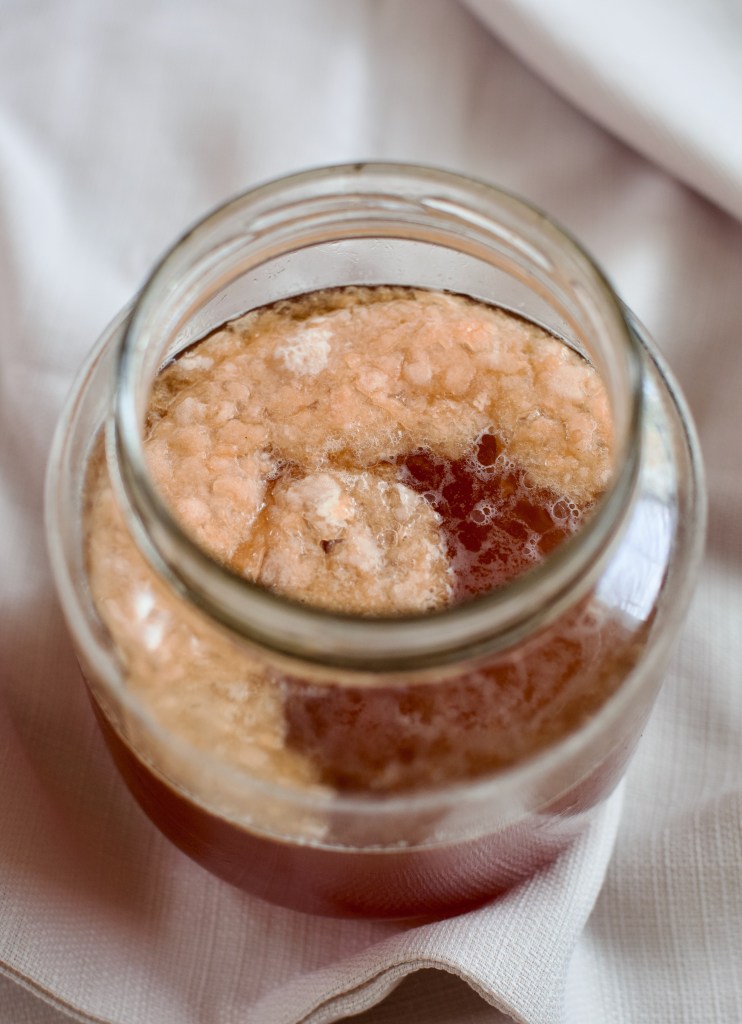
Mead is among the oldest alcoholic beverages drunk since ancient times. Made of pure sugar, honey is a natural preservative in itself. Yeast already present in honey water digests sugar into alcohol. Thus the best honey for mead is raw and unfiltered. The standard ratio of water to honey is 1 quart of water for every cup of honey to give the same alcohol content as wine, and the vessel should be well lidded. Until visible yeast rafts accumulate atop, it should be shaken vigorously daily to activate the natural yeast in honey. My mead took 3 weeks to show yeast rafts. They looked like a frothy and bubbling bed of white mold with yeast strands suspended beneath. It took a month and half to start showing tiny bubbles, an indication that the yeast was active and working. After 2 months, its pH value reduced from 4 to 3.3. It tasted sweet and rich, slightly tart, was amber hued and heavy on honey notes. Its specific gravity was 1.060, making its alcohol percentage value %ABV = (1.115-1.060)/.776 = 7.1%. Even though less cloying when refrigerated, it was pleasant to drink either at room temperature or cold.
Another month of fermentation brought its gravity value to 1.040, raising its alcohol percentage value %ABV = (1.115-1.040)/.776 = 9.6%. It had mellowed with a less overt honey tone. However, it also tasted rather flat, thus I found it best a month before.
Modern mead is made in a controlled manner to bring it to the quality of wine. Wine yeasts are employed along with other ingredients to make up for its lack of tannin, such as adding raisins and black tea. Thus I also added 1 cup of black tea, made with 1 tbsp of granulated black tea and steeped for 10 minutes, and 2 oz or 60 gr of sultana raisins to 3 lbs or 4 cups of honey. Then I filled in water to make a gallon of mead must. Initial readings showed pH = 4, OG = 1.115. This amount of mead took 1 tsp of blanc wine yeast. Similar to cider, it needs to be stirred vigorously to introduce oxygen in order to activate the yeast, but not at all for the rest of the fermentation process. Keep the vessel well lidded as carbon dioxide buildup keeps oxygen out, preventing mold from growing, especially with raisins present. Within a day, raisins floated to the surface with plenty of bubbles.
The first fermentation took a month. Its pH was at 3.5, its FG was 1.015, bringing its alcohol percentage to %ABV = (1.115-1.015)/.776 = 12.9%. Its color was between the hue of straw and wheat yellow. It smelled heady of honey and floral notes. It tasted sweet and clean, slightly tannic, with a medium finish. Unlike cider, mead can be kept with lee for 6 months to a year before racking. However, given the added raisins, I siphoned mine into 1-L bottles. Mead’s sediments appeared finer than cider’s, and there was still plenty present even after siphoning.
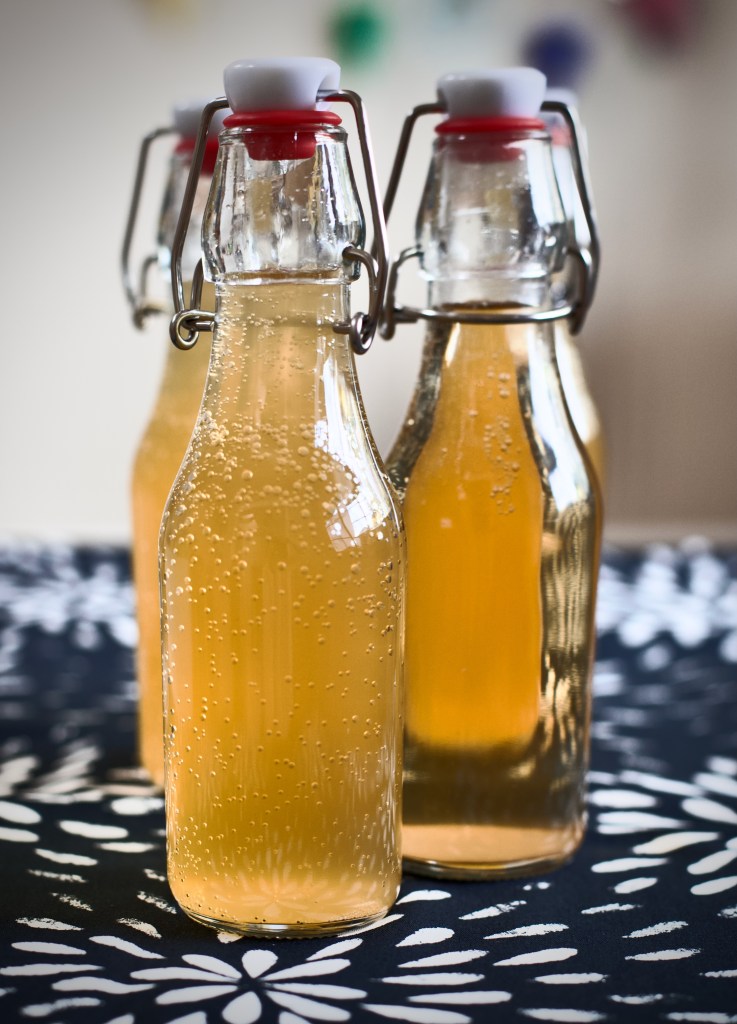
After another month, the sediment had settled to about 2 ml thick at the bottom, and it was siphoned to 250-ml bottles. Its color lightened to the same hue of straw yellow as cider, but its clarity remained opaque. Next to a bottle of cider, one could see that the cider was more transparent, showing the bottle of mead visibly through it. Overall, it had mellowed, but still heady with floral and honey aromas. It tasted sweet and slightly tannic with a medium to long finish, and moving toward a creamier mouthfeel. As with cider, mead continues to mellow and becomes more complex as it ages.
 hardlyplaying.blog