
Like fermentation, curing is a method to preserve food without the need for heat. However, whereas fermentation takes advantage of good microbes to keep food safe for eating, curing prevents bacteria from entering it at all. Both methods result in food’s physical and chemical transformation – fermentation with the aid of external microbes, and curing on its own enzymes.
Curing largely depends on salting and drying, such as salt cured fish roe which has been done across cultures for centuries. Quick curing, made ready within a few days with salt and sugar, is another popular method. Then there are century duck eggs, which are cured for months with salt and ash, transforming them into edible Fabergé eggs, of transparent albumen with jade-green colored yolk.
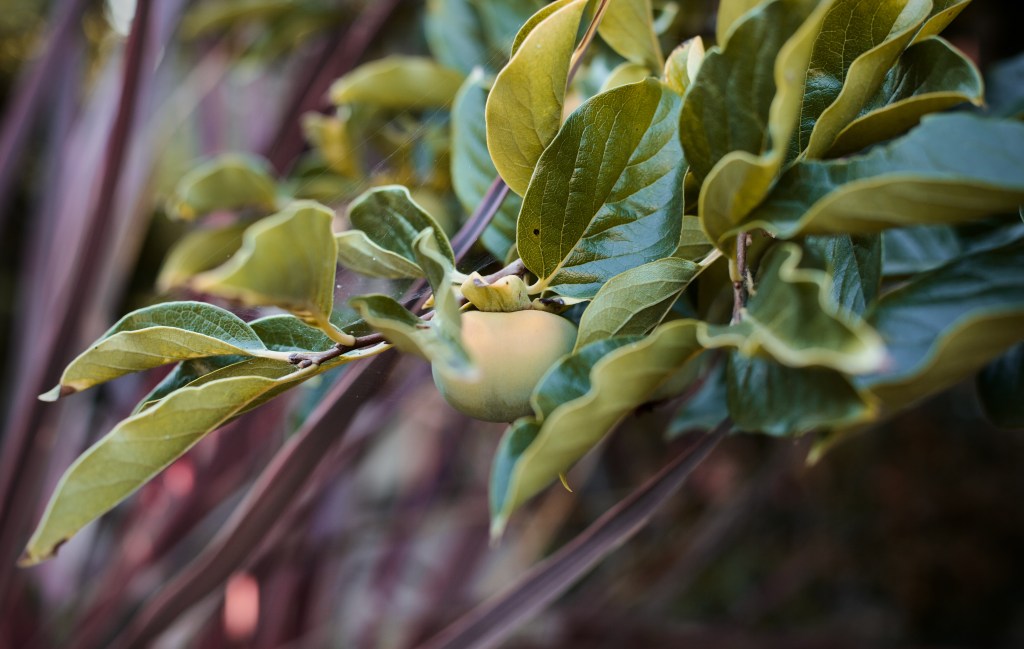
Beside animal products, fruits and vegetables can also be cured. Manning a fruit garden, one notices the variability in fruit qualities from year to year. There may be fewer, but large and pretty looking fruits one year, then followed with overproduced and small ones the next. Such is the state of the persimmon tree this year, making tons of little persimmons and me being too unmotivated to cull them. Small, firm, and unripe fruits are great candidates for curing. Certain fruits such as olives are actually inedible until cured.
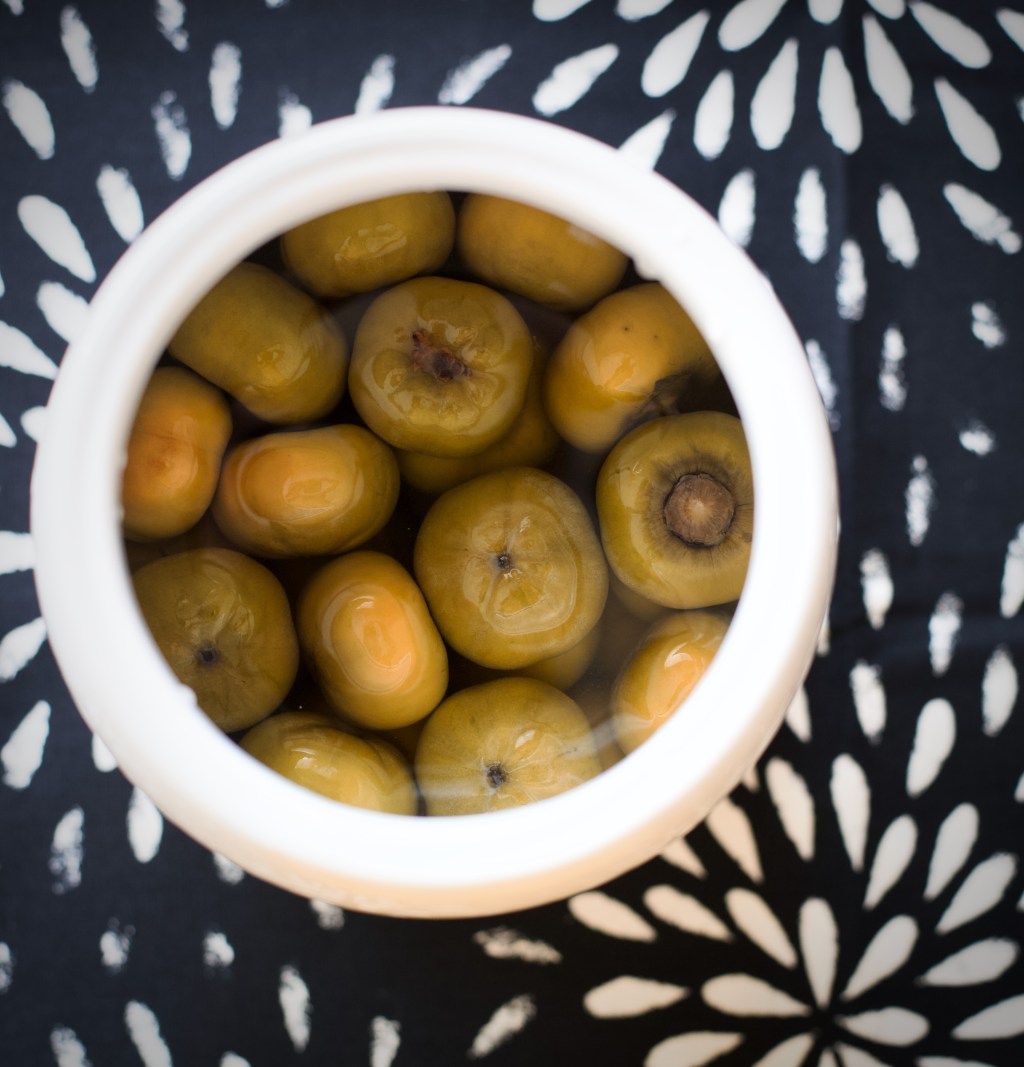
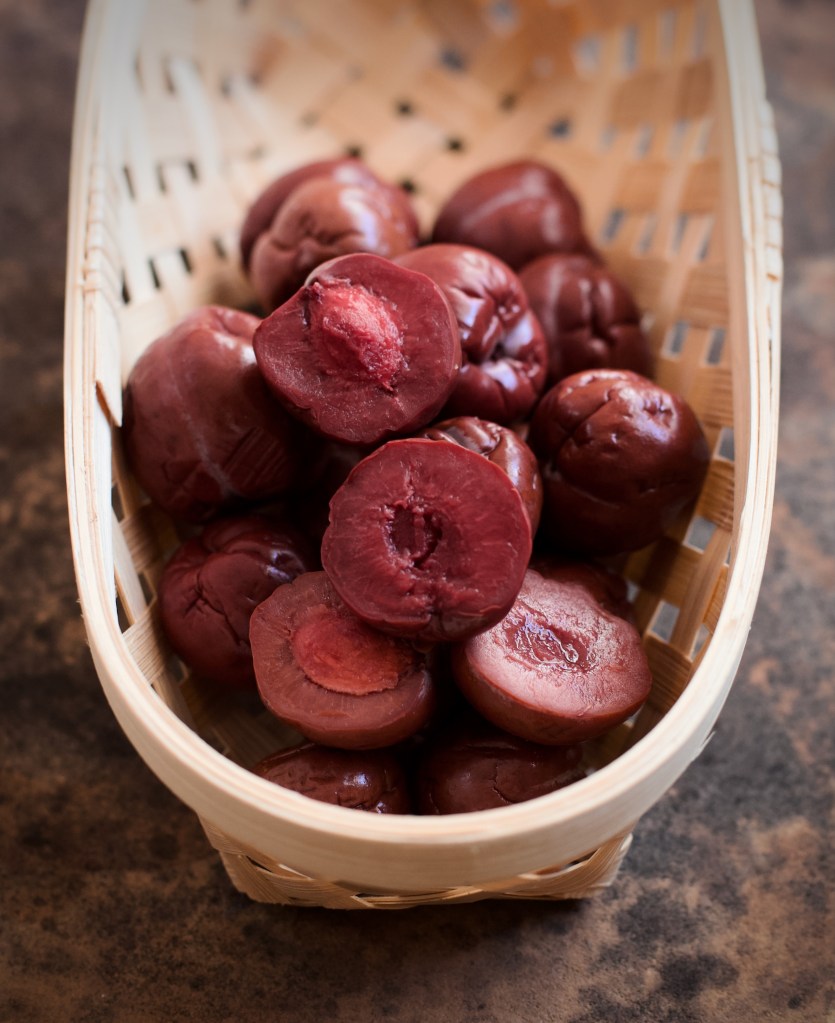
To salt cure persimmons, I used a brine of salt and alcohol. It’s one I employed successfully before to make chao, a fermented tofu first inoculated with mold, then preserved in brine. The ratio for this brine is [400 ml water : 100 ml rice wine : 3 tbsp salt : 1 tbsp sugar]. Fruits should be completely submerged in brine to prevent unwanted molds. The simplest way is probably to fill a clean plastic bag with water, tie it, and place it atop to keep the food submerged. They should be ready within a month and can also be kept in brine. Last year, I salt cured plums with the same brine for a month, then sun dried them for a week. The result resembled umeboshi, but not wrinkly or mushy. Instead, their textures were plump, soft, and meaty. They also retained their natural pink color, while umeboshi, being an apricot-like fruit rather than plum, is actually tinted pink with red shiso leaves. These were among my favorites. The sun-dried persimmons did not have the same quality, since they are not sour like plums.
Much joy of having a garden comes from taking care of the animals and plants and appreciating the sounds, colors, and fragrances that they offer. But also, just as much enjoyment is had from the fruits of our labor, learning the myriad ways to make use of them.
 hardlyplaying.blog