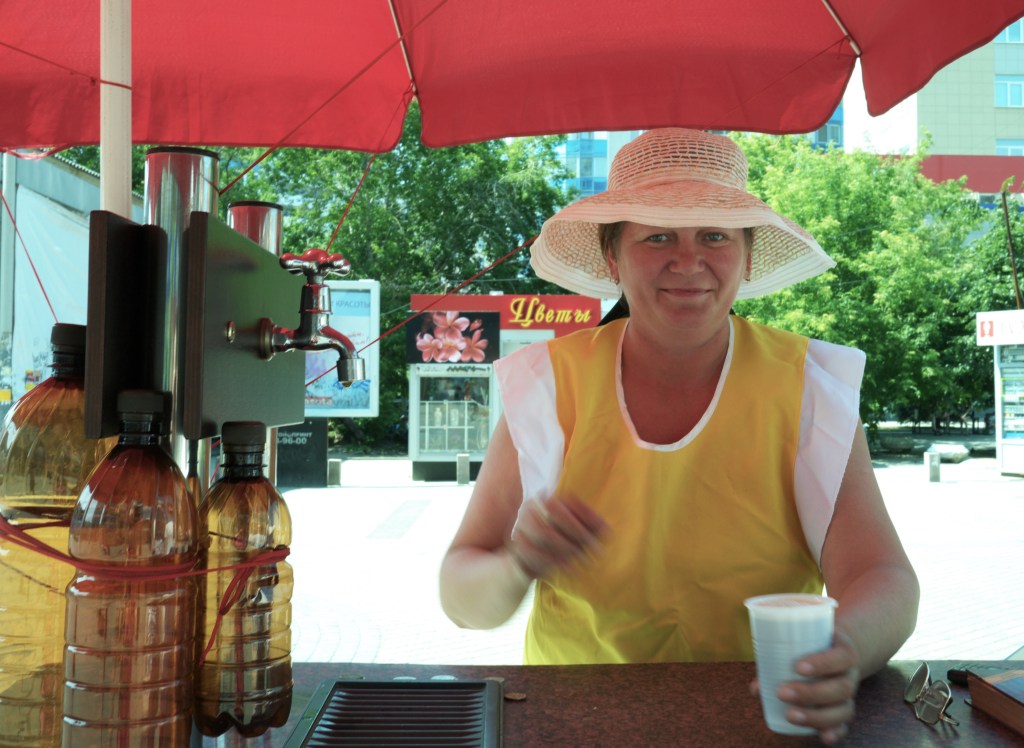
The first time I tasted kvas was in the city of Yekaterinburg in Russia’s Siberia. It was a perfect thirst quencher for a sunny and moist summer day. How hot can it really get in Siberia at such high latitudes? -but that it is landlocked allows its summer temperatures to rise to a sizzling 90’s range. Combined with high humidity, it felt no different from the tropics at the equator.
I’ve been wanting to try my hands at kvas for a while; this summer seems to be good as any. It is a beverage fermented with brewer’s yeasts, the same kind used for bread making. Typically taking a couple to several days, it is not as long as fermenting kombucha, which requires a week. Bread infused water, rather than tea, is the flavored liquid of choice. Kvas is comparable to a quick cider. Hard cider, which is fruit juices fermented with yeasts for months, has been consumed in Europe since ancient times.
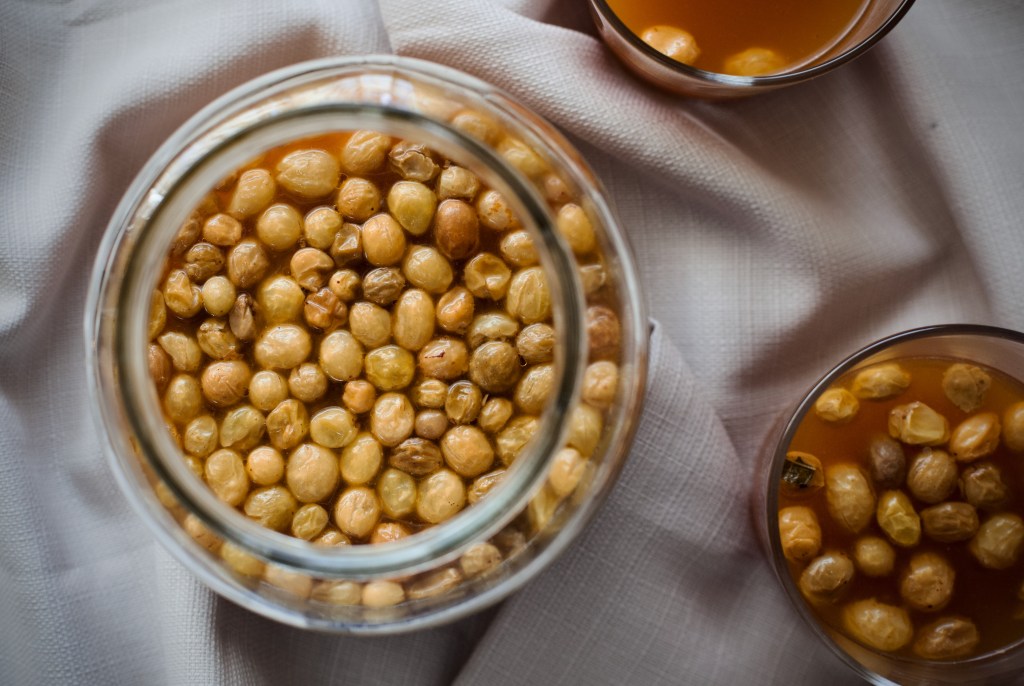
Similar to a hard cider, kvas follows a 2-stage fermentation process, the 1st in a large “barrel”, and the 2nd after bottling. Using baker’s yeasts makes a cloudy cider with a strong yeasty flavor and does not make enough alcohol to preserve the cider. But it works for kvas, since it is meant to be drunk much sooner. However, adding sultana raisins introduces different yeasts and noticeably improves its flavors. Sultana raisins are the sun-dried, pale yellow, seedless grapes. They contain an abundance of wine yeasts on their skins.
Dark rye bread is the bread of choice. I made mine following this recipe, halving the quantities for one 800-gr loaf. Depending on the bread, the amount of water may vary. This recipe for kvas is adapted from Kachka by Bonnie Morales.
¼ lb of stale rye bread
1½ liters of water
¼ cup + 2 tbsp sugar
½ tsp active dry yeast
A handful of sultana raisins
As with any fermentation project, sterilize all equipment with boiling water and use a glass, ceramic, or food grade plastic container. Slice the bread into ¼-inch slices, place them single layered on a baking sheet, and bake for 20 minutes at 350F until they’re dried out but not burnt. Bring the water to a boil and soak the bread slices in half of the boiled water for an hour. Filter and retain the bread for another one-hour soak with the other half of the boiled water.
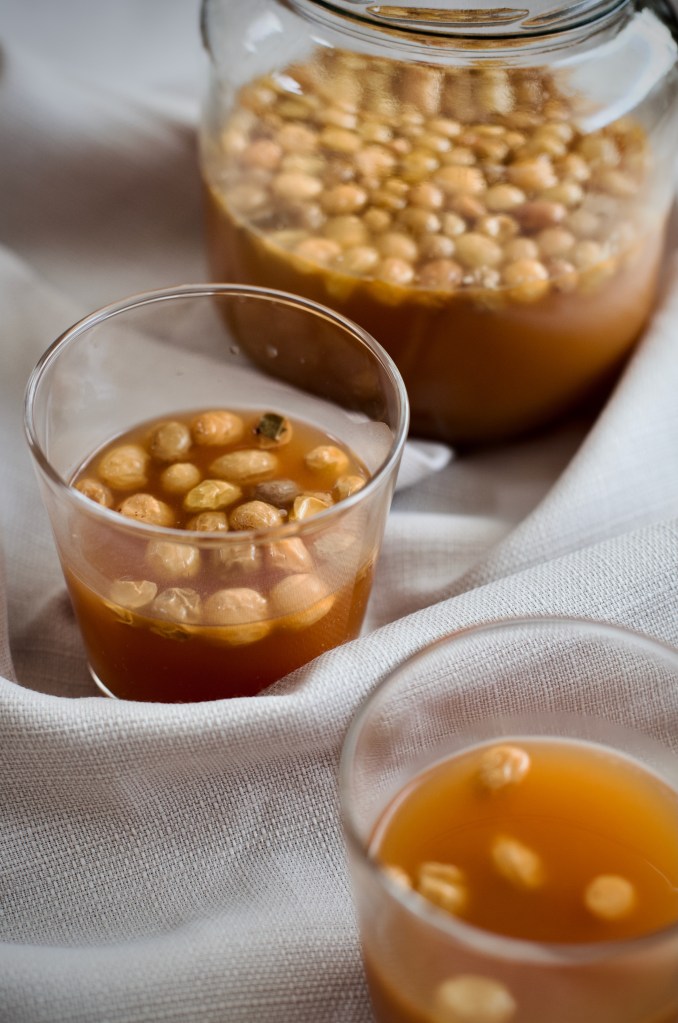
Collect both quantities of the filtered bread water and add to the fermenting vessel along with sugar and the yeast. Stir to dissolve and cover with a linen cloth. Taste it after 24 hours of fermentation. It should smell yeasty like leavened bread dough, be slightly fizzy, and tastes sweet and malty. Add the raisins and let ferment for another 24 hours. Now, it should taste drier, its flavor mellows and is more complex. Bottle along with the raisins and refrigerate. It will continue to ferment in the refrigerator.
 hardlyplaying.blog