
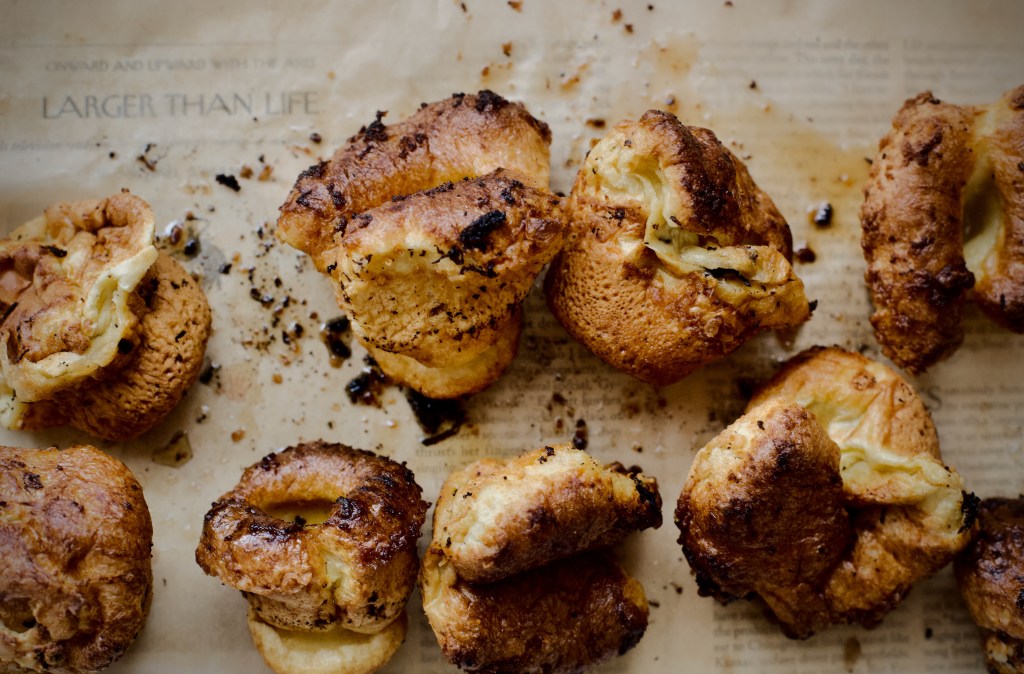
Bakers love high rises. A tall and fluffy loaf of bread, a crisp and airy pâte-à-choux, a poofy and pillowy soufflé, a bed of cloud of meringue are the crowning achievement worthy of a brag. Previously, this sort of baking could only be done in a communal oven, which only existed in highly populated towns. But modern technologies changed it all. Built-in ovens in every home, powerful kitchen gadgets, and affordable food supplies allow even casual bakers to play and experiment, to try to create breads fit only for royalties in the olden days.
Additionally, the plethora of books and internet resources enables sharing of experiences gained over many years from many bakers. I am, in many ways, enjoying the fruits of their labors. While toying with the pâte-à-choux, the popovers caught my attention. Whereas the choux are hollow and bland “cabbages” in need of a filler, popovers are mile-high puffs that can hold their own. Popovers are crisp shelled but tendered in flesh, and this one from Kenji López-Alt won me over because it’s flavored with tallow. I always have frozen beef dripping laying about, waiting for the next big thing. Beside the winning flavor profile, his experiment detailed every possible alternatives for your popovers to rise taller. Heat and steam make the magic happen for this sort of batter without a leavening agent. The popover batter is even thinner than a pancake batter; getting it warmed to room temperature, then the baking pan and the oven super hot will quickly evaporate liquid into steam, rising the bread three times over.
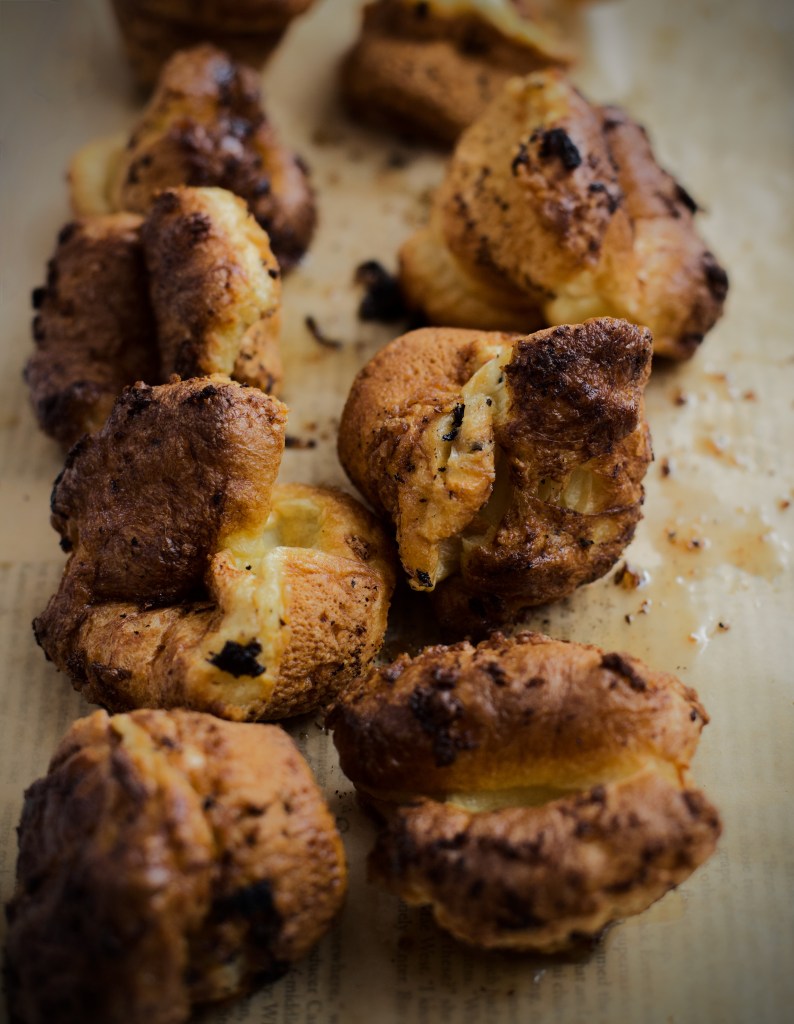
Next to heat and steam, another technique for a high rise is to trap air by whipping the egg whites into foam. It is employed in the soufflé, another type of batter without a leavening agent. In Bake Wise, Shirley Corriher prescribed folding a hot cooked dough into the egg-white foam to ensure a warm batter before going into the oven. Observe that from oven to photo, the soufflé was already deflated, as it’s meant to be served immediately.
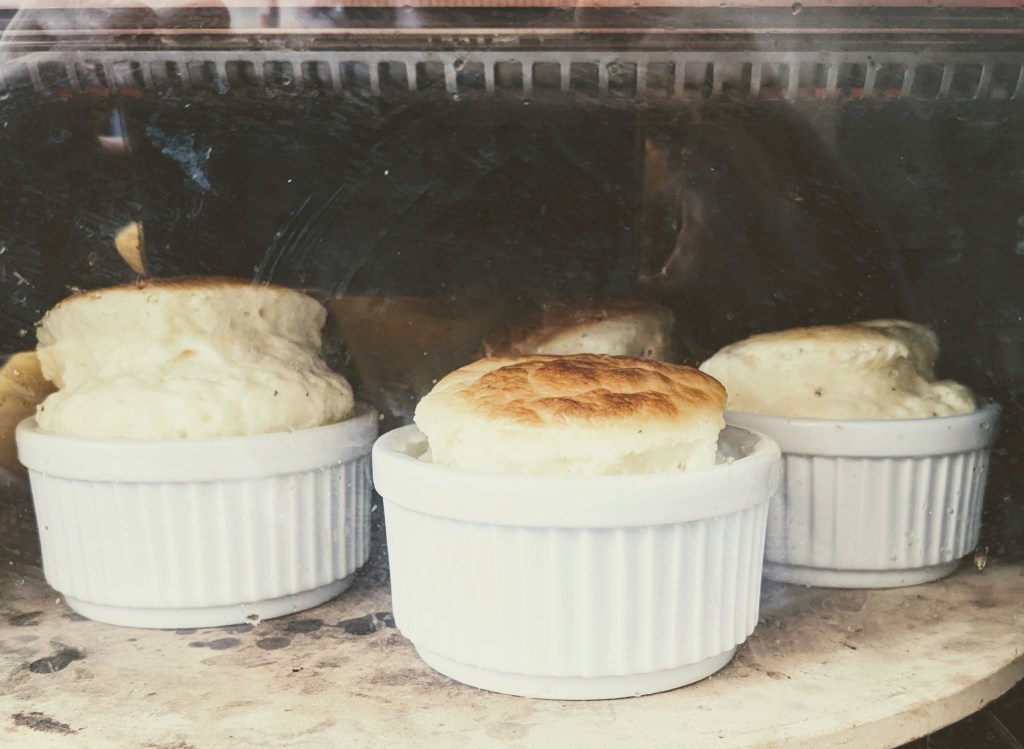
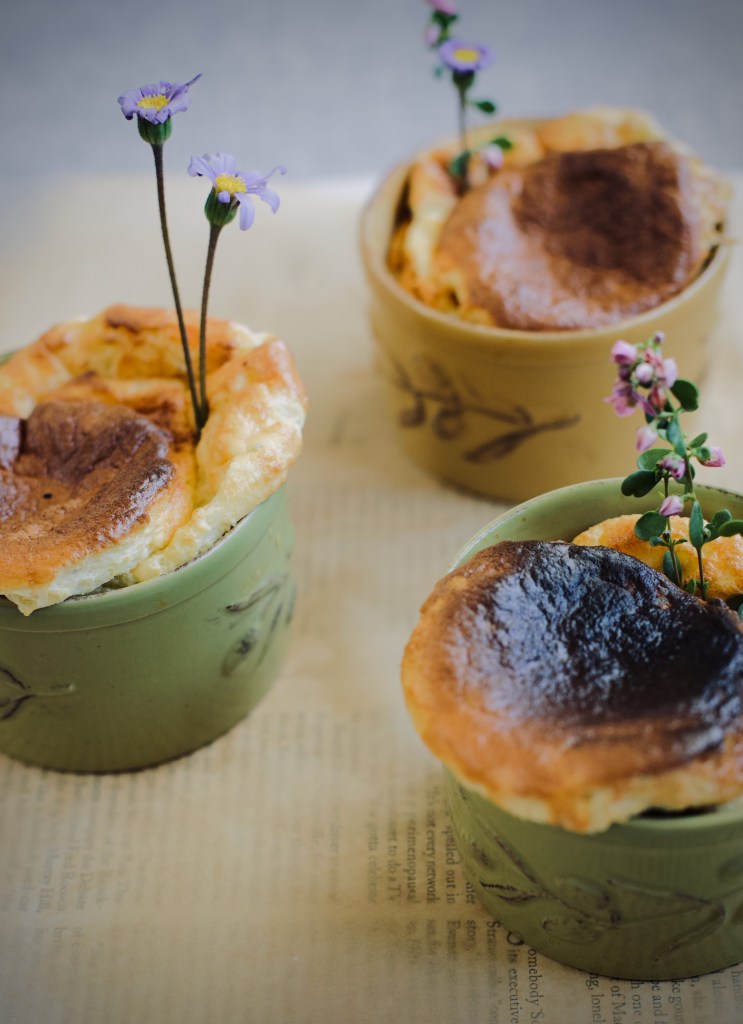
If maintaining a perky soufflé is of priority, there is the non-collapsible soufflé by Julia Child on The French Chef series where she used more egg whites than yolks to stabilize the rise. A less fussy and more decadent approach is to bake twice, the second time in a cream bath. In this way, the soufflé can be prepared ahead and reheated to puff up again at your convenience.

Meringue also makes a light and soft cheesecake, aka the soufflé or cotton cheesecake. However, it’s really not a modified American cheesecake. The New York-style cheesecake strives for a dense and smooth texture, thus incorporating air into the batter while mixing is not desirable. I keep a cheesecake recipe by Nigella Lawson where she prescribed having every ingredient warmed to room temperature, then blended together using a food processor. Some recipes use a mixer with a whisk or a leaf attachment which tends to beat too much air into the batter, leading to over mixing. On the contrary, whisking air into the egg whites is why the soufflé cheesecake has its iconic airy and fluffy texture. I used this recipe from Francis and Chef. It can be eaten warm or chilled, but I prefer the later. Like all most cakes Asian, it does feel and taste very healthy; you’ll just reach for 2 slices instead of one.
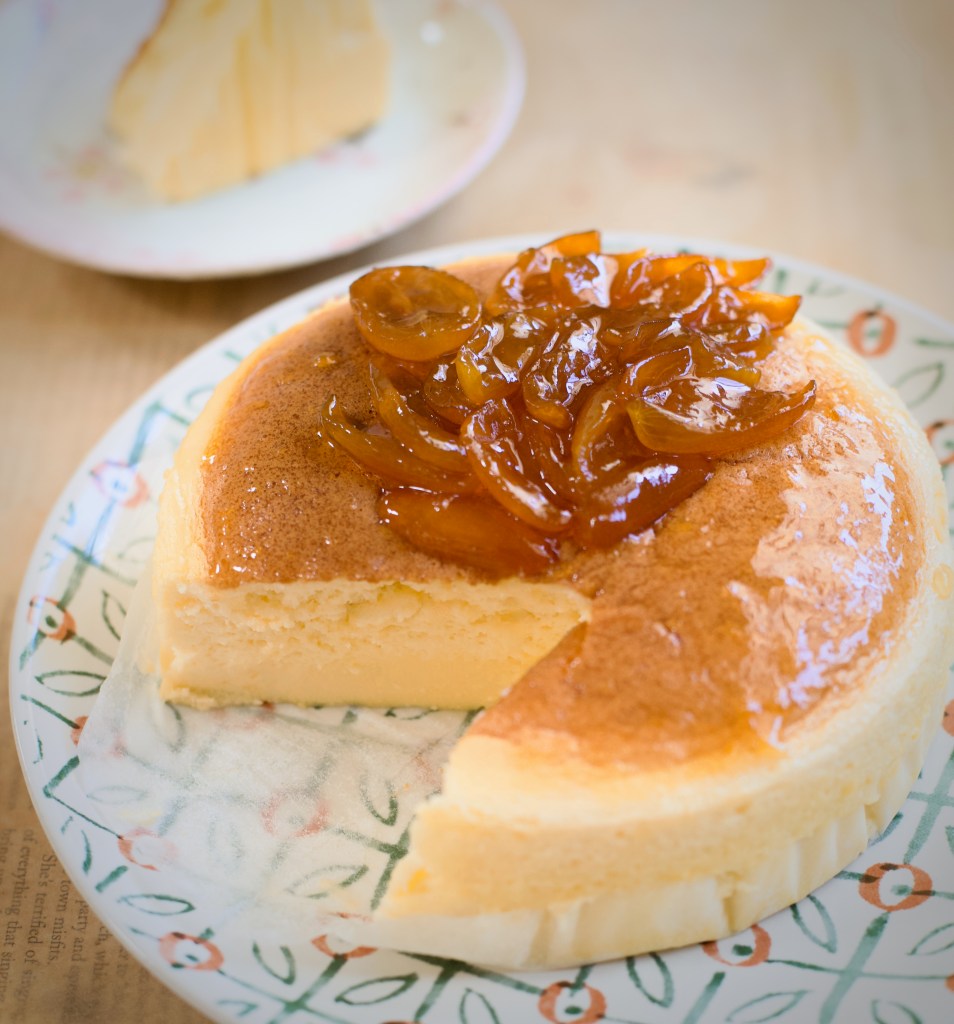
Ingredient quantities in U.S. units:
4 oz – 1 tbsp cream cheese, 2 tbsp sour cream, 1½ tbsp butter
2 large egg yolks
2 tbsp + 2 tsp cake flour, or replace 1 tsp AP flour with 1 tsp cornstarch
⅓ cup + 1½ tbsp milk
½ tsp vanilla extract
2 large egg whites, 3 heaping tbsp sugar
Glaze: ¼ cup apricot jam diluted with 1 tbsp dark rum.
Using a mini convection oven, it’s set to 320F for 10 minutes, then to 300F for 40 minutes. Typical for a soufflé, this cheesecake will deflate as it cools.
 hardlyplaying.blog