
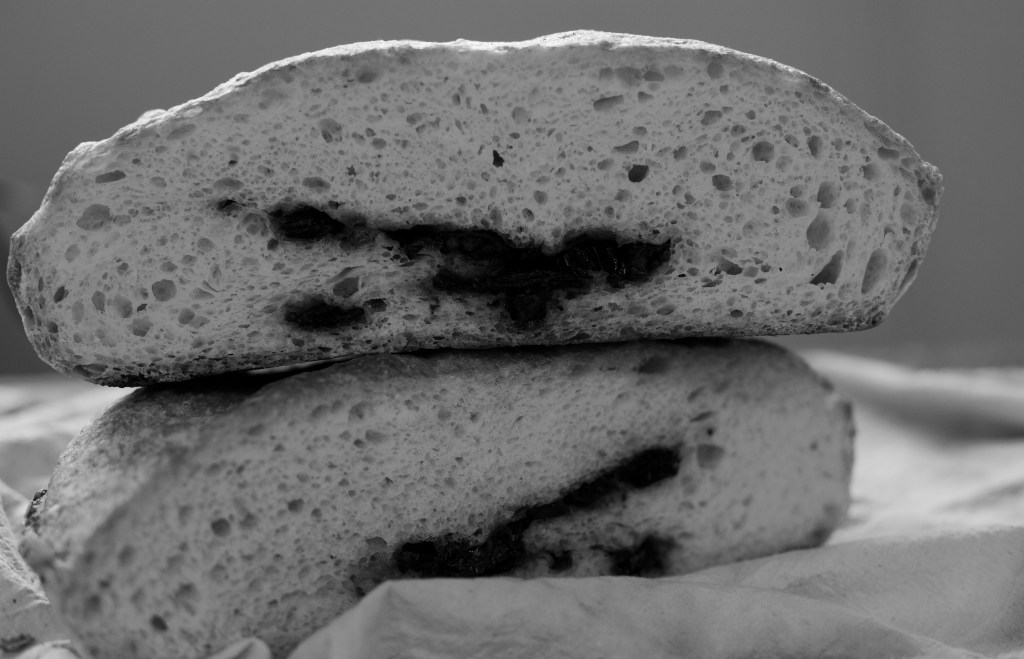
I’m no expert at bread making. I’ve tried my hands at sourdoughs, baguettes, bagels, flat breads, soda breads, and they mostly came up short of my expectation. But over the years, I’ve gathered a decent dose of learning for an appreciable bread dough. It makes for a good table bread, to be doused in swirls of olive oil and balsamic vinegar, with a shower of salt and pepper bits. It also makes a good base for pizza.
A good bread dough requires nothing more than wheat flour, water, yeast, and salt. And when you want a good bread dough with minimum amount of effort, time is on your side. Given enough time, the dough will develop gluten on its own without the need for kneading, building structure to the bread. Over time, only the least amount of yeast is needed to digest flour and water into gas and alcohol, creating gaping holes and giving depth to flavor and taste.
Depending on ambiance temperature, we should plan between 24 to 36 hours from flour to bread. This dough is wet, at the ratio of 70% water to flour, a typical ratio for focaccia bread. A high-hydration dough opens up the crumb for those desirable air pockets in your bread. The more hydrated, the more kneading is required for stronger gluten development.
500 gr wheat flour makes four 10-inch pizzas or one 10-inch loaf
350 gr water
1 tsp salt
½ tsp active dry yeast
Ensure the dough has risen fully twice, but not more than thrice before baking. Bread dough has fully risen when it doubles in size.
1. Late afternoon: dissolve the salt in water and mix the yeast with flour. Then pour the salted water into the flour mixture and give it a few vigorous stirs. Cover the bowl with cling film and let it rest, ideally at ~70F. Before bedtime, stir to ensure that any bit of dry flour is properly wetted, using extra water if necessary.
2. Next morning: if it has barely risen, again stir the dough to ensure that any dry bit of flour is wetted. Cover the bowl and let it rise fully. This is the first full rise.
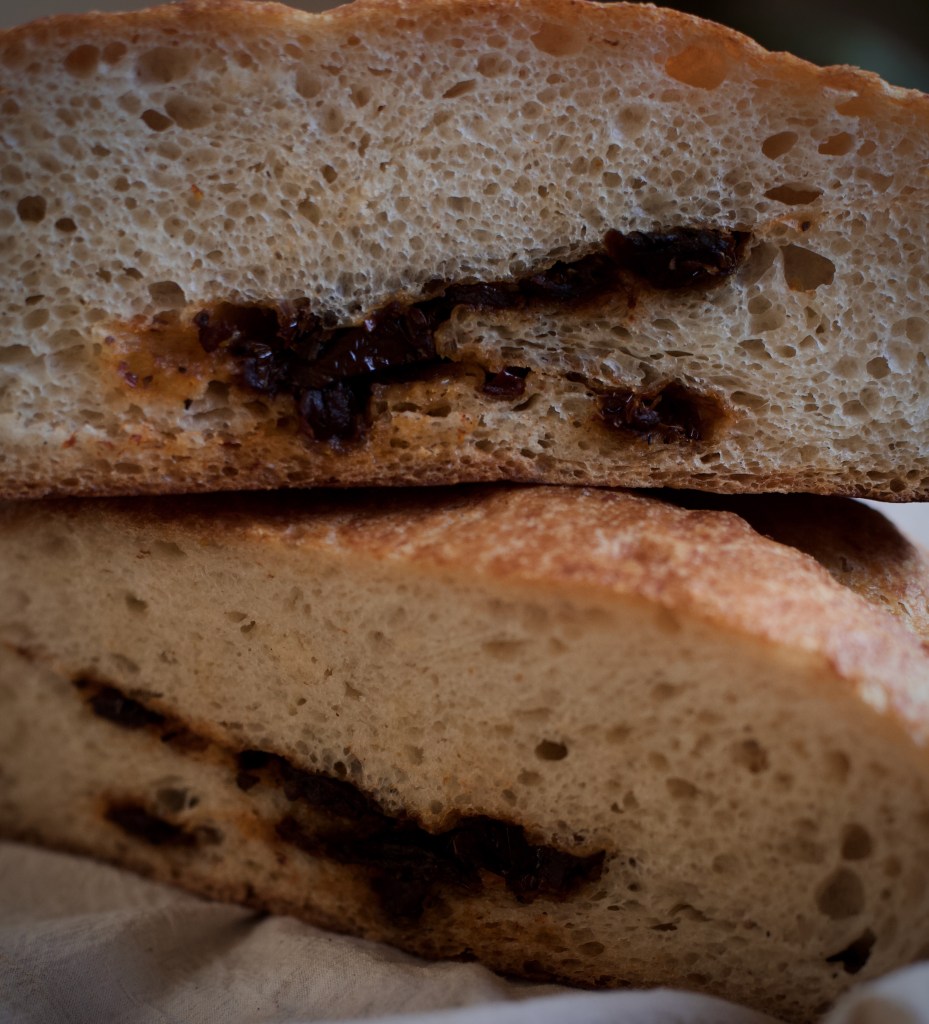
Bread:
3. Scrape the dough onto a flat surface sprinkled with flour. It is fairly loose and should spread into an elongated oval. Use a dough scraper to fold the dough from the short end all the way to the other short end, making another elongated oval in the perpendicular direction. Use the dough scraper to fold the dough again from the short end to the other short end. Repeat two more times, brushing off extra flour as needed with a pastry brush. Now scrape and mold at the bottom in a circular motion so that it resembles a boule. Oil a large bowl and place the boule inside the well-oiled bowl. Cover and let it rise until 50% larger to nearly doubled in size, about 2 hours. This is the second full rise.
4. Place in the oven a baking stone, a 10-inch cast-iron pan, and a pot to cover, such as a dutch oven, so that all are pre-heated to 500F. Very carefully, take the cast-iron pan out of the oven and drop the boule into it. Spray the surface of the bread dough with water and score it. Cover it with the preheated pot and bake for 15 minutes.
5. Gently lift the covered top to vent steam. Reduce oven to 450F and continue to bake covered for another 15 minutes. Then bake uncovered for another 15-20 minutes until desirable browning. Ensure it is completely cool before cutting, about an hour.
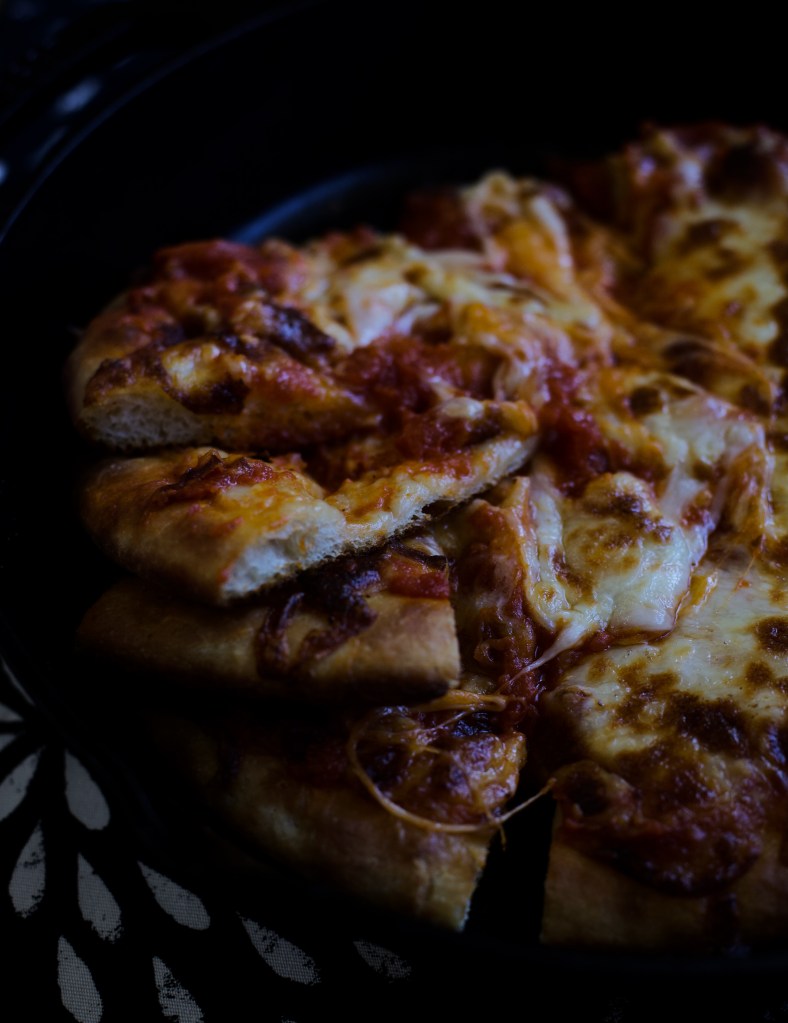
Pizza: store-bought marinara sauce works well as tomato sauce. I stir in a teaspoon of sugar to soften the acidity of the tomato, but adjust to taste.
3. Divide the dough into four portions and form into balls. Then place the dough balls onto the baking sheets or cast-iron pans and press down to stretch them outward, then cover. After the dough balls have again relaxed, about an hour later, repeat. Cover and let the dough rise fully. This is the second rise.
4. Set the oven at 550F. Stretch the pie again if desired. If the pie is >~ ¼ inch thick, bake it by itself for the first 3-5 minutes on the lower rack. The extra time allows for the bread to rise and brown properly. This point in time would be appropriate to freeze for later. Spread the tomato sauce, cheese, and toppings of choice and bake for another 10 minutes on the lower rack until the cheese is browned in spots and bubbly. Pizza toppings are ever diverse, but my favorite is the classic – just tomato sauce, shredded low-moisture part-skim mozzarella, and nothing else required.
 hardlyplaying.blog