
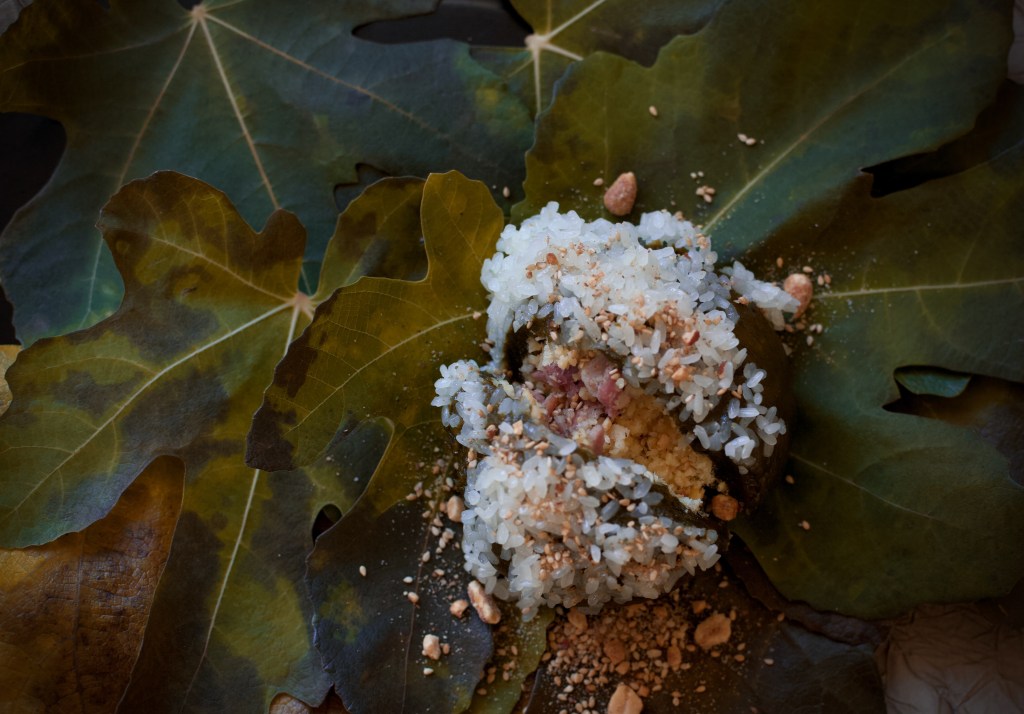
Amidst the holiday season, take some time for food that makes you feel warm and cozy. It could be something decadent, festive, or something that you savored in childhood. I’m sharing a few favorite recipes that I’ve learned over the years.
Egg Rolls
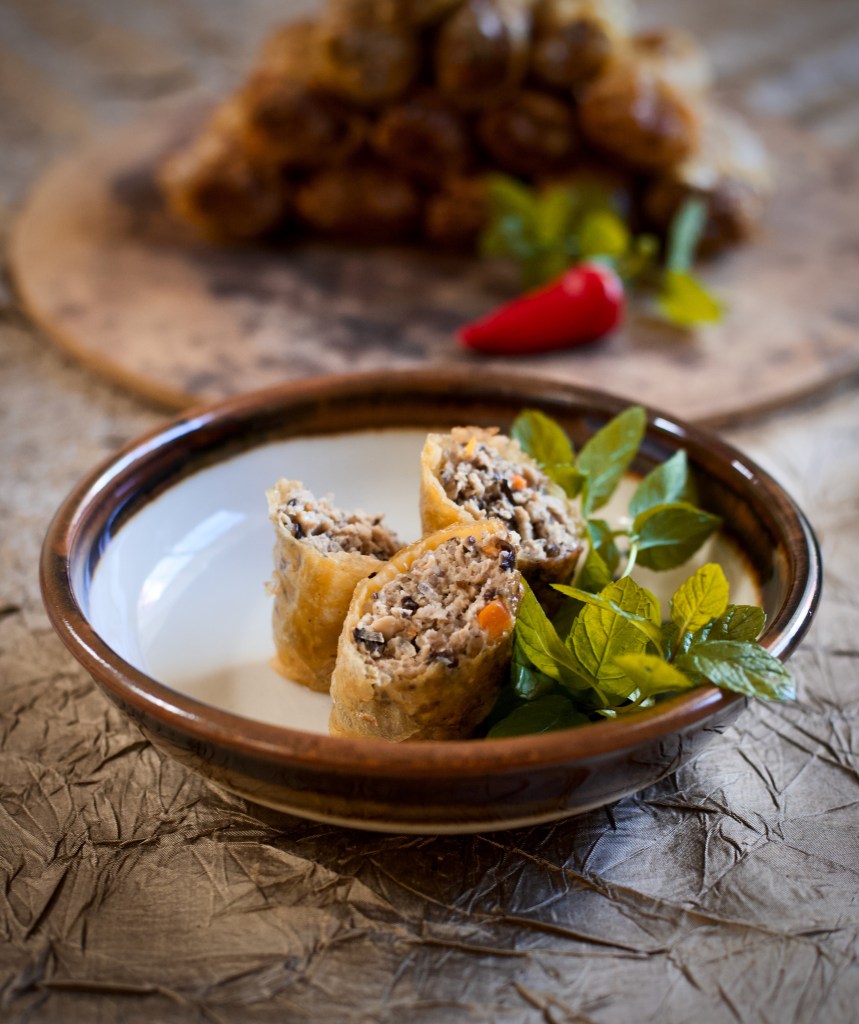
Fried cylindrical rolls are a ubiquitous Asian food, but their variations lie in the type of wrappers and what goes into the filler. While most fillers are made with a minced meat, typically pork, it’s the rest of the filling ingredients that differentiates the egg roll, either making it a common appetizer or elevating it into a dish for a holiday feast. In choosing filler elements, two qualities are kept in mind – textures and flavors. The following are typically selected for the Vietnamese egg roll:
. Shiitake mushroom: flavor
. Wood ear mushroom: crunch
. Onion: flavor and soft texture
. Carrot: some flavor, mostly for crunch and color
. Jícama, kohlrabi: crunch, jícama is preferred for added sweetness
. Cellophane noodles: for chewiness, presoaked in water
They can be cut matchstick style or chopped up in a food processor, which is how I usually do it. The weight ratio of meat to other fillers should be 1 : 1 to keep the filling soft and moist, preventing it from being dry and pasty. Salt ratio should be ¾ tsp to a pound of meat, plus a scant ¾ tsp to a pound of other fillers. To bind everything together, add one egg per 2 pounds of fillers. Always error on less salt, as it’s much easier to add than to subtract it, and do a taste test by pan-frying a teaspoon of filling before wrapping.
Not with wheat wrappers, but Vietnamese egg rolls use wrapping papers made from rice flour. Unfortunately, I have not been able to find a suitable rice wrapper to make egg rolls here in the U.S. The ones sold at grocery stores are OK for spring rolls, but when fried, instead of being thin and crispy, they turn into a thick, chewy, and sticky mess. I would go for the ones used in the Filipino lumpia, as they are the thinnest variety among the wheat wrappers.
PA Sticky Buns
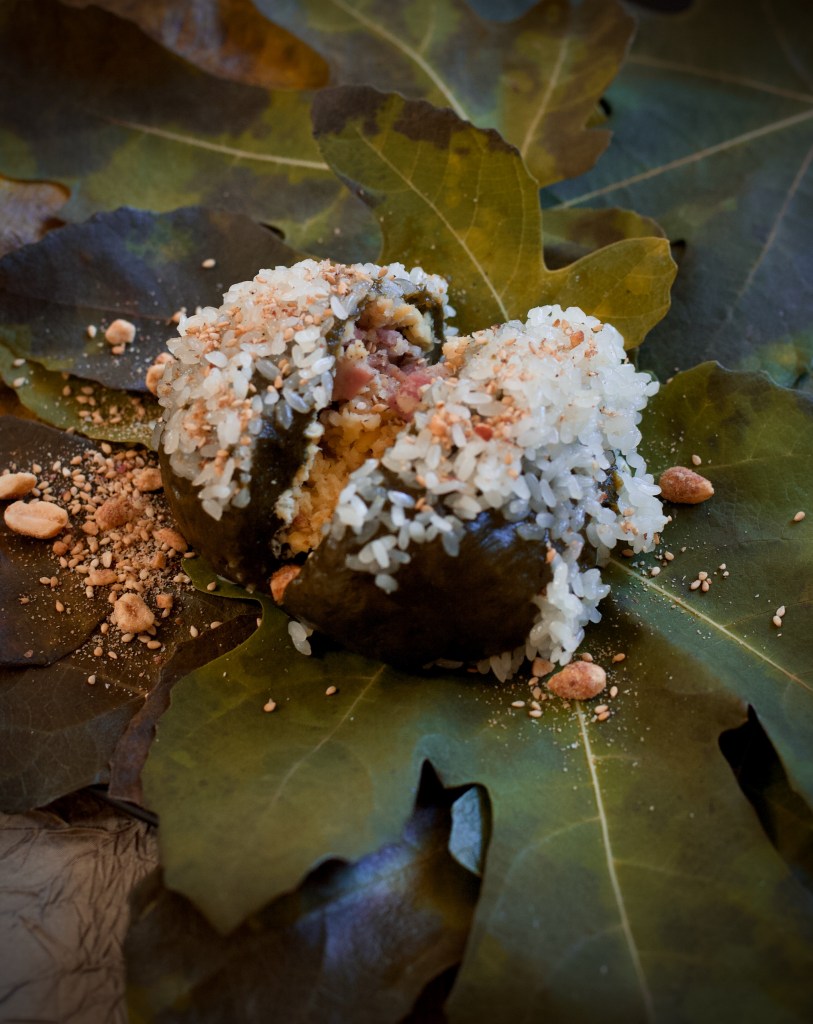
These used to be my after-school treats. They’re made with a green leafy weed, scientifically called pseudognaphalium affine (PA), but their Vietnamese common name is “lá khúc”. Making these recalls the turducken method where one is stuffed inside another. Here, the bacon is stuffed inside the ball of mung bean, enveloped by a sticky layer of PA and sweet rice flour, and finally covered with sweet rice. I’ve swapped out the PA for spinach leaves, flavored with mustard.
Makes 8 buns:
. ½ lb dry cured bacon or 4 thick-cut strips, cut into bite-sized pieces, seasoned with ground black pepper, and divided into 8 portions
. 1 cup mung bean, soaked overnight, steamed for 30 minutes, and mashed with ½ tsp salt into a rough paste so it can be formed into a ball
. 1 lb spinach leaves, blanched and blended into a smoothie with 2 tsp mustard condiment and 1½ tsp salt, then kneaded with 3+ cups sweet rice flour to make a malleable dough, divided into 8 portions
. 2 cups sweet rice, soaked overnight and seasoned with 1 tsp salt
Spread a layer of sweet rice onto a large steaming tray. Flatten the mung bean paste on the palm of your hand, then place the bacon on it and close the hand to form the mung bean ball. I used a bowl to wrap the PA layer around the mung bean by pressing the dough against the wall of the bowl, placing the mung bean ball into it, and then molding the dough inward to close completely. Don’t dismay if there are tears, spills, or intermingling, as it does not affect the taste. Place the buns onto the steaming tray, atop the sweet rice and apart in a single layer, otherwise they will stick to each other. You may need to do 2 bouts of steaming. Cover the buns with a top layer of sweet rice and steam for 30 minutes. Serve with roasted peanuts and sesame seeds, salted and crushed.
Fruit Cookies
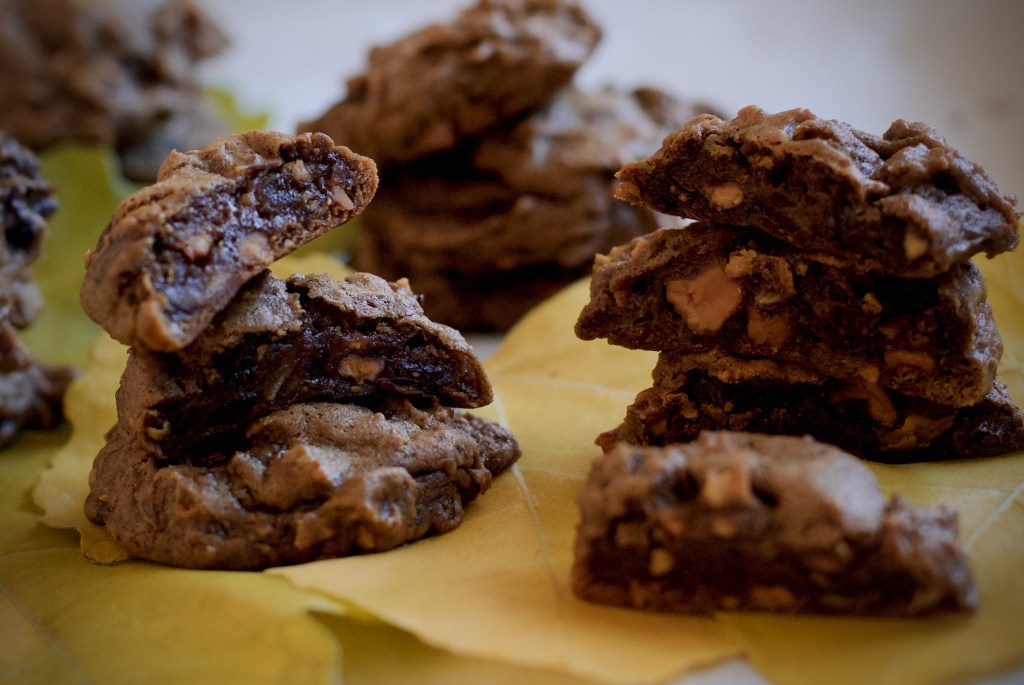
Similar to the fruitcake, these fruit cookies are made with dried fruits and holiday spices. However, that the dates are pre-soften makes for a softer texture. I generally group the ingredients for cookies into 4 categories – the wet, the dry, those for textures, and finally those for sprinkling. The recipe for these fruit cookies is adapted from Shirley Corriher’s New England hermit bars.
Makes 24 cookies:
. Wet: ½ stick soften butter, ½ cup brown sugar, 1 room-temp egg
. Dry: 1¼ cup flour, 1 tsp baking soda, ½ tsp salt, 1 tsp cinnamon powder, ¼ tsp allspice powder, ⅛ tsp grated nutmeg
. Texture[1]: ½ cup dates sprinkled with ¼ tsp baking soda and soaked in boiling water for at least 1 hr, then dried and chopped. The longer soaking time, the softer they become.
. Texture[2]: ½ cup raisin and ¼ cup other dried fruit bits soaked in 1½ tbsp dark rum and 3 tbsp molasses for at least 10 min
. Texture[3]: ½ cup toasted and chopped walnuts, then mixed with 1 tbsp melted butter
Whisk the dry ingredients together. In a separate bowl, whisk the wet ingredients together until smooth, then stir the dry mixture into it, and lastly, fold in the texture ingredients. Scoop the cookie dough onto a parchment-lined baking sheet, 1 tbsp per scoop, at least two inches apart. Freeze for 10 minutes, then 10 minutes at 350°F on the oven’s upper rack, and do not over-bake.
Sparkling Jelly
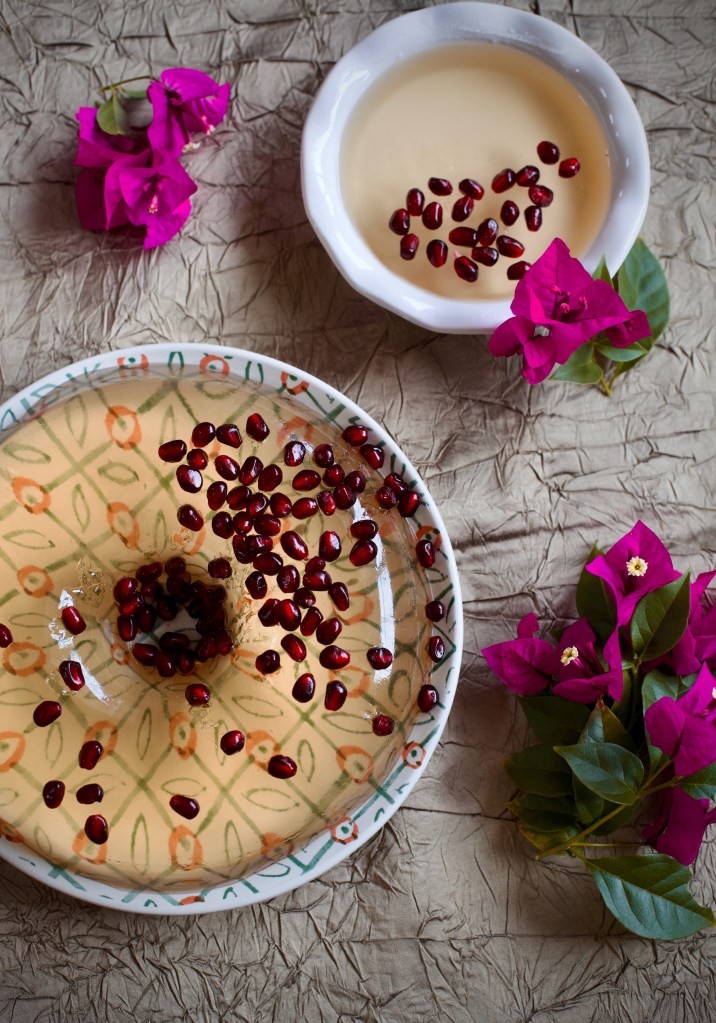
While it looks as glamorous as if you’ve spent tons of time making it, the instruction for this sparkling jelly follows that on your store-bought gelatin package. But instead of fruit juice, it’s made with sparkling wine and flavored with orange blossom water. This recipe is adapted from Nigella Christmas: Food Family Friends Festivities.
. One 750ml bottle of sparkling wine
. 1½ cups sugar
. 4 tsp or 2 envelopes of unflavored gelatin powder
. ½ tsp vanilla or orange blossom extract
. Flavorless oil for greasing the mould
. Pomegranate seeds and whipped cream to serve
Pour the sparkling wine into a saucepan, add sugar and stir BEFORE heating to help dissolve. Pour 1 cup of water into a large bowl and sprinkle the gelatin powder over it.
Over medium heat, bring the wine and sugar to a boil and do not stir. Add the orange blossom extract and take it off the heat. Carefully ladle 1 cup of the wine-sugar liquid into the gelatin water and stir until the gelatin has dissolved completely. Pour the bowl of liquid into the pan and stir again. Pour the liquid in the pan back into the bowl, before pouring it into the oil-greased mould. Similar to making silken tofu, several bouts of pouring help with even distribution without the need for vigorous stirring, which creates undesirable air bubbles in the jelly. Refrigerate overnight and do not skimp on time, else it weeps.
Fill a bowl with warm water to come about halfway up the mould, sit it in the warm water for 30 sec. Wipe the water off the mould before tipping it upside-down to release the jelly.
 hardlyplaying.blog