
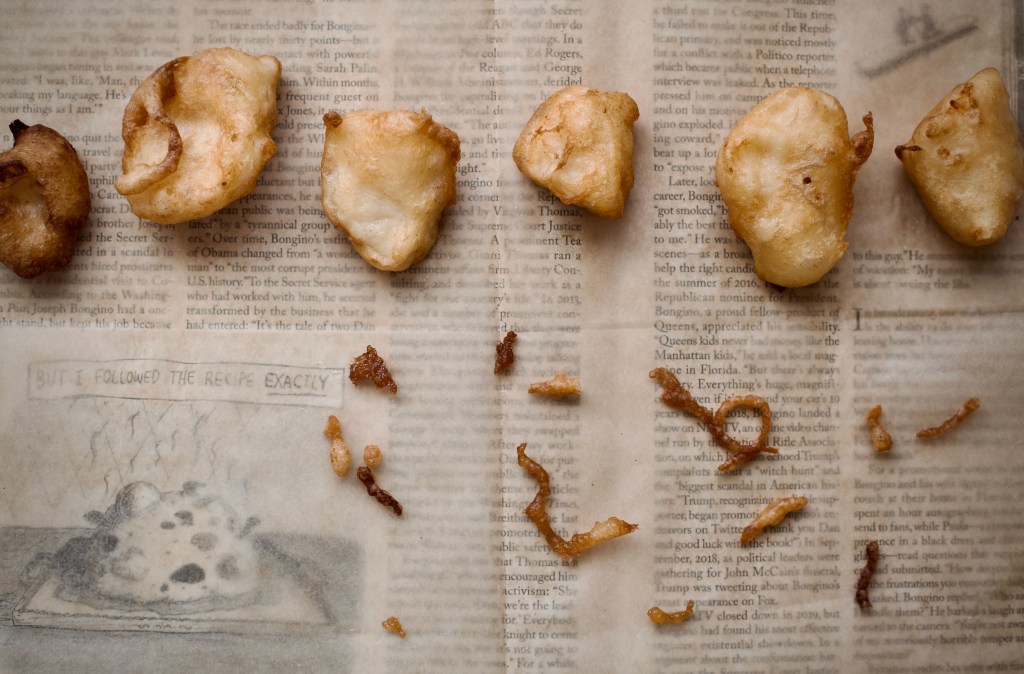
I’ve been wondering about the differences between flours and starches. Starch is processed by grinding the starch-containing tubers or seeds and then mixing the pulp with water. The resulting paste is rid of its remaining impurities and dried into a powder. Flour results from crushing raw whole grains.
Pure starch has been made since Roman times by grinding and soaking grains for days, leaving bacteria to digest their proteins while leaving the starch intact. Most commonly, starch is used as a thickening agent, of which flour can do just as well. I haven’t seen much information for why one would choose one starch over another to thicken gravy. Recipes usually give instructions for how to substitute one starch for another. Otherwise, starch is used as a substitute for flour, especially in gluten-free diets. I’m less interested in starch as an alternative, but rather how it influences food’s textures and tastes.
Starches come in two forms: grain starches with more long and straight chains called amylose, and root starches with more branched chains called amylopectin. Once cool, grain starches become opaque, while root starches remain transparent. When frozen and thawed, grain starches become spongy and leak watery fluid, while root starches remain more or less the same. However, root starches will thin during reheat, while grain starches will not.
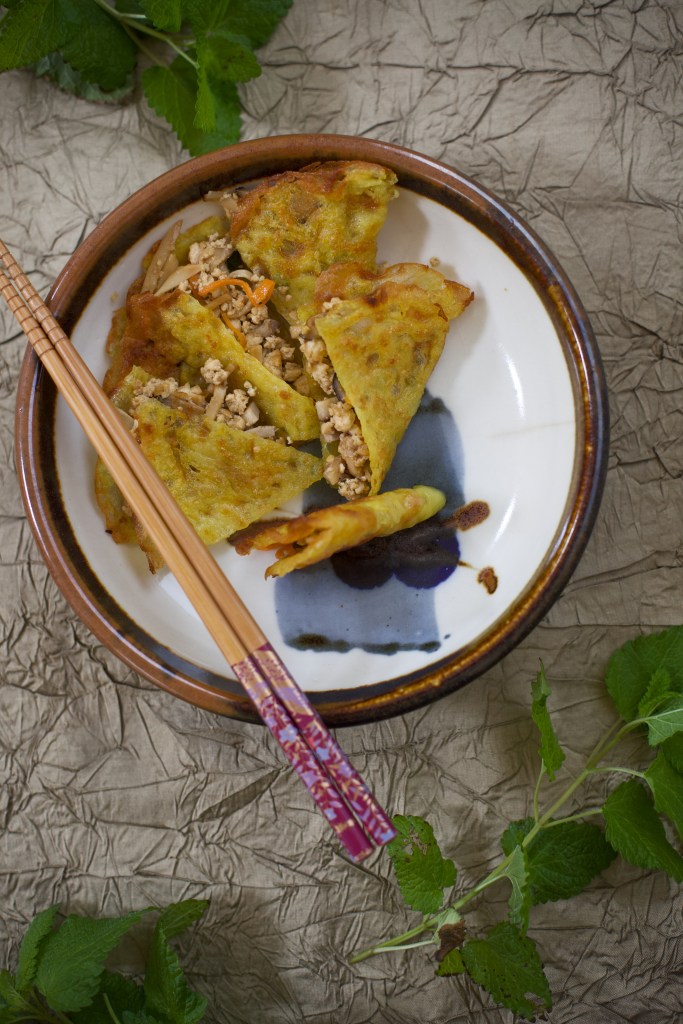
In Asia, tapioca starch, a root starch, is beloved for its gooey texture. It is made into pre-gelatinized pearls for pudding and sweet teas. In Vietnam, it makes chewy, sticky dumplings and steamed crêpe rolls. Adding tapioca starch to rice flour makes paper-thin crêpes, soft but supple enough for rolling. In Brazil where cassava is a basic staple, tapioca starch makes puffy, chewy, and pillowy cheese bread. Adding cornstarch to wheat flour gives it a soften quality, comparable to cake flour. I’m hoping to discover more of this kind of characteristics of starches.
It started with the French crêpe, a soft, paper-thin pancake made of wheat flour, eggs, and milk, used as a wrapper for anything from savory to sweet. Vietnam, much influenced by French food because of its colonial past, has its own version of crêpe. But instead of wheat flour, it is made entirely of rice flour. And rather than being soft and pliable, it is brittle and crunchy. It made me wonder whether adding rice flour to a wheat batter would improve crispness in a deep-fried batter.
A batter for making fish and chips is composed entirely of wheat flour, baking powder, salt, and beer. Wheat flour contains gluten proteins that form elastic gluten and absorb both moisture and fat, thus creating a coating that is crispy on the exterior but a pancake-like interior. Rice flour contains proteins that do not form gluten and absorb less moisture and fat, thus fry crisper and dryer.
I discovered that while adding rice flour certainly gave it that light and shattering crispness that I was hoping for, the resulting batter couldn’t protect the fish from losing moisture. However, would adding another starch achieve desirable outcomes for both batter and fish? Cornstarch’s large particles are less absorbant and its proteins dilute wheat gluten, thus reducing the chewiness of the crust. Root starch gelatinizes early in frying, thus making a soggy crust, but would a small amount of tapioca starch in a wheat and rice flour batter help protect moisture loss?
I thus ran an experiment, varying the ratio between wheat flour, rice flour, and two different starches, tapioca starch and corn starch, in the batter. I used cod fish, which is typical for making fish and chips. Each sample was observed for taste and texture when hot and fresh, and when cold. Given a choice, I’d rather have my fish not be a soggy mess and still be tasty after some time. All samples included ⅛ tsp of baking powder & ⅛ tsp of salt; the cod was cut into ½-inch thick pieces.
| Sample Composition | (Hot & Fresh) Batter Texture | (Hot & Fresh) Fish Texture | (Cold) Batter Texture | (Cold) Fish Texture |
| 2 tbsp wheat flour, 2 tbsp cold beer | 1: Crispy exterior; soft and cushy interior; | 1: Tender, flaky | Retains some crispness | 4: Firm |
| 2 tbsp wheat flour, 1 tbsp rice flour, 3 tbsp cold beer | 5: Ultra crispy exterior; thin coating | 6: Moisture lost, flaky, strands are visible | Retains some crispness | 4: Firm, texture improved when cold |
| 2 tbsp wheat flour, 1 tbsp tapioca starch, 3 tbsp cold beer | 1: Crispy exterior; thin coating, coating clings to fish | 3: Firm and tender | Retains some crispness | 4: Firm |
| 2 tbsp wheat flour, 1 tbsp corn starch, 3 tbsp cold beer | 2: Crispy exterior | 2.5: Firm and tender | Retains some crispness | 4: Firm |
| 2 tbsp wheat flour, 1 tbsp rice flour, 1 tsp tapioca starch, 3 tbsp cold beer | 4: Ultra crispy exterior; thin coating | 1.5: tender, but not as flaky as Sample 1 | Retains crispness best | 2: Retains tenderness |
| 2 tbsp wheat flour, 1 tbsp rice flour, 1 tsp corn starch, 3 tbsp cold beer | 1: Crispy exterior; soft and cushy interior; | 2: Firm and tender | Do not retain crispness, soft | 5: Very firm, thickened into jelly in spots |
Observations:
1. Adding a small amount of tapioca starch to a wheat and rice flour batter was able to retain most of the ultra-crispy exterior while keeping the fish texture moist and tender.
2. Adding cornstarch to a wheat flour batter gave a crispier exterior, but also a firmer fish texture.
3. Adding a small amount of cornstarch to a batter of wheat and rice flour did not improve crispness. Unexpectedly in its cold state, it thickened the liquid inside the fish nuggets into a jelly puddle while turning the fish texture extra firm.
 hardlyplaying.blog